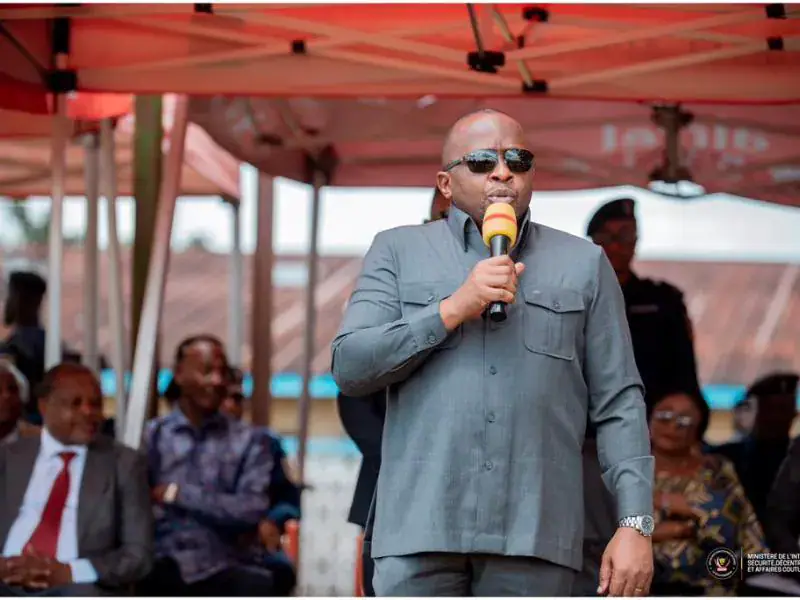
In a recent interview, Jacquemin Shabani, the Vice Prime Minister of the Interior of the Democratic Republic of Congo, emphasized that the country's laws prohibit any contact with enemy forces without government approval. He cited the penal code, which stipulates punishment for those who engage in such activities. Shabani's comments come in response to an announcement by Moïse Katumbi, a prominent politician, that his coalition, C64, plans to meet with Joseph Kabila, the leader of the Front Révolutionnaire National (FRN).
Shabani stressed that the DRC is facing a severe security crisis due to foreign aggression and collaboration with local militias. He warned that any attempts to engage with enemy forces without government approval would be considered a criminal offense. The minister also recalled that previous attempts at dialogue with rebel groups had failed, citing the example of Joseph Kabila's meeting with rebel leaders in Goma, which ultimately led to his involvement with the Rwandan army.
The proposed meeting between C64 leaders and Joseph Kabila has sparked concerns about potential collaboration with enemy forces. Shabani stated that if the meeting proceeds without government approval, those involved could face prosecution upon their return. He emphasized that the government will not tolerate any actions that compromise national security. The minister also plans to inform the presidents of the two chambers of Parliament about the situation, as some of the politicians involved are represented in these institutions.
Shabani highlighted the gravity of the situation, citing the penal code's article 192, which prescribes punishment of one to five years for those who engage in unauthorized communication with enemy forces during wartime. He also mentioned that the government has mechanisms in place to address the conflict and that previous attempts at dialogue had been unsuccessful. The minister's comments reflect the government's concerns about the growing security threat in the region.
The C64 coalition has stated that its goal is to find a peaceful solution to the crisis through dialogue with all stakeholders, including Joseph Kabila. However, Shabani expressed skepticism about the coalition's intentions, citing Joseph Kabila's past actions. He also noted that President Tshisekedi has launched initiatives for dialogue with the political class, but emphasized that any meeting with enemy forces must have government approval.
The situation in the DRC remains volatile, with ongoing security challenges in the eastern regions. The government has accused Joseph Kabila of collaborating with Rwandan forces, which has exacerbated tensions. Shabani's comments reflect the government's determination to maintain control and ensure national security. The minister's warning has implications for politicians and other stakeholders who may be considering engagement with rebel groups or foreign entities.
The DRC government is taking steps to address the security crisis, including engaging with international partners and promoting national dialogue. However, the proposed meeting between C64 leaders and Joseph Kabila has raised concerns about potential risks to national security. Shabani's comments serve as a reminder of the government's commitment to upholding the law and protecting national interests.
Key points
- Jacquemin Shabani warns politicians against meeting with rebel groups or foreign entities without government approval, citing the penal code and national security concerns.
- The proposed meeting between C64 leaders and Joseph Kabila has sparked concerns about potential collaboration with enemy forces.
- The DRC government is taking steps to address the security crisis, including engaging with international partners and promoting national dialogue.