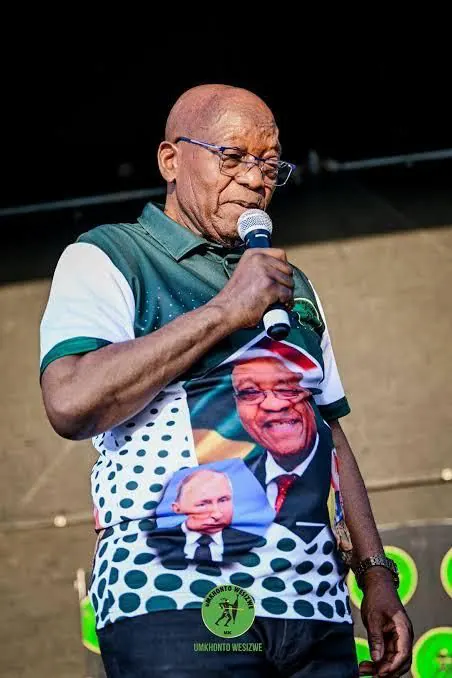
Former South African President Jacob Zuma has been making headlines with his recent prayer gatherings, sparking debate about the role of spirituality in politics. Zuma visited the Siddhpeeth Shri Dakshin Kali Temple in Haridwar, India, on 26 June 2026, alongside Ajay Gupta, a fugitive from South African justice. Gupta is wanted for his alleged role in the state capture scandal, which was examined by the Zondo Commission. The commission's findings suggest that the Gupta family used their ties to the Zuma government to influence state contracts and drain public money.
Zuma's use of prayer politics is not new. In 2016, he convened a National Day of Prayer at Absa Stadium in Durban, which was attended by thousands. The event was billed as a call for unity, peace, and rain, but critics saw it as a way for Zuma to boost his popularity ahead of local government elections. His new party, MK, is positioning itself to capture power in key metros, including eThekwini, which has a R70-billion metro budget. Polls suggest that MK may win the eThekwini metro, making it a crucial battleground in the upcoming elections.
Zuma's party, MK, has seen significant growth since its formation, winning 14.58 percent of the national vote in 2024. However, analysts say that the party is still struggling to build the structures needed to convert that popularity into stable governance. Zuma's leadership style has been criticized for its reliance on patronage appointments and lack of accountability. During his presidency, the Constitutional Court ruled that he had violated the Constitution by failing to repay public money spent on his private homestead in Nkandla.
The Zondo Commission's findings also suggest that Zuma's administration facilitated state capture, with systematic abuse of state institutions and enrichment of private actors. Zuma was charged with 12 counts of fraud, one of racketeering, two of corruption, and one of money laundering in March 2018, although the charges were later withdrawn. Critics argue that Zuma's election campaign strategy does not involve acknowledging his past mistakes, but rather presenting himself as a victim of system capture.
Minister Khumbudzo Ntshavheni publicly criticized High Commissioner Anil Sooklal for attending the same prayer ceremony as Zuma and Gupta, calling it a disgrace. However, it emerged that Ntshavheni's own ministry had authorized the protocol assistance, and Dirco headquarters had issued written directives to assist Zuma. This contradiction highlights the challenges of accountability in government.
Zuma's use of prayer politics has raised questions about the role of spirituality in elections. While faith matters, spiritual authority cannot be borrowed to improve political messaging. MK says it will govern municipalities differently, but details are scarce. The party's leadership has stated that it will focus on changing procurement systems and protecting officials from patronage.
As South Africa approaches critical elections, voters are entitled to ask tough questions about Zuma's leadership and accountability. Which failures is MK offering to fix? The corruption that occurred during Zuma's presidency? The patronage appointments that undermined state capacity? The lack of accountability in government? The answers to these questions will be crucial in determining the future of South African politics.
Key points
- Zuma's use of prayer politics raises questions about the role of spirituality in elections.
- MK's leadership style has been criticized for its reliance on patronage appointments and lack of accountability.
- Zuma's administration facilitated state capture, with systematic abuse of state institutions and enrichment of private actors.