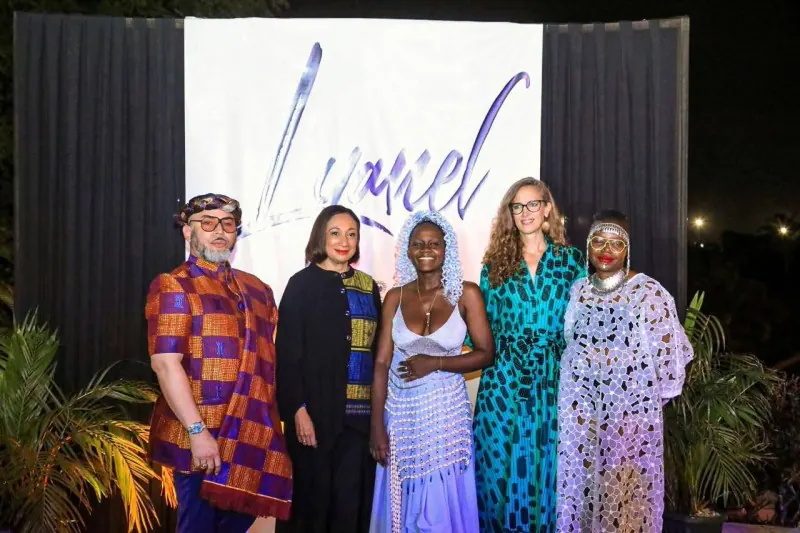
Ivorian fashion designer Lyanel Babli, also known as Lily Elodie, recently presented a sustainable clothing collection made from marine waste at the Residence of Belgium in Cocody-Ambassades, Côte d'Ivoire. The collection was showcased on September 30, and it highlighted the potential for fashion to promote environmental sustainability. Babli's designs were made from plastic bottles and bags collected from beaches, which were then transformed into high-end fashion pieces. This innovative approach to fashion design aims to raise awareness about the importance of protecting the marine environment.
The event was attended by prominent figures, including the Minister of Culture and Francophonie, Françoise Remarck, and the Belgian Ambassador to Côte d'Ivoire, Carole Van Eyll. The presence of these officials demonstrated the importance of supporting initiatives that promote cultural and creative industries in Côte d'Ivoire. Babli's work was praised for its creativity and commitment to sustainability, with the ambassador noting that fashion can be a powerful tool for driving positive change.
Babli's designs were met with widespread acclaim for their beauty and ingenuity. The collection featured a range of clothing items, including dresses, tops, and pants, all made from transformed marine waste. The use of cauris, a type of shell, added a touch of elegance to the designs. By incorporating marine waste into her designs, Babli aimed to draw attention to the issue of marine pollution and the need for sustainable practices in the fashion industry.
The event was also attended by stylist Élie Kuame, who will serve as a mentor to Babli. Kuame's presence highlighted the importance of collaboration and mentorship in the fashion industry. Babli's work is seen as a reflection of the growing awareness among young Ivorian designers of the need to address environmental challenges through their work.
Babli's collection was the result of her winning the first edition of the artistic competition of Ivorian-Belgian friendship. The competition aims to promote cultural exchange and creativity between Côte d'Ivoire and Belgium. Babli's win was seen as a testament to her talent and commitment to using fashion as a tool for positive change.
The collection was not just a showcase of beautiful clothing, but also a statement about the need for sustainability in the fashion industry. Babli's use of marine waste as a material for her designs challenged traditional notions of fashion and beauty. By elevating waste to the level of high-end fashion, Babli demonstrated that sustainability and style are not mutually exclusive.
The event concluded with a sense of hope and optimism about the future of sustainable fashion in Côte d'Ivoire. Babli's work has shown that fashion can be a powerful tool for promoting environmental sustainability and driving positive change. As the fashion industry continues to evolve, it is likely that we will see more designers following in Babli's footsteps and exploring innovative approaches to sustainable design.
Key points
- Ivorian designer Lyanel Babli transforms marine waste into high-end fashion pieces
- The collection was showcased at the Residence of Belgium in Cocody-Ambassades, Côte d'Ivoire
- The event was attended by prominent figures, including the Minister of Culture and Francophonie and the Belgian Ambassador to Côte d'Ivoire