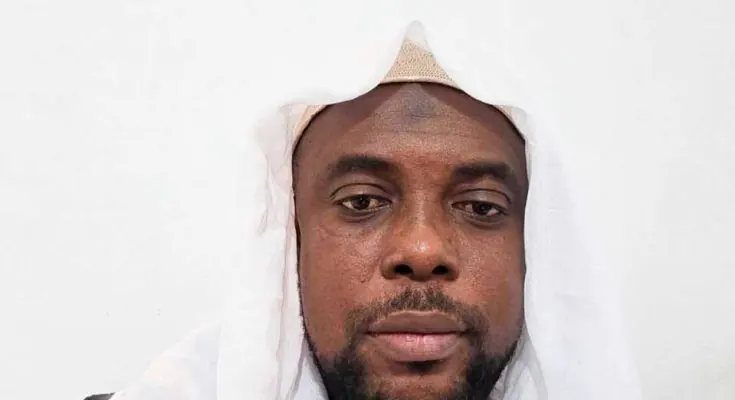
In a recent interview, Imam Kouassi Wah Houphouet, principal Imam of the Iman Cocody Rivera Abbata Mosque in Côte d'Ivoire, shared his thoughts on the role of artificial intelligence (AI) in Islamic leadership. With AI increasingly being used in various sectors, Imam Houphouet emphasized that while AI can be a valuable tool, it should not replace the human and spiritual responsibilities of an Imam. He highlighted the multifaceted role of an Imam, including spiritual guidance, education, and community service.
Imam Houphouet outlined the various responsibilities of an Imam, including leading prayers, providing spiritual guidance, and serving as a teacher, educator, and counselor. He cited the Quran and Hadith, emphasizing the Imam's role in promoting peace, social cohesion, and solidarity. The Imam also noted that certain functions, such as leading prayers and providing spiritual accompaniment, are inherently human and cannot be delegated to technology.
According to Imam Houphouet, AI can be used as a tool to support the Imam's work, but it should not be relied upon to make decisions or assume responsibility. He cited the example of preparing sermons, where AI can assist with research and organization, but human verification is essential to ensure accuracy and authenticity. The Imam also referenced the Académie internationale du Fiqh islamique's 2025 resolution on AI, which emphasizes the need for licit and beneficial use of technology.
Imam Houphouet discussed the potential benefits of AI in supporting the Imam's work, including preparing educational materials, organizing programs, and facilitating communication. He noted that AI can help with tasks such as translating content, creating podcasts, and disseminating sermons. However, he emphasized that AI should not be used to replace human interaction or assume responsibility for religious guidance.
The Imam also highlighted the importance of verifying information and ensuring that AI-generated content is accurate and reliable. He cited the Quran's emphasis on verification and the need for Imams to critically evaluate information before sharing it with their communities. Imam Houphouet encouraged the use of AI as a tool to augment the Imam's work, but not to replace human interaction or spiritual guidance.
Imam Houphouet discussed the potential for AI to help disseminate Islamic teachings to younger generations. He noted that young people are increasingly active online and that Islamic leaders must adapt to this new reality. By using AI to create engaging and accessible content, Imams can reach a wider audience and promote Islamic values in a more effective way.
In conclusion, Imam Houphouet emphasized that AI should be used as a tool to support the Imam's work, not replace it. He encouraged Islamic leaders to harness the potential of AI while maintaining their spiritual and human responsibilities. By doing so, Imams can promote peace, understanding, and social cohesion in their communities.
Key points
- Imam Kouassi Wah Houphouet emphasizes that AI should be used to support, not replace, the human and spiritual responsibilities of Islamic leaders.
- The Ivoirian Imam highlights the importance of verifying AI-generated information to ensure accuracy and authenticity.
- AI can be a valuable tool in promoting Islamic teachings to younger generations, but must be used in a way that complements human interaction and spiritual guidance.