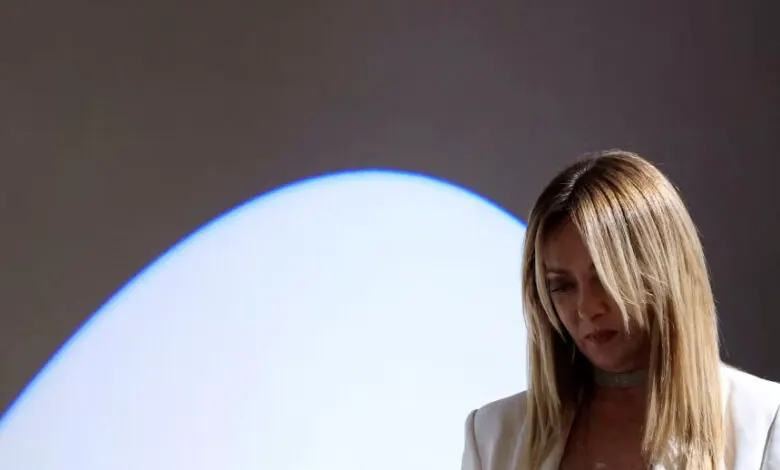
Italian Prime Minister Giorgia Meloni has announced that her government will introduce new policies aimed at regulating the integration of foreign students in Italian schools. Speaking at a youth event organized by her Brothers of Italy party, Meloni stated that a measure will soon be presented to the Cabinet to establish a maximum number of foreign students per class. This move is part of a broader effort to address the challenges of migrant integration in Italy, a country that has been significantly affected by migrant arrivals in recent years.
The proposed policies have been driven in part by concerns about the integration of students from Muslim-majority countries. Meloni noted that if a large number of students in a class do not understand Italian, it can hinder the integration process and create educational challenges. According to Fondazione ISMU, a research institution, students who are not Italian citizens account for 11.6% of those enrolled in Italian schools, or nearly 12 in every 100 students. This demographic trend has contributed to ongoing debates about cultural integration, citizenship rules, and immigration policy in Italy.
One of the key aspects of the new policy is the ban on face coverings, including burqas and niqabs, in schools. Meloni emphasized that students must attend school with their faces uncovered, arguing that no one should be allowed to hide their identity in the name of tradition. This stance reflects the government's commitment to promoting cultural integration and ensuring that students can fully participate in the educational system.
The Italian government has not specified what the maximum number of foreign students per class will be. However, Meloni stressed that the goal is to prevent situations where a large number of students who do not understand Italian dominate a class, which she believes can lead to neglect rather than integration. The government aims to strike a balance between accommodating foreign students and ensuring that they can effectively integrate into the Italian education system.
The announcement has been made as Italy continues to grapple with the complexities of migrant integration. The country's central Mediterranean location makes it a key point of arrival for migrants, and successive governments have faced challenges in addressing the social and economic implications of migration. The new policies are part of a broader effort to address these challenges and promote greater social cohesion.
Meloni's comments have sparked debate about the role of religion and cultural identity in Italian society. The issue of religious symbols and cultural integration has frequently polarized public opinion in Italy, with some arguing that the government should take a more inclusive approach to migrant integration. Others believe that stricter policies are needed to ensure that migrants adapt to Italian culture and values.
The Italian government is expected to finalize the details of the new policies in the coming weeks. As the country continues to navigate the complexities of migrant integration, the effectiveness of these policies in promoting social cohesion and educational outcomes will be closely watched. The government's approach will likely have implications for migrant communities and the broader Italian society.
Key points
- Italy's Prime Minister Giorgia Meloni has announced plans to ban face coverings in schools and cap the number of foreign students per class.
- The proposed policies aim to address concerns about migrant integration and promote cultural assimilation.
- The Italian government has not specified the maximum number of foreign students per class, but aims to prevent situations where a large number of students who do not understand Italian dominate a class.