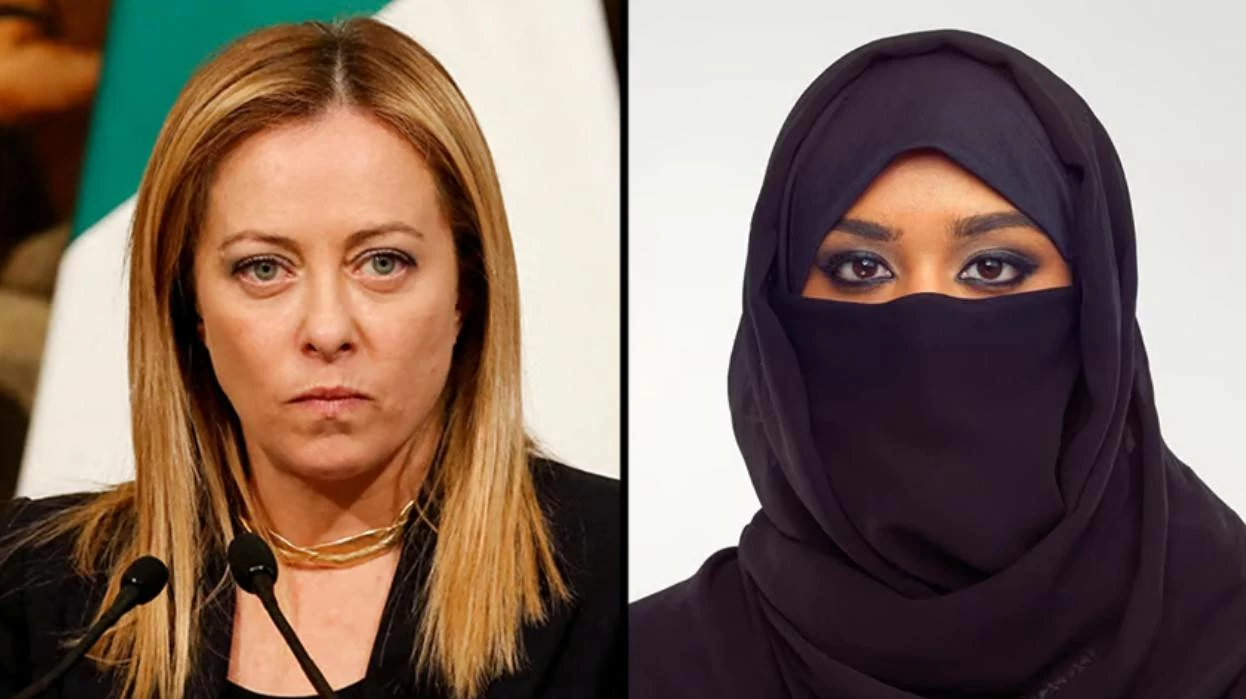
Italian Prime Minister Giorgia Meloni has announced that her country is preparing to ban face veils in schools and impose a limit on the number of foreign students in each classroom. These measures are part of her right-wing agenda, which she emphasized during a youth event organized by her party, Fratelli d'Italia. According to Reuters, Meloni's statements have sparked debate about integration and cultural identity in Italy.
Italy is one of the European countries most affected by migration due to its strategic location in the Mediterranean. As a result, the issue of migration has become a pressing concern for successive governments. The integration of migrants, particularly those from predominantly Muslim countries, remains a contentious issue in Italian politics and society. Discussions about religious symbols, cultural assimilation, citizenship rules, and migration policies often divide public opinion.
Meloni stated that her government will soon introduce a measure to set a legal limit on the number of foreign students in each classroom. She argued that if there is only one student who does not understand Italian, they can quickly learn the language and integrate with the help of classmates and teachers. However, if many students do not speak Italian or form a majority, it becomes a challenge for integration.
The proposed ban on face veils in schools is part of Meloni's efforts to promote Italian culture and tradition. She emphasized that no Italian citizen would accept a young woman hiding her face, citing the importance of showing one's face in schools. This move has been met with mixed reactions, with some supporting the government's efforts to promote integration and others criticizing the restrictions on personal freedom.
According to the ISMU research foundation, non-Italian students make up 11.6% of all students enrolled in Italian schools, which translates to approximately 12 students out of every 100. Meloni did not specify the exact number that would be set as the limit for foreign students in each classroom. The government's plans have sparked concerns about the potential impact on the education system and the integration of migrant communities.
The issue of face veils and migration has become a sensitive topic in Italy, with some arguing that the government's measures are necessary to promote national identity and security. Others have expressed concerns about the potential for discrimination and marginalization of minority groups. As the government prepares to implement these measures, it remains to be seen how they will affect Italian society and politics.
Meloni's government has faced criticism for its stance on migration and integration. While some argue that the measures are necessary to address the challenges posed by migration, others believe that they will only exacerbate existing social and economic problems. As Italy continues to grapple with these issues, the international community will be watching to see how the country's policies evolve and impact its citizens and migrant communities.
Key points
- Italy plans to ban face veils in schools and impose a limit on the number of foreign students in each classroom.