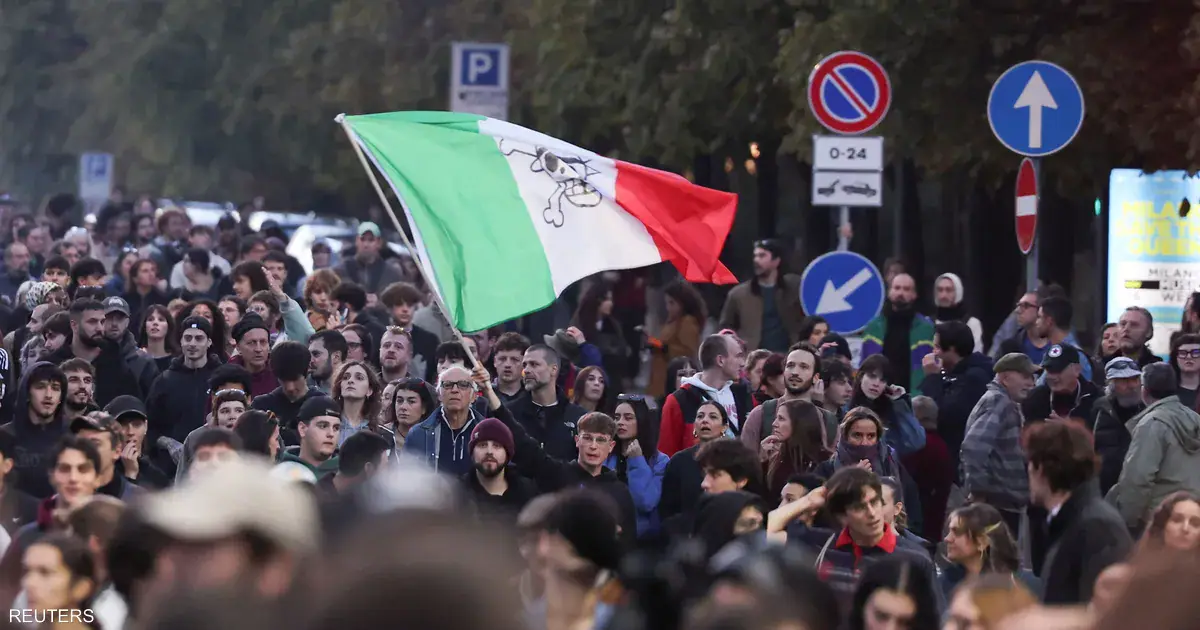
Tens of thousands of protesters, mostly students and workers, took to the streets across Italy on Friday to demand wage increases and improved public services. The protests were also aimed at expressing discontent over the rising cost of living and opposing increased military spending. The protests were largely peaceful, with some incidents reported in earlier clashes between protesters and police.
The protests were called by the Basic Unions Federation, which had declared a 24-hour general strike. Demonstrations were organized in over 40 cities, with protesters marching through major cities like Rome, Milan, and Genoa. In Rome, a large procession was held near the Colosseum, with protesters vowing to set up tents and stay put until the start of the week.
The protests in Italy are part of a broader wave of demonstrations across Europe, driven by concerns over the cost of living, wages, and public services. Countries like France, Spain, Belgium, and Albania have also seen significant protests in recent times. In Italy, the protests were marked by some incidents, including the use of water cannons by police in Turin to disperse protesters.
In Genoa, around 15,000 protesters, including port workers, students, and other activists, marched into the city's port, joining similar protests across Europe against the use of ports for shipping weapons. The protests also highlighted the killing of sailors in conflicts from the Gulf to the Black Sea.
The protests in Italy come at a time of growing concern over the country's economic situation, with rising costs of living and stagnant wages. The protesters are demanding action from the government to address these issues and improve public services. The government has not yet responded to the protests, but the demonstrations are likely to put pressure on policymakers to take action.
The use of ports for shipping weapons was a key issue in the protests, with many protesters arguing that it was unacceptable for ports to be used for military purposes. The protests also highlighted the need for greater investment in public services, including education and healthcare.
The protests in Italy are likely to continue, with many protesters vowing to stay on the streets until their demands are met. The government will need to respond to the concerns of the protesters and take action to address the issues driving the protests.
Key points
- Tens of thousands of protesters demand wage increases and improved public services in Italy
- Protests are part of a broader wave of demonstrations across Europe driven by concerns over the cost of living and public services
- Protesters also oppose the use of ports for shipping weapons and demand greater investment in public services