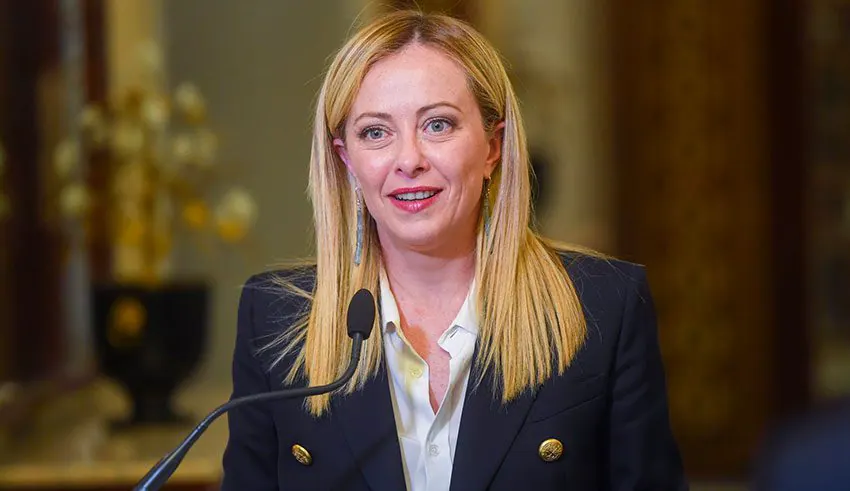
Italian Prime Minister Giorgia Meloni has taken a proactive step to safeguard her voice by filing a request with the European Union Intellectual Property Office (EUIPO) to register her voice as a trademark. This move is designed to protect her voice from being used in deepfakes, which are AI-generated audio recordings that can mimic a person's voice. Meloni's request, confirmed by her office, includes a four-second recording of her saying "Io sono Giorgia Meloni" (I am Giorgia Meloni), a phrase that has been used in her autobiography and in a 2019 political rally.
The request, which is currently under review, seeks to protect Meloni's voice as a sound mark across the 27 member states of the European Union. If approved, this trademark protection would cover downloadable multimedia content, cultural activities, and the organization of political events. While this measure would not technically prevent the creation of vocal deepfakes, it could provide additional legal grounds to challenge unauthorized uses of her voice. This development highlights the growing concern among public figures about the potential misuse of their likenesses and voices in AI-generated content.
Meloni's voice has become one of her most recognizable attributes as a public figure, and she is seeking to have it legally protected as an asset. Her autobiography, published in 2021, bears the title "Io sono Giorgia," which she has also used in public speeches. The proposed trademark protection would enable her to take action against individuals or organizations that use her voice without permission, potentially leading to a significant shift in how intellectual property rights are understood and enforced in the digital age.
This move by Meloni is not isolated, as other Italian celebrities have also taken steps to protect their identities. Giusy Ferreri, a singer, and Luca Ward, a voice actor, have undertaken similar efforts to safeguard their voices and images. The increasing prevalence of AI-generated content has raised concerns about the potential for misuse, leading public figures to explore new ways to protect their personal and professional identities.
Giorgia Meloni has previously been a victim of AI-generated manipulation. In 2024, she initiated a civil lawsuit against a man from Sardinia who created pornographic images using her face. That case is still ongoing in an Italian court. By seeking to trademark her voice, Meloni aims to prevent similar incidents in the future and establish a precedent for protecting the intellectual property rights of public figures in the face of advancing AI technology.
The EUIPO's decision on Meloni's request will have implications for how trademark law is applied to AI-generated content. If her application is successful, it could set a precedent for other public figures seeking to protect their voices and images from unauthorized use. As AI technology continues to evolve, the need for clear guidelines and regulations on intellectual property rights has become increasingly pressing.
The use of AI-generated deepfakes has sparked debates about the intersection of technology, law, and personal identity. As public figures like Giorgia Meloni take proactive steps to protect their voices and images, it remains to be seen how the courts and regulatory bodies will respond to these new challenges. One thing is certain, however: the conversation around intellectual property rights in the digital age is only just beginning.
Key points
- Italian Prime Minister Giorgia Meloni has filed a request with the EUIPO to protect her voice as a trademark, aiming to prevent unauthorized use in deepfakes generated by AI.