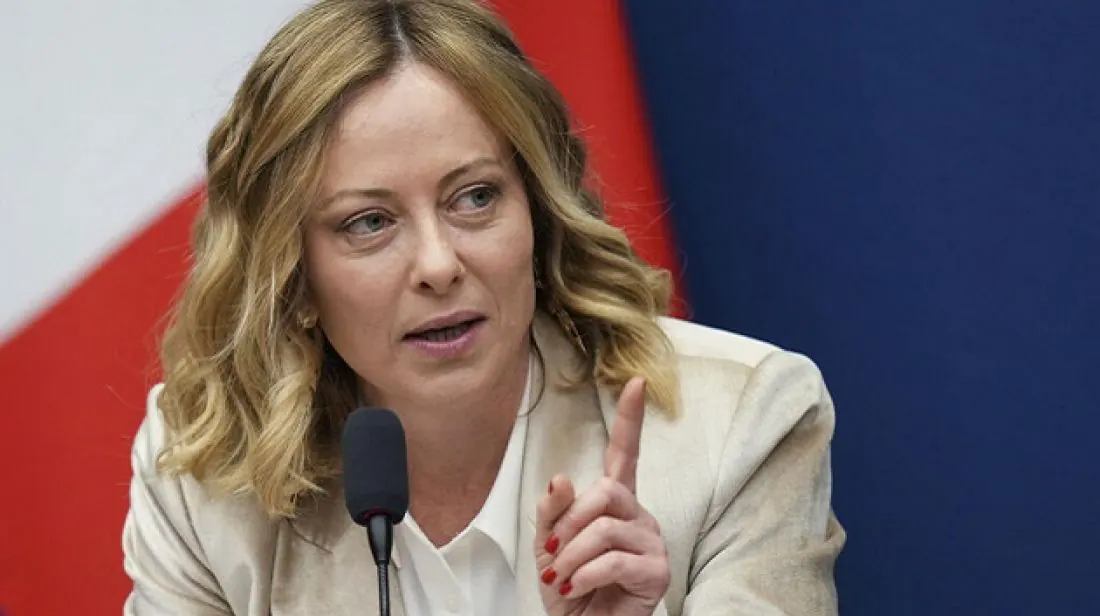
Italian Prime Minister Giorgia Meloni has announced that her government plans to ban the wearing of face veils in schools and impose a limit on the number of foreign students in each classroom. The announcement was made during a gathering of the youth wing of her Brothers of Italy party. Meloni stated that a draft decree will soon be presented to the Council of Ministers, which will establish a maximum number of foreign students allowed in each classroom.
According to Meloni, the draft decree will also require parents of foreign students who struggle to integrate into the education system to learn the Italian language. This move is aimed at promoting integration and ensuring that students can fully participate in the educational process. The Prime Minister emphasized that if a single student in a class does not speak Italian, they can still learn the language quickly with the help of their peers and teachers.
However, Meloni argued that if the number of students who do not speak Italian becomes too high, it can hinder the integration process and lead to a lack of understanding. While she did not specify the exact limit on foreign students per classroom, data from the ISMU research foundation shows that non-Italian students currently make up 11.6% of students in Italian schools, or approximately 12 students per 100.
Meloni's announcement has sparked debate about the role of integration and cultural identity in Italian schools. The Prime Minister emphasized that students should attend school with their faces uncovered, stating that it is not acceptable for anyone to impose the wearing of face veils on young women in the name of tradition or cultural identity.
The proposed ban on face veils in schools is seen as a move to promote secularism and integration, while also highlighting the government's focus on cultural identity. Meloni's Brothers of Italy party has been associated with right-wing ideology, and this move is seen as a reflection of her government's stance on issues related to immigration and cultural identity.
The Italian government has not provided further details on the proposed limit on foreign students in classrooms or the timeline for implementing the ban on face veils. However, the announcement has sparked a national conversation about the role of integration, cultural identity, and education in Italy.
Critics of the proposed ban argue that it may infringe on the rights of students and parents to practice their cultural and religious traditions. However, supporters argue that the move is necessary to promote integration and ensure that students can fully participate in the educational process.
Key points
- Italian Prime Minister Giorgia Meloni announces plans to ban face veils in schools and limit foreign students in classrooms.
- The proposed ban on face veils is seen as a move to promote secularism and integration.
- The Italian government has not provided further details on the proposed limit on foreign students in classrooms or the timeline for implementing the ban on face veils.