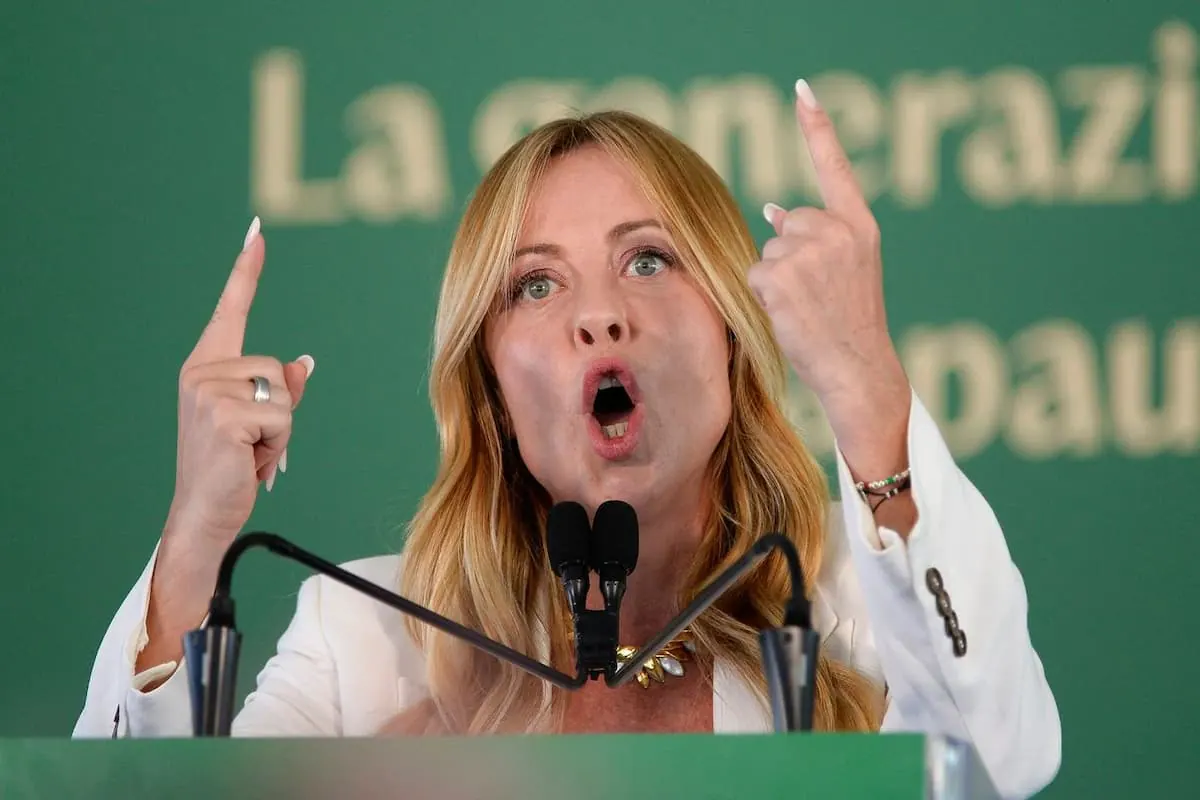
Italian Prime Minister Giorgia Meloni has announced that a new education bill will be presented to the Council of Ministers. The bill aims to set a limit on the number of foreign students per class, as Meloni believes that a class with a majority of non-Italian students is not an effective integration model. She also emphasized the importance of parental involvement in their children's education, particularly for those facing integration challenges.
The announcement was made during the "Fenix" youth festival in Rome on September 20, 2026. Meloni's government has been focusing on education and integration policies. The new bill is expected to address concerns about the growing number of foreign students in Italian schools. According to reports, there are nearly 50,000 Tunisian students and young people enrolled in Italian schools.
Another key aspect of Meloni's education policy is the ban on the niqab and hijab in schools. She emphasized that equality between the sexes is "non-negotiable" and that no tradition should justify forcing a young girl to cover herself. Meloni's government has been working to promote a more inclusive and respectful education system. The new policies aim to improve the overall quality of education in Italy.
Meloni also defended her government's education budget, stating that it has increased to 9.4 billion euros, up from 8.6 billion when she took office. She countered accusations from the opposition, led by Elly Schlein, secretary of the Democratic Party, that her government has reduced university funding. The debate over education funding and policies is ongoing in Italy.
In addition to education policies, Meloni touched on other key issues, including the "Superbonus" program and the cost of the Five-Star Movement's program in 2022. She warned against the spread of misinformation on social media, particularly in the run-up to elections. Meloni emphasized the need for responsible communication and fact-based discourse.
The new education policies have sparked debate and discussion in Italy. While some have welcomed the emphasis on integration and equality, others have expressed concerns about the potential impact on foreign students and the education system as a whole. The policies are expected to be closely watched by educators, policymakers, and the general public.
The issue has implications for Tunisia, with nearly 50,000 students and young people enrolled in Italian schools. The Tunisian government and educators will likely be monitoring the situation closely. The Italian government's policies on education and integration may have a significant impact on the country's relationships with neighboring countries.
Key points
- Giorgia Meloni's government has announced new education policies, including limits on foreign students per class and a ban on the niqab and hijab in schools.
- The policies aim to promote integration and equality in the education system.
- The issue has implications for Tunisia, with nearly 50,000 students and young people enrolled in Italian schools.