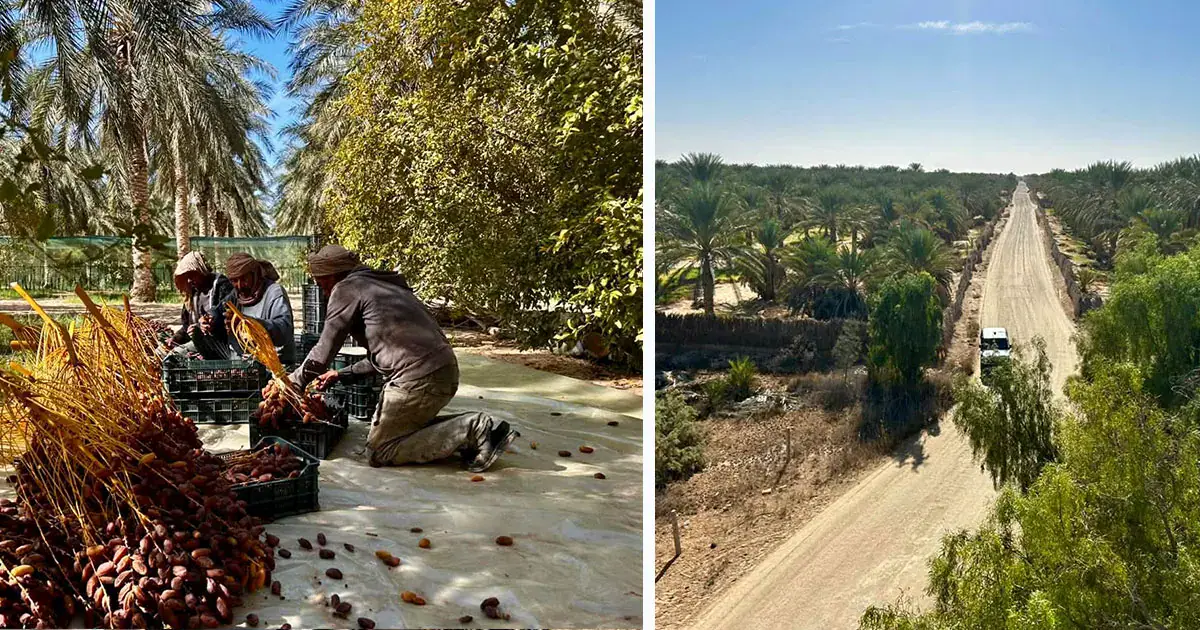
On November 25, 2026, Italian Ambassador to Tunisia Alessandro Prunas and Isabella Lucaferri, director of the Tunis office of the Italian Agency for Development Cooperation (AICS), visited the Rjim Maatoug agricultural development project in Kebili, Tunisia. The project is a flagship initiative of the Tunisia-Italy partnership, aimed at valorizing territories and supporting local communities. The project has transformed 2,500 hectares of desert into productive palm groves, generating income for over 1,300 families.
The Rjim Maatoug project, launched in 1989, has had a significant impact on the region, producing over 20,000 tons of dates annually, accounting for approximately 5% of Tunisia's national production. The project was made possible with an Italian contribution of €20 million, representing around 45% of the total investment. The initiative has also led to the creation of six villages, including 1,300 homes, schools, roads, healthcare facilities, and administrative and commercial services.
Ambassador Prunas praised the project, stating that it concretely demonstrates the results that Italy and Tunisia can achieve together. He described the initiative as a long-term investment that continues to create economic opportunities and improve living conditions for thousands of people while combating climate change and contributing to the fight against desertification. Prunas emphasized the essence of the partnership between the two countries, focusing on inclusive, sustainable, and lasting development.
The Rjim Maatoug project has not only improved the lives of local communities but also served as a model for similar interventions in neighboring areas. The Italian government has committed €25 million to a similar project in El Mahdeth, as part of the program to convert Tunisia's debt. This new initiative will focus on the rational use of water resources, building on the experience gained from Rjim Maatoug.
During their visit, Ambassador Prunas and Lucaferri were able to witness firsthand the positive impact of the project on the region. They expressed their congratulations to the Tunisian authorities, particularly the Ministry of National Defense and the Office of Rjim Maatoug for the Development of the South and the Sahara (ORMDS), for their remarkable achievement.
The Rjim Maatoug project is a testament to the strong partnership between Italy and Tunisia, demonstrating the potential for collaborative development initiatives that benefit local communities and promote sustainable growth. The project has been recognized as an emblematic example of the two countries' commitment to working together to address common challenges.
As the visit concluded, Ambassador Prunas and Lucaferri highlighted the importance of continued cooperation between Italy and Tunisia, emphasizing the potential for future joint initiatives that promote development, economic growth, and environmental sustainability in the region. The Rjim Maatoug project serves as a model for future collaborations, showcasing the positive impact that can be achieved through international cooperation and partnership.
Key points
- The Rjim Maatoug project has transformed 2,500 hectares of desert into productive palm groves, generating income for over 1,300 families and producing over 20,000 tons of dates annually.