In South Sudan, pregnant women face extreme dangers and a near-total lack of emergency care, with a maternal mortality ratio estimated at 1,150 per 100,000 live births. The country's healthcare system is severely underfunded, with only about 40 percent of health facilities functional. Ongoing conflict has damaged or forced the abandonment of roughly 60 percent of facilities.
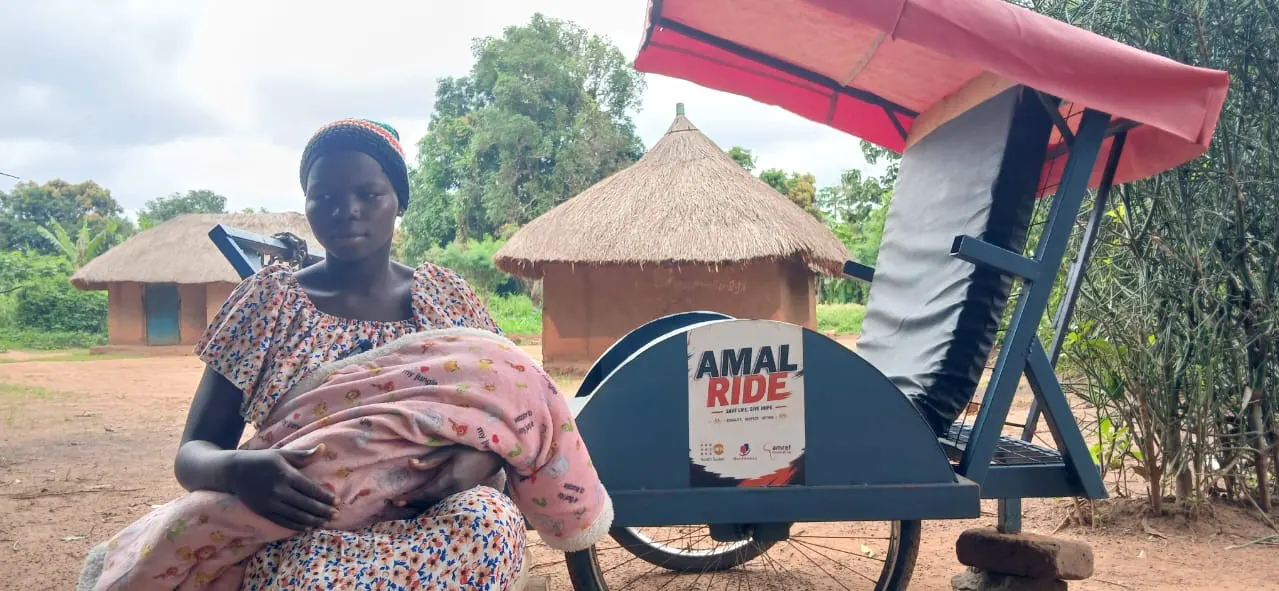
The Amal Ride, a community-based transport service, has become a lifeline for pregnant women and vulnerable patients in Bazungua Payam, Western Equatoria State. The service uses a bicycle ambulance, locally known as a Dagadaga, designed to transport patients who cannot sit upright. It can be attached to a bicycle or motorcycle, allowing a patient to lie down during the journey.
Sheila Charles Mborikina, a pregnant woman, was transported to a health facility by the Amal Ride when labour pains began. She safely delivered her baby and credits the service with saving her child's life. "For us in Bazungua, the Amal Ride has become a lifeline," she says. The service has already transported eight people, including a pregnant woman, a person living with a disability, and a man suffering from an illness.
The Amal Ride is implemented by Men 4 Women, with support from UNFPA through Amref Health Africa, to address transportation barriers to healthcare in Bazungua. Data Gordon of Men 4 Women says the initiative aims to reduce delays in reaching healthcare, particularly during emergencies. "When a woman is in labour or someone is facing a medical emergency, every minute matters," Gordon says.
Luka Godwill, a 32-year-old patient, used the Amal Ride service when both his legs became severely swollen, leaving him unable to stand or walk. He was carried to the hospital and received treatment immediately. "With Amal Ride, you feel comfortable. It is almost like lying on your bed at home," he says.
Despite its success, the Amal Ride faces challenges, including rough roads, hills, and difficult terrain that can slow bicycle journeys. Community leaders say the service has shown what a relatively simple intervention can mean for people living far from health facilities, but more support is needed. Victor Zakapu, the youth leader in Bazungua, is calling on donors and partners to continue supporting Men 4 Women.
The Amal Ride's impact is measured by the journeys it makes and by the patients who reach medical care when they need it most. For Mborikina, the service did more than just transport her to a health facility - it saved her child's life. The bicycle ambulance is a simple piece of equipment, but its value is reflected in the lives it helps to save.
Key points
- The Amal Ride bicycle ambulance service has reduced transportation barriers to healthcare in Bazungua Payam, Western Equatoria State, South Sudan.
- The service has transported eight people, including pregnant women and patients with disabilities, to health facilities.
- The initiative aims to reduce delays in reaching healthcare, particularly during emergencies, and has become a lifeline for pregnant women and vulnerable patients in Bazungua.