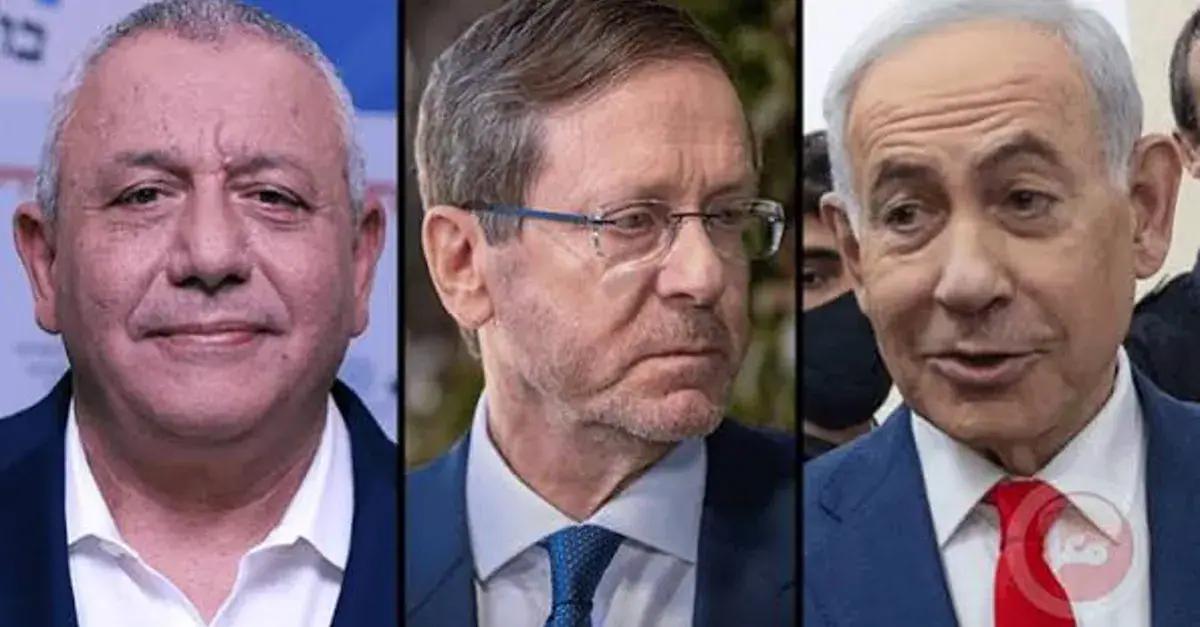
Israeli President Isaac Herzog stated that it is still unclear which candidate has the best chance of forming a new government, despite Gadi Eisenkot receiving the backing of a majority of Knesset members. Herzog will reveal the person tasked with forming the government on Sunday, following consultations with parliamentary blocs. The president's comments came after meetings with party leaders, which showed that while results may seem clear, the complex dynamics between and within blocs make it difficult to determine who can form a coalition.
The consultations, held on Wednesday and Thursday, saw 67 out of 120 Knesset members support Eisenkot, the former Israeli army chief of staff, while 46 backed incumbent Prime Minister Benjamin Netanyahu. The ultra-Orthodox party "Yehudat HaTorah" refrained from recommending either candidate. Eisenkot's party, "Yesh Atid", urged Herzog to task its leader with forming the government promptly, citing the majority of party recommendations as justification.
The October 27 elections did not yield a clear parliamentary majority for either side, with Netanyahu's Likud party securing 27 seats and its national-religious coalition garnering 53 seats. In contrast, the anti-Netanyahu coalition led by Eisenkot, comprising four Jewish parties, won 48 seats, while the two parties representing Israel's Arab minority secured 19 seats. The elections reflected a desire for change, with many voters expressing a lack of confidence in Netanyahu and his government.
Eisenkot's party warned that delaying the government formation could lead to new elections, contradicting the will of the voters who opted for change. The party called on political leaders to assume responsibility and work towards establishing an emergency national government to address Israel's challenges. This development comes as Israel faces various pressing issues, including security concerns and economic challenges.
President Herzog will engage in personal conversations with party leaders in the coming days before making his decision on who to task with forming the government. These discussions may prove crucial in determining the next steps in Israel's government formation process. The Israeli president plays a significant role in this process, as they typically task the candidate with the best chance of forming a stable government.
The complex negotiations and consultations reflect the difficulties in forming a government in Israel, where coalition-building is often a delicate and time-consuming process. The multiple party factions and interests at play can make it challenging to achieve consensus. As a result, Israel has experienced repeated election cycles in recent years, with little progress in resolving the country's leadership vacuum.
The eventual candidate tasked with forming the government will face significant hurdles in achieving a stable coalition, given the current party dynamics. However, with the president's guidance, they will be expected to navigate these complexities and establish a functional government. The government formation process is critical for Israel, as it will impact the country's policy direction and address pressing issues.
Key points
- Israeli President Isaac Herzog will announce the candidate to form a new government on Sunday.
- Gadi Eisenkot received the backing of 67 Knesset members, while Benjamin Netanyahu secured 46.
- The October 27 elections did not yield a clear parliamentary majority for either side.