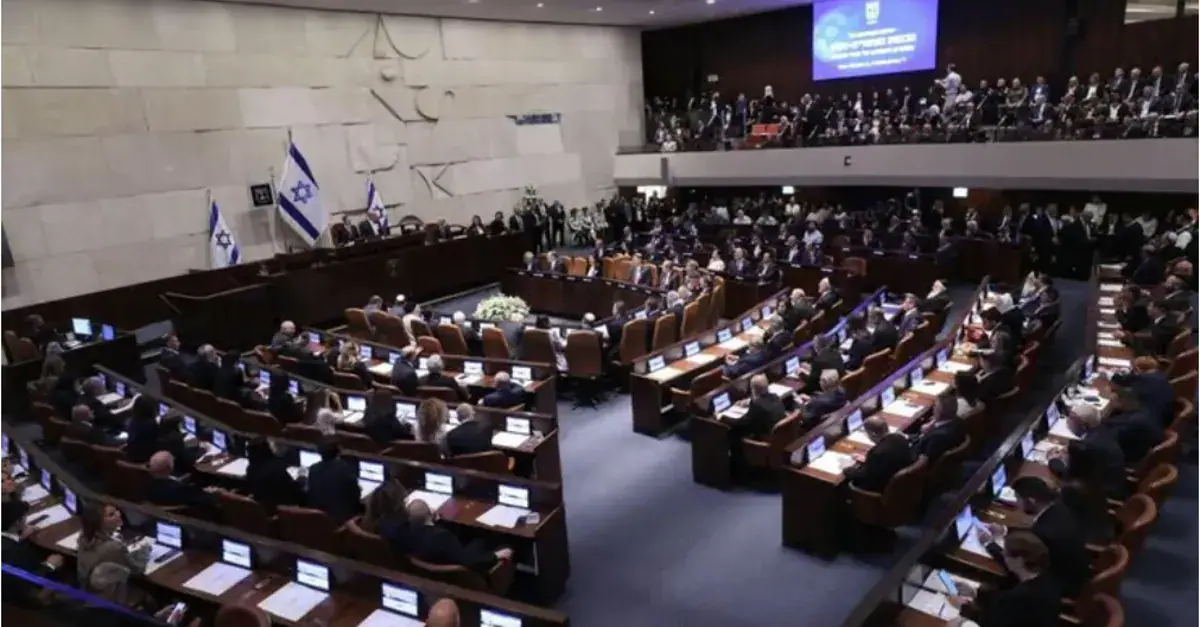
Israeli President Isaac Herzog officially inaugurated the 26th session of the Knesset, Israel's parliament, on Tuesday. The session began with 120 members taking their oath of office in a formal parliamentary session, following the October 27 elections. Herzog urged the parties to make concessions to form a new government. He emphasized the need to address the issue of military conscription in Israel and investigate the circumstances of the events of October 7.
The new parliamentary session begins amidst a complex and divided political landscape. The recent election results showed that neither of the main camps could secure a comfortable majority, indicating a challenging and lengthy process of forming a new government. Despite the festive atmosphere at the Knesset, with the presence of families of new and veteran lawmakers, political tensions were evident. The opposition bloc, "Knesset Change," submitted the necessary signatures to oust the current Knesset Speaker, Amir Ohana, and appoint Matan Kahana from the "Yesh Atid" party.
Herzog warned of the risks of dragging Israel into another round of elections, criticizing the internal polarization and urging lawmakers to focus on the security and social challenges facing Israeli society. The President's remarks reflect concerns about the potential consequences of prolonged political instability. The Knesset's inauguration marks the beginning of a critical period in Israeli politics, with the formation of a new government hanging in the balance.
The election results have created a challenging situation for the formation of a new government. With no clear majority, the parties will need to engage in intense negotiations to reach a coalition agreement. The "Knesset Change" bloc's move to oust Ohana and appoint Kahana as the new Speaker reflects the intense competition among the parties. The negotiations are expected to be difficult, with each party pushing for its interests and agendas.
The issue of military conscription remains a contentious topic in Israeli politics. Herzog's emphasis on addressing this issue reflects the need for a comprehensive solution. The investigation into the events of October 7 is also a pressing concern, with many Israelis demanding answers about the circumstances surrounding the incident. The new government's ability to address these issues will be crucial in determining its legitimacy and effectiveness.
The Knesset's inauguration marks a critical moment in Israeli democracy. The new lawmakers will need to work together to address the country's challenges and find solutions to its pressing problems. The President's call for compromise and cooperation reflects the need for a united approach to governance. The coming weeks and months will be crucial in determining the course of Israeli politics and the future of the country.
The formation of a new government will have significant implications for Israel's domestic and foreign policy. The parties will need to navigate complex issues, including the Israeli-Palestinian conflict, security concerns, and economic challenges. The new government's agenda will be shaped by the coalition agreements and the priorities of its constituent parties. The Israeli public will be watching closely, expecting the new government to deliver on its promises and address the country's pressing issues.
Key points
- Israeli President Isaac Herzog inaugurates the 26th Knesset session, calls for compromise to form a new government.
Reporting sources
- الرئيس الإسرائيلي يعلن تنصيب الكنيست الجديد · Al-Qahera News