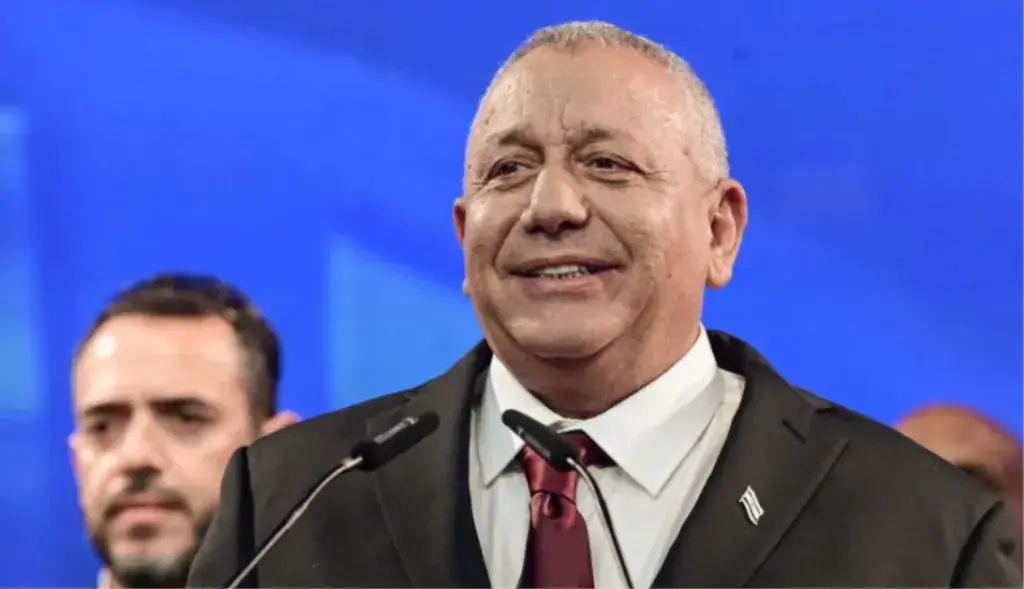
Israeli opposition leader Gadi Eisenkot and Avigdor Liberman, leader of the ultranationalist party Israel Beitenu, have agreed to sign a coalition pact. This pact is a step towards forming a government that would replace Benjamin Netanyahu. The two leaders met on Tuesday and agreed to sign the pact, according to a brief statement from Eisenkot's party, Yashar!. The statement did not provide details on the pact's content or the distribution of government positions.
The Israel Beitenu party is one of four Zionist parties in the bloc led by Eisenkot, which holds 48 seats in the Knesset, Israel's parliament. Liberman currently chairs the Knesset's Foreign Affairs and Defense Committee. He has rejected forming a minority government that would rely on external support from Arab parties, but has shown willingness to work with ultra-Orthodox parties in a future coalition.
Eisenkot has stated that he will not compromise on key issues, including the establishment of a state commission to investigate events on October 7. He also wants to extend military service to religious students and alter security policies. However, incorporating ultra-Orthodox parties, which oppose recruiting students from yeshivas, would conflict with Eisenkot's demands.
The opposition bloc recently gained control of the Knesset's agenda after electing Matan Kahana, a Yashar! member, as Knesset president with 66 votes against 52. This was made possible with the support of Arab parties. The opposition has since begun revoking key laws from the judicial reform promoted by Netanyahu's outgoing government.
Netanyahu, who has been serving as prime minister since the October 27 elections, continues to call for a "unity" government supported by ultra-Orthodox parties and without Arab party participation. Eisenkot's bloc currently holds 48 seats, and negotiations are ongoing to form a new government.
The coalition pact between Eisenkot and Liberman is seen as a significant step towards forming a government that would replace Netanyahu. However, the path forward remains uncertain, with ongoing negotiations and potential conflicts with ultra-Orthodox parties.
The developments in Israel's politics have been closely watched, with international attention on the country's governance and relationships with neighboring countries. The outcome of these negotiations will likely have significant implications for Israel's future.
Key points
- Israeli opposition leaders Gadi Eisenkot and Avigdor Liberman agree to sign coalition pact
- The pact is a step towards forming a government that would replace Benjamin Netanyahu
- The opposition bloc currently holds 48 seats in the Knesset, Israel's parliament
Reporting sources
- Oposição israelita avança com pacto de coligação para substituir Netanyahu · Expresso das Ilhas