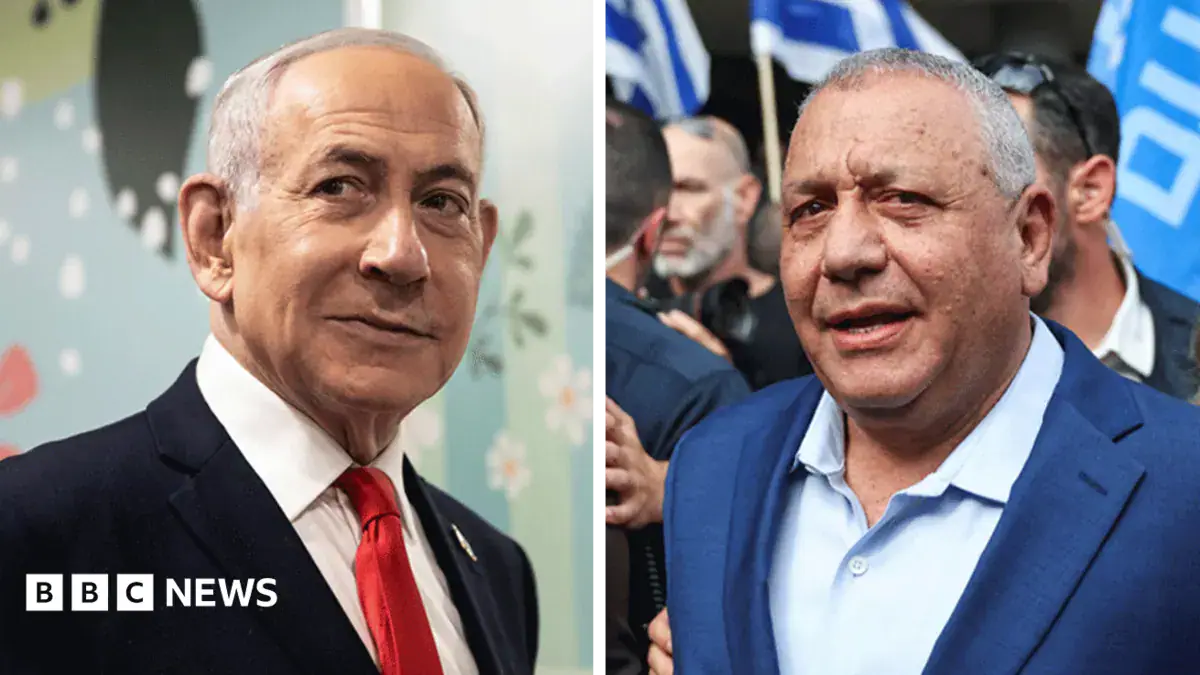
Israeli caretaker Prime Minister Benjamin Netanyahu and opposition leader Gadi Eisenkot met on Sunday to discuss the possibility of a national unity government. The talks, described as "businesslike" by both parties, aimed to address significant divides following last month's election. However, Hebrew media reports indicate that considerable differences remain, leading to the decision to halt future meetings between their negotiating teams.
Netanyahu's Likud party secured 53 seats in the October election, while Eisenkot's alliance of four parties garnered 48, falling short of the 120-seat majority in the Knesset. Despite this, Eisenkot has opted to continue discussions with parties within his coalition, leaving open the possibility for Likud to join later. This development comes as Eisenkot faces a deadline of 6 December to form a government.
The Sunday talks followed Netanyahu's proposition for a coalition including a rotating premiership, excluding Arab-led parties. He offered to allow Eisenkot to serve first as prime minister, though it was unclear how long this arrangement would last. This proposal was met with a response from Eisenkot, who invited Netanyahu to engage in "genuine and accelerated negotiations" on Saturday.
Tensions between the two leaders have been evident in recent days. On Friday, Eisenkot accused Likud of delaying coalition talks to push for another election. Netanyahu, however, stated that his leadership responsibilities required him to prioritise the discussions. The two leaders have been at odds over the formation of a government, with Eisenkot seeking to secure coalition agreements with various parties.
Eisenkot has made some progress in forming a government, securing coalition agreements with two parties. However, he faces resistance in partnering with Arab parties and challenges reaching agreements with ultra-Orthodox factions. Following the election on 27 October, President Isaac Herzog consulted all parties before tasking Eisenkot with forming a government within 28 days.
The stalled talks between Netanyahu and Eisenkot have significant implications for the formation of a new government in Israel. With Eisenkot's deadline looming, it remains to be seen whether he will be able to secure the necessary coalition agreements to form a government. The failure to reach an agreement could lead to further instability in the region.
The situation remains fluid, with all parties involved working to secure a coalition that will allow them to form a government. As the deadline for Eisenkot to form a government approaches, the pressure is mounting on all parties to reach a compromise. The outcome of these efforts will have far-reaching consequences for Israel and the region.
Key points
- Eisenkot faces a deadline of 6 December to form a government.
Reporting sources
- Israeli Leadership Rivals Address Differences, No Further Talks Scheduled, Reports Indicate · sierraleonetoday.co.com