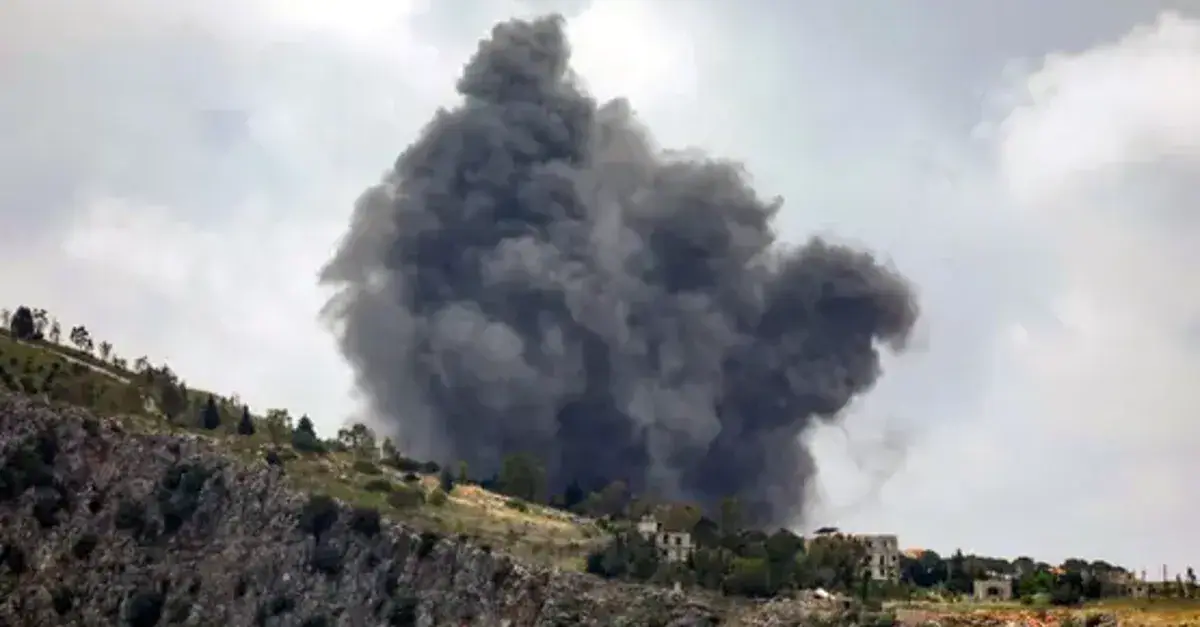
In southern Lebanon, late on Monday evening, multiple areas came under intense artillery fire from Israeli forces. This escalation occurred alongside the presence of Israeli warplanes patrolling the skies above the region. According to reports from the Lebanese National News Agency, Israeli forces targeted Wadi Zabqin with artillery fire. The agency also noted that Israeli warplanes were conducting flights over the southern region.
The Lebanese National News Agency provided further details, stating that Israeli forces were also targeting Wadi Al-Hajour with artillery fire and conducting a sweep of the town of Al-Khiyam. These actions by Israeli forces are part of ongoing aggressions. This continues despite the agreement on the "Framework Formula," signed between Beirut and Tel Aviv on June 26, 2026, facilitated by the United States.
The Framework Formula agreement outlines a gradual Israeli withdrawal from occupied territories. In return, the Lebanese army is to deploy in these areas and assume security responsibilities. Israel has been occupying areas in southern Lebanon, with some since decades ago and others since its aggression against Lebanon between 2023 and 2024. During the aggression, Israeli forces advanced approximately 10 kilometers into Lebanese territory.
The Lebanese Ministry of Health reported an increase in the number of casualties resulting from Israeli aggression against Lebanon since March 2, 2026. The updated toll stands at 4,390 fatalities and 12,429 injuries. These confrontations highlight the persistent tensions and the humanitarian impact of the ongoing conflict between Lebanon and Israel.
The recent escalation in the form of concentrated artillery attacks on Wadi Zabqin and Wadi Al-Hajour underscores the volatile situation in southern Lebanon. The involvement of warplanes and the targeting of specific areas indicate a significant military engagement. The Lebanese population in these areas faces heightened risks due to the resurgence of hostilities.
The international community has been closely monitoring these developments, given the potential for wider conflict. The United States, in particular, has played a mediating role, as evidenced by its facilitation of the Framework Formula agreement. However, the persistence of Israeli aggression suggests challenges in achieving lasting peace and stability in the region.
The situation in southern Lebanon remains critical, with civilians bearing the brunt of the conflict. The Lebanese government's response and the international community's efforts will be crucial in determining the trajectory of events. For now, the people of Lebanon, especially those in the conflict zones, await a return to peace and stability.
Key points
- Israeli forces have launched concentrated artillery attacks on Wadi Zabqin and Wadi Al-Hajour in southern Lebanon.
- The attacks are part of ongoing Israeli aggressions despite the Framework Formula agreement signed on June 26, 2026.
- The Lebanese Ministry of Health reports 4,390 fatalities and 12,429 injuries since March 2, 2026.
Reporting sources
- لبنان.. قصف إسرائيلي مكثف على وادي زبقين والحجير جنوب البلاد · Al-Qahera News