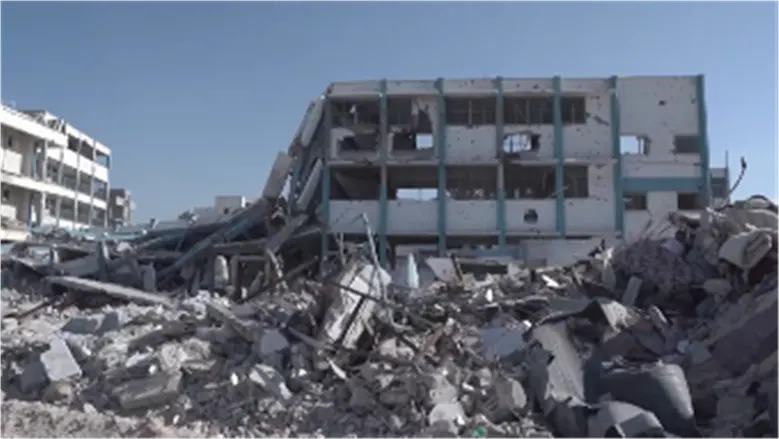
Cairo News Channel correspondent, Bashir Jabr, reporting live from the Gaza Strip, stated that Israeli forces have not only been bombing Gaza over the past three years but have effectively turned it into a massive pile of rubble. Thousands of homes have been destroyed, and entire residential areas and cities have been erased from the sector's geographical map. Jabr highlighted that the destruction has been widespread, affecting areas including northern Gaza, such as Beit Hanoun, Beit Lahia, and Jabalia, as well as the southern city of Rafah.
According to Jabr, the Israeli military has maintained a significant presence in around 70% of the Gaza Strip, particularly in the eastern regions. Meanwhile, the western areas, which account for approximately 30% of the sector, continue to experience Israeli airstrikes. A recent incident saw an Israeli drone strike a tent housing displaced Palestinians in the Al-Zawayda area of central Gaza, resulting in the death of one Palestinian and injuring others with varying degrees of severity.
The Gaza Strip has been under intense bombardment, with both the Israeli military's artillery and ground forces maintaining a heavy presence along the eastern border. These forces have been engaging in sustained gunfire towards adjacent areas, leading to further instability and casualties. The correspondent emphasized that the situation on the ground remains dire, with no respite for the local population.
In the southern Gaza city of Khan Yunis, several Palestinians were injured due to Israeli gunfire. The injured individuals were subsequently transported to Nasser Medical Complex for treatment. The medical facility has been overwhelmed with casualties in recent times, highlighting the severe impact of the ongoing conflict on Gaza's healthcare infrastructure.
The relentless Israeli bombardment has left a trail of destruction across Gaza, with residential areas, infrastructure, and essential services severely affected. The local population continues to face immense hardship, with many struggling to access basic necessities like food, water, and shelter. International concerns have been raised regarding the humanitarian situation in Gaza, with calls for an immediate ceasefire to prevent further loss of life.
The situation in Gaza has been exacerbated by the longstanding Israeli-Palestinian conflict, which has led to significant economic and social challenges for the local population. The Gaza Strip has been under blockade since 2007, severely restricting the movement of people and goods. The ongoing violence has further complicated efforts to address the humanitarian crisis.
The international community has been urged to take a more active role in resolving the Israeli-Palestinian conflict and addressing the humanitarian crisis in Gaza. Efforts to broker a ceasefire and facilitate negotiations between the parties involved have been ongoing, but a lasting resolution remains elusive. The situation in Gaza continues to deteriorate, with the local population bearing the brunt of the violence.
Key points
- Israeli forces have been responsible for widespread destruction in Gaza, turning large areas into rubble and targeting displaced persons.
- The Gaza Strip has been under intense bombardment, with both the Israeli military's artillery and ground forces maintaining a heavy presence along the eastern border.
- The situation in Gaza has been exacerbated by the longstanding Israeli-Palestinian conflict, which has led to significant economic and social challenges for the local population.