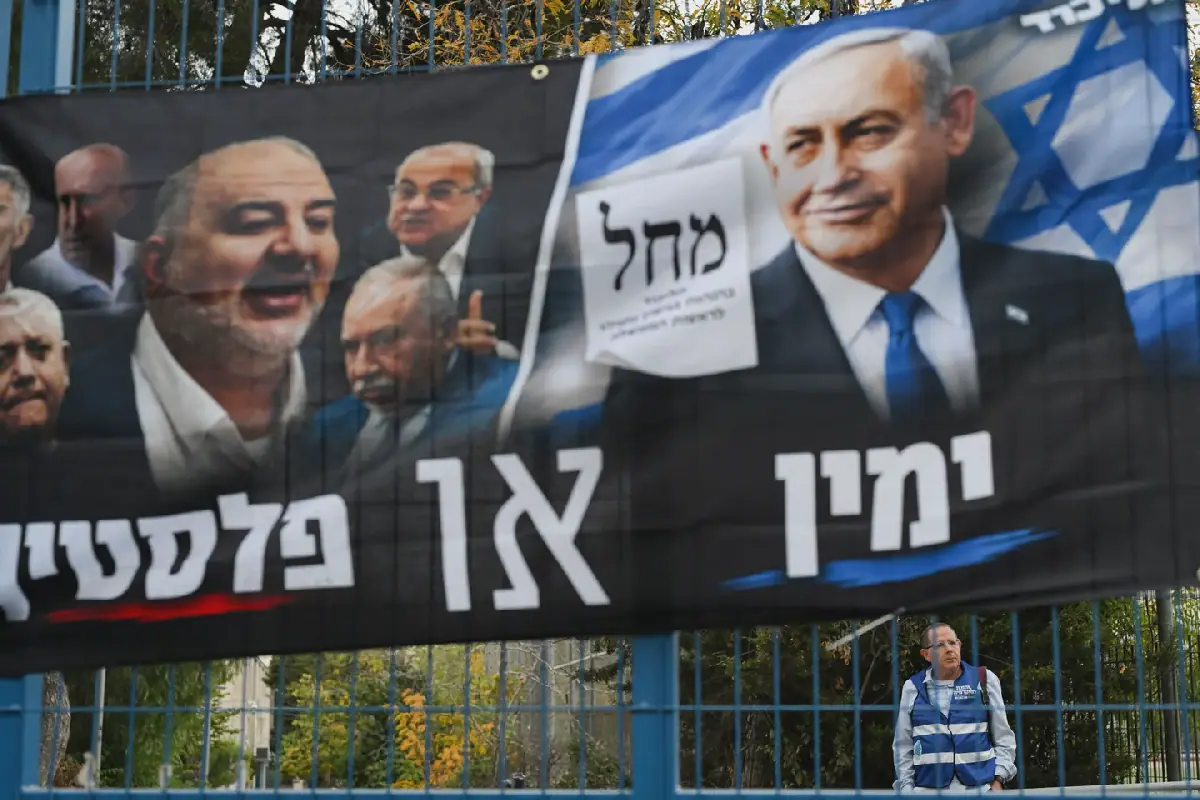
The partial results of Israel's legislative elections, held on October 27, have been released, showing no clear majority. With 66.3% of votes counted, Benjamin Netanyahu's coalition has secured 54 seats, while the opposition bloc led by Gadi Eisenkot has 48 seats. The Arab parties have obtained 18 seats in the 120-seat Knesset. The majority threshold is set at 61 seats. These results are preliminary and subject to change as the vote count continues.
The exit polls published on Tuesday evening had indicated a tight contest between the two blocs, with some suggesting a slight lead for the opposition. However, as the vote count progressed, the projections reversed, giving Netanyahu's coalition a narrow lead. The voter turnout for these elections is the highest in over 25 years, which may have contributed to the uncertainty surrounding the outcome.
The position of the Arab lists has become crucial in determining the next government. Theoretically, their support could enable the opposition to reach the 61-seat threshold. However, Gadi Eisenkot and some of his allies have expressed concerns about forming an alliance with the Arab parties, fearing it might alienate some of their supporters. Only Yaïr Golan has publicly advocated for considering a partnership with Israel's Arab citizens, who make up nearly 20% of the population.
Both Netanyahu and Eisenkot have maintained their stances on forming a government. The incumbent Prime Minister has called for a strong right-wing government, emphasizing the need for unity among the Jewish and Zionist majority. In contrast, Eisenkot has asserted that the people have chosen change and has vowed to work towards forming a government.
External factors have also weighed on the elections. The ongoing conflict in Gaza and violence in the West Bank have drawn international criticism. A UN investigative team concluded on Monday that crimes against humanity may have been committed in the occupied territory. Furthermore, Netanyahu mentioned the possibility of another military campaign against Iran during the election campaign.
The US President has expressed the view that his support for Netanyahu in the final days of the campaign was beneficial to the Prime Minister. The definitive election results are expected to be released on Thursday evening or Friday morning. Following this, President Isaac Herzog will consult with party leaders before appointing a candidate to attempt to form a coalition.
The next steps in forming a government will be critical. The designated candidate will have to navigate complex negotiations to secure the necessary support. The outcome will likely have significant implications for Israel's domestic and foreign policies, particularly with regard to the Israeli-Palestinian conflict and Iran.
Key points
- The elections have shown a record-high voter turnout and a deeply divided electorate.
- The role of Arab parties has become pivotal in determining the next government.
- The international community is closely watching the developments, given the ongoing conflicts in the region.