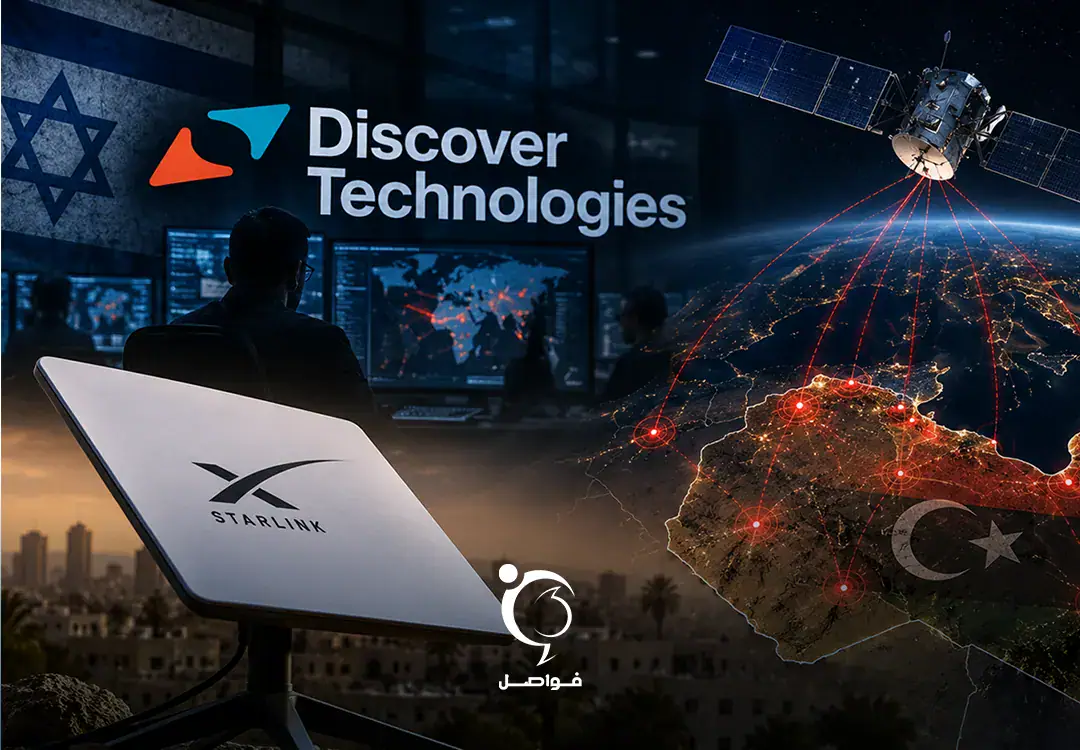
A recent investigation by the Bulgarian website "Fakti" has revealed that an Israeli advertising company, Discover-Tech, may be involved in tracking Starlink users in Libya, Syria, Yemen, and South Sudan. The investigation found that Discover-Tech was behind a campaign called "Shadow Earth 79," which purchased targeted ads for Starlink users in these countries. The ads were allegedly used to gather data on users' locations and online activities.
According to the investigation, Discover-Tech's activities raised concerns about the potential exploitation of user data, particularly in conflict zones. The company's actions were reportedly halted by Google and other platforms after the investigation was published. However, Discover-Tech has not commented on the allegations. The use of Starlink in Libya is currently unofficial, as the service has not been officially launched in the country.
Starlink, a satellite internet service provided by SpaceX, has not been officially launched in Libya due to regulatory issues. However, some users in the country have managed to access the service through unofficial means or by activating it internationally through roaming. The investigation by Fakti has raised concerns about the potential risks of using Starlink in conflict zones, particularly in Libya, where the service is not officially available.
The investigation also highlighted the potential risks of using targeted advertising in conflict zones. Discover-Tech's activities may have compromised the security of Starlink users in Libya and other countries. The company's alleged actions have sparked concerns about the need for greater transparency and regulation in the use of targeted advertising, particularly in sensitive regions.
Libya has been a challenging market for tech companies, with many services facing regulatory hurdles. The country's unstable security situation has also made it difficult for companies to operate effectively. In this context, the allegations against Discover-Tech have raised concerns about the need for greater oversight and regulation of tech companies operating in Libya and other conflict zones.
The Fakti investigation has sparked a wider debate about the ethics of targeted advertising in conflict zones. The use of targeted ads has become increasingly common in recent years, but the investigation has highlighted the potential risks of this practice, particularly in sensitive regions. As the use of targeted advertising continues to grow, there is a need for greater transparency and regulation to ensure that companies are not exploiting user data.
The allegations against Discover-Tech have also raised concerns about the potential for other companies to engage in similar activities. As the investigation continues, it is likely that more information will come to light about the company's activities and the potential risks of targeted advertising in conflict zones. In the meantime, users in Libya and other countries must be aware of the potential risks of using certain services and take steps to protect their online security.
Key points
- Discover-Tech's alleged activities have raised concerns about the potential exploitation of user data in conflict zones.
- The investigation has highlighted the need for greater transparency and regulation in the use of targeted advertising.
- The use of Starlink in Libya is currently unofficial due to regulatory issues.