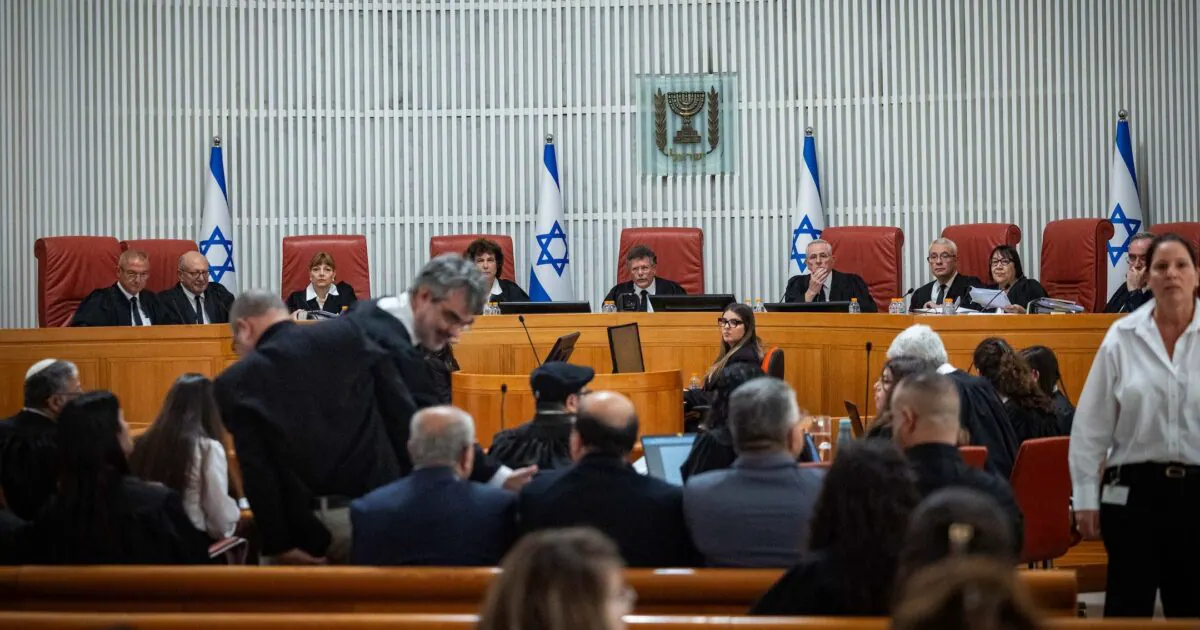
Israel's Supreme Court has ruled that Arab-led parties, the Joint Arab List and Ra'am, can participate in the 27 October election. The unanimous decision overturns a ruling by the Central Elections Committee, which had voted to bar the lists from running. The committee is a largely political body in which parties in Prime Minister Benjamin Netanyahu's right-wing coalition hold a majority of seats.
The Supreme Court's decision allows parties that traditionally represent Israel's over two million Arab citizens to run, potentially boosting the opposition bloc. Most polls indicate that the opposition would need the parliamentary seats held by the Ra'am party, led by Knesset member Mansour Abbas, to gain a lead over Netanyahu's coalition. The Joint Arab List has never sat in an Israeli coalition and is not expected to join Zionist Jewish-led parties.
The court also overturned the committee's decision to disqualify Ofer Cassif, a Jewish lawmaker running as part of the Joint List. While the justices condemned Cassif's "outrageous statements and actions," they ruled that they did not meet the stringent tests for disqualifying a candidate. Cassif had legitimized Palestinian violence during a war and referred to those seeking to attack Israeli soldiers as "freedom fighters."
However, the court's decision did not apply to Sami Abu Shehadeh, the leader of Balad, one of the parties in the Joint List. Before a hearing, the court indicated that a majority of justices were inclined to disqualify him and recommended that he withdraw his candidacy. Following internal consultations, Balad announced that Abu Shehadeh would withdraw, rendering the court's expected ruling moot.
The case against Abu Shehadeh centered on an article he published on 8 October 2023, describing a Hamas attack as an "important historic event" and suggesting that Israel could learn from it. The article was cited as evidence that he supports armed struggle against Israel, a ground for disqualification under Israeli law. The court described his comments as "painful, outrageous, and revolting."
The Joint List criticized the court's handling of the case, accusing it of acting "following a campaign of incitement and political persecution" and infringing on their public's right to choose representatives. Right-wing politicians, including National Security Minister Itamar Ben-Gvir, also criticized the court for not formally disqualifying Abu Shehadeh, calling the proposal "too merciful" and saying it "harms the democracy of the State of Israel."
Despite the controversy, the Supreme Court's decision is seen as significant, as it allows a wide constituency that rejects working with Netanyahu to participate in the election. The court's ruling could make it more difficult for Netanyahu to form a new coalition after the election. The opposition bloc may now have a reason to head to the polls rather than stay home, potentially altering the election's outcome.
Key points
- The Supreme Court's decision allows Arab-led parties to run in the 27 October election.
- The court's ruling overturns a decision by the Central Elections Committee.
- The decision may make it more difficult for Prime Minister Benjamin Netanyahu to form a new coalition.