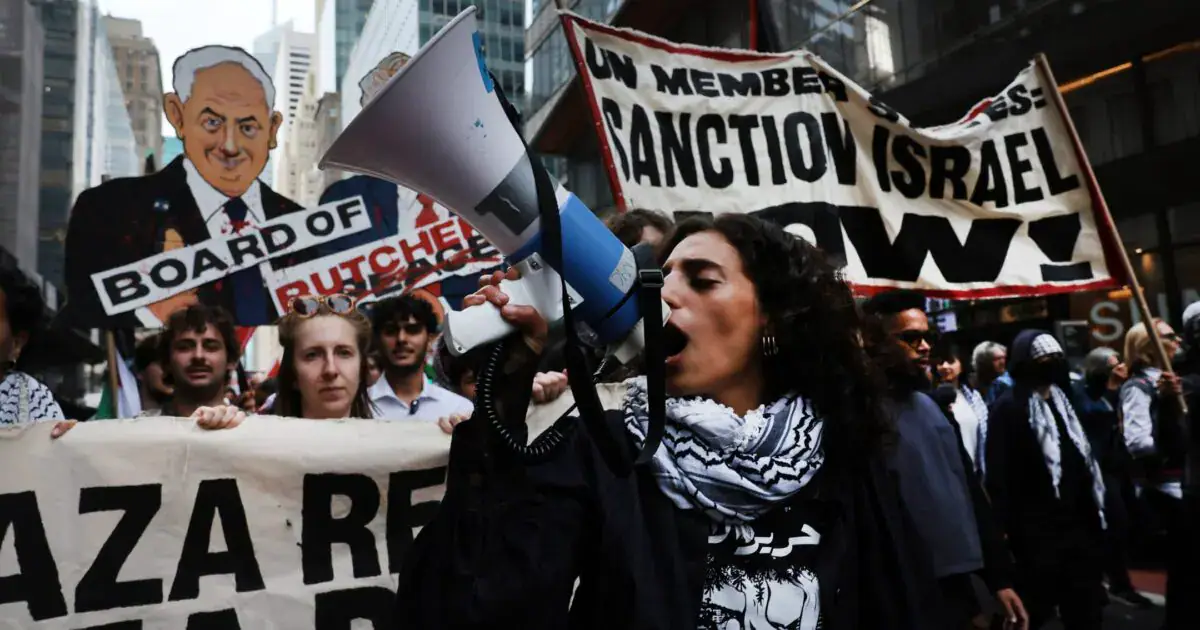
Israel's global image has fallen to historic lows, with a recent Pew poll finding that 67% of adults in 36 countries hold an unfavorable view of the country. Reports of Israeli tourists being harassed or physically attacked in Europe, Asia, and the Americas have been on the rise. In July, a group of Israeli tourists in Montenegro were confronted by locals who asked if they were taking a break from genocide. Similar incidents have been reported in Greece, Thailand, and the US.
Despite the growing hostility towards Israel, the issue is not a major factor in the current election. Yaakov Katz, a senior fellow at the Jewish People Policy Institute, attributes this to the widespread perception among Israelis that the world's opinion of Israel is beyond their control. Many Israelis believe that no matter what they do, the world will still be against them, and that antisemitism is a major factor in this.
Katz notes that Israelis tend to take comfort in reassurances from supporters like US President Donald Trump, who has endorsed Prime Minister Benjamin Netanyahu. However, Ofir Dayan, a senior fellow at the Institute for National Security Studies, suggests that Israelis are indeed aware of the deteriorating global image and are concerned about it. Nevertheless, security remains the top priority for most voters.
The issue of Israel's international standing is secondary to other concerns, such as security and the questions surrounding the 7 October Hamas-led terror attack. Peter Lerner, a former IDF spokesperson, notes that voters are primarily focused on the question of Netanyahu or not Netanyahu, and the left versus the right. As a result, the issue of Israel's global image is not a major factor in the election.
Only a few parties have referred to Israel's negative global image or suggested ways to improve public diplomacy. The B'Yachad party, led by former prime ministers Naftali Bennett and Yair Lapid, has proposed a plan to repair ties between Israel and world Jewry. This plan includes elevating the importance of diaspora Jewry and allowing a non-voting observer in the Knesset to focus on such issues.
Some parties, such as Amcha Yisrael, have prominent public diplomacy activists on their lists. Yoseph Haddad has expressed interest in becoming Israel's next minister for public diplomacy. Journalist Eylon Levy notes that public diplomacy is not a goal in itself for most candidates, but rather a means to achieve national interests.
Levy suggests that there is a range of opinions on public diplomacy, from the far right's approach of making Israel look tough to the left's approach of behaving like a normal country. While Levy does not believe that a new government would lead to a massive change in perceptions, he does think it would be given a grace period by Israel's allies.
Key points
- Israel's global image has fallen to historic lows, with 67% of adults in 36 countries holding an unfavorable view.
- The issue of Israel's international standing is not a major factor in the current election, with security and the questions surrounding the 7 October Hamas-led terror attack taking priority.
- Only a few parties have referred to Israel's negative global image or suggested ways to improve public diplomacy.