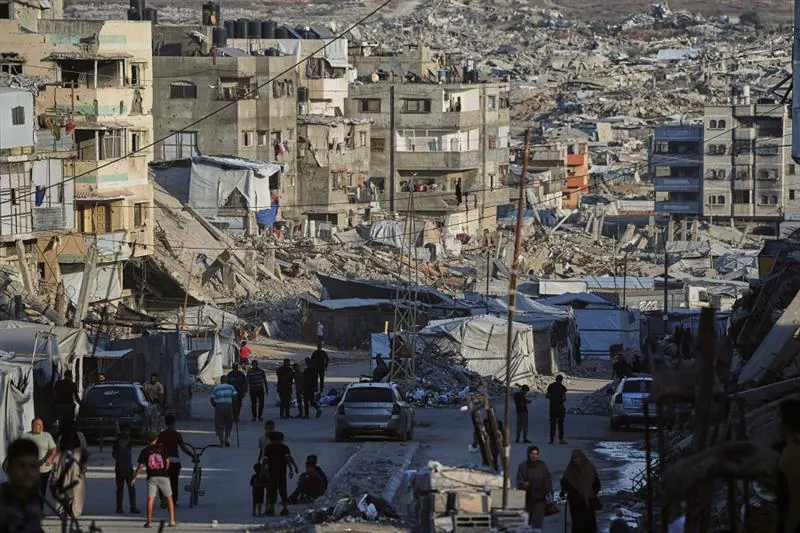
Israel's military has systematically razed the southern city of Rafah and other towns and districts in Gaza to the ground, using bulldozers and explosives, according to satellite imagery. The demolition has continued unabated since the Israel-Hamas ceasefire deal reached a year ago, as the military solidifies its hold over around 60% of the territory it still controls. This has left Gaza's 2 million Palestinians with significant wounds, including over one in ten people killed or wounded by Israeli fire.
The Gaza Strip, once home to a quarter million people in Rafah, has been effectively erased. Palestinians have had to move multiple times to escape fighting and Israeli evacuation orders, with nearly every family mourning dead or caring for wounded. The coastal territory is now one of the world's most populated tent cities, with ramshackle canvas and nylon shelters blanketing beaches and former agricultural lands. Little is likely to change for the foreseeable future, as Israel hits tents, cars, and buildings almost daily in strikes that it claims target Hamas members.
The ceasefire agreement's plan for large-scale reconstruction of Gaza has never gotten off the ground, as Israel rejected the new US-led Board of Peace roadmap to disarm Hamas in Gaza. Israel bars most construction material from entering Gaza, making it difficult for Palestinians to rebuild homes. People like Najwa Abu Eita, who lost her 7-year-old daughter and was injured in an Israeli strike, now live in tents by the ruins of their homes. Abu Eita, a hairdresser before the war, has no work and struggles with her damaged face and breathing.
On the Israeli-occupied side, destruction continues, with Gaza's population squeezed into about 40% of the tiny territory. Israel's military controls the rest, with satellite imagery showing that the vast majority of buildings in the Israel-held part have been bulldozed or exploded down to piles of rubble. A U.N.-appointed expert reported that the scale of destruction of civilian housing and infrastructure in Gaza "is unprecedented even by the terrible standards of modern warfare since the 20th century."
The destruction has extended to the Israeli-held part of Gaza, with at least 50 Israeli military outposts built throughout the area, and at least 18 of them constructed since the ceasefire began. Many have been put on top of former neighborhoods where the rubble of demolished buildings nearby has been cleared away. Most of Rafah was razed before the ceasefire, but images show that troops continue to demolish the few remaining buildings.
The economy in Gaza has been wrecked, with an increased flow of aid and commercial products bringing Gaza back from famine that arose in some areas last year. However, most of the population remains dependent on international relief, and jobs are few, mostly connected to selling in the market. Shadi Barawi, who lost his father and leg in the war, now works as a barber in a tent, struggling to support his family.
Thousands of bodies remain buried under buildings smashed by Israeli strikes, and Gaza authorities have been searching for them since the ceasefire. The search for bodies and rebuilding of homes will likely be a long and difficult process for the people of Gaza.
Key points
- Israel's demolition of Gaza buildings continues despite a ceasefire agreement.
- Thousands of Palestinians remain without homes or livelihoods.
- The Gaza Strip's economy has been severely impacted by the conflict.