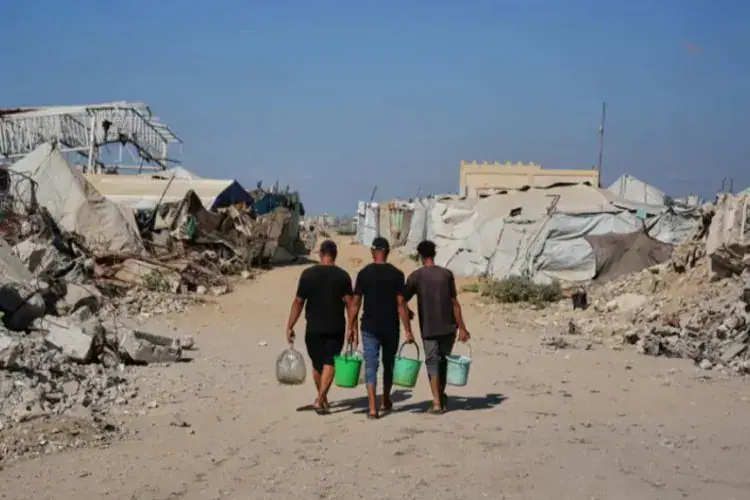
A recent report by Oxfam has found that Israel's military actions have had a devastating impact on the environment in Gaza, with 99% of the territory's land contaminated. The report, released on November 22, was produced in collaboration with the Center for Observing and Monitoring the Effects of Wars on the Environment (CEOBS). It used satellite imagery, remote sensing technology, and field analysis to assess the damage. The report found that Israel's military actions have resulted in over 61 million tons of rubble, including hazardous materials such as asbestos and heavy metals.
The contaminated rubble and debris pose a significant threat to the health and well-being of Gaza's residents. Louis-Nicolas Jandeaux, an advocacy officer at Oxfam France, stated that the dust from destroyed buildings and burning waste pollutes the air, causing serious respiratory problems and lung damage. Furthermore, the report found that 40,000 cubic meters of sewage are released into the sea every day due to damaged infrastructure. This has resulted in 20% of Gaza's water sources being contaminated with sewage.
The use of contaminated water for drinking or hygiene purposes can lead to illness and death. Jandeaux warned that resuming agricultural activities in contaminated soil and water could further exacerbate the health risks faced by Gaza's residents. The report emphasizes that environmental rehabilitation must be a priority in any efforts to rebuild Gaza. However, this effort is hindered by Israel's refusal to allow independent experts to enter Gaza to conduct their own assessments.
The Oxfam report highlights the long-term consequences of Israel's military actions on the environment and public health in Gaza. The contamination of soil, water, and air has created a hazardous environment that poses significant risks to the health and well-being of Gaza's residents. The report's findings underscore the need for urgent action to address the environmental damage and ensure that Gaza's residents have access to safe and healthy living conditions.
The environmental impact of Israel's actions in Gaza has been severe and far-reaching. The report notes that the destruction of infrastructure and the contamination of soil and water have had a devastating impact on Gaza's ecosystem. The use of heavy machinery and explosives has resulted in the destruction of buildings, roads, and other infrastructure, leading to a massive amount of rubble and debris.
The report also highlights the challenges faced by Gaza's residents in accessing basic necessities such as clean water and sanitation. The contamination of water sources has made it difficult for residents to access safe drinking water, and the lack of proper sanitation facilities has led to the spread of diseases. The report emphasizes that addressing these challenges will require a concerted effort from the international community to provide humanitarian assistance and support.
The Oxfam report concludes that the environmental damage caused by Israel's actions in Gaza must be addressed as a matter of urgency. The report calls for the international community to take action to support the rehabilitation of Gaza's environment and to ensure that the territory's residents have access to safe and healthy living conditions. The report also emphasizes the need for accountability and for those responsible for the environmental damage to be held accountable.
Key points
- Israel's military actions have contaminated 99% of Gaza's environment, posing significant risks to the health and well-being of Gaza's residents.
Reporting sources
- Intambara ya Israel yahumanyije 99 % by'ibidukikije muri Gaza · Isango star Radio