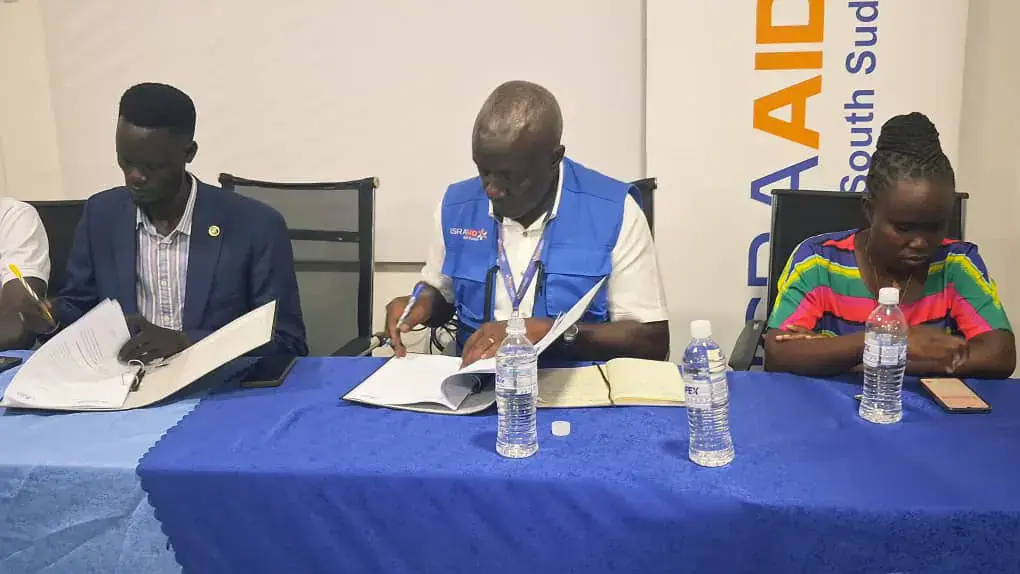
IsraAID South Sudan has signed a memorandum of understanding with Community Aid and Relief Initiative (CARI) to transfer management of its humanitarian projects in internally displaced persons (IDP) camps in Juba to local leadership. The agreement, signed on Friday in Juba, aims to strengthen local capacity and ensure sustainability of humanitarian programmes. CARI will take over project implementation and management.
IsraAID had been operating in South Sudan since 2013, implementing programmes in protection, water, sanitation and hygiene, health, nutrition and education. The organization had recruited and trained people from within the displaced communities, some of whom had worked with IsraAID for four to five years. Thomas Okollah, IsraAID South Sudan country director, said the decision to hand over management followed several years of humanitarian work in the camps.
Okollah stated that IsraAID's work in the IDP camps mainly focused on protection, ensuring dignified living for women, children and girls, and protecting them from exploitation and gender-based violence. He said IsraAID had worked with former staff members to establish CARI after struggling to identify an existing national organization with the capacity and presence needed to continue the programmes.
The handover does not amount to a complete withdrawal by IsraAID, which will continue to provide technical advice, oversight and capacity-building support when required. Okollah emphasized that IsraAID wants CARI to assume full responsibility for running the interventions in the camps, with the international organization available for consultation when needed.
Johnson Nguanyiet, CARI's executive director, said the organization was established by experienced humanitarian workers seeking to address the lack of continuity in projects implemented in Juba's displacement camps. He stated that several aid organizations had operated in the camps over the years, but their programmes often ended when they withdrew.
Nguanyiet said CARI's primary mission is to provide community-led health and protection services in the camps, while expanding assistance to other crisis-affected communities across South Sudan. The organization currently has 22 experienced staff members, most of whom had previously worked with IsraAID, and is prepared to continue supporting displaced communities.
The agreement comes amid growing calls in the humanitarian sector for international aid organizations to strengthen local leadership and ensure national organizations have the capacity and resources to respond to humanitarian needs. IsraAID said CARI would gradually strengthen its organizational systems, personnel and ability to mobilize independent funding, with the possibility of expanding its operations to other states as resources become available.
Key points
- IsraAID transfers management of Juba IDP camp projects to local NGO CARI to strengthen local capacity and ensure sustainability of humanitarian programmes.
- CARI aims to provide community-led health and protection services in the camps and expand assistance to other crisis-affected communities across South Sudan.
- The handover is an important step towards building sustainable national humanitarian institutions, with IsraAID providing technical advice and support when required.