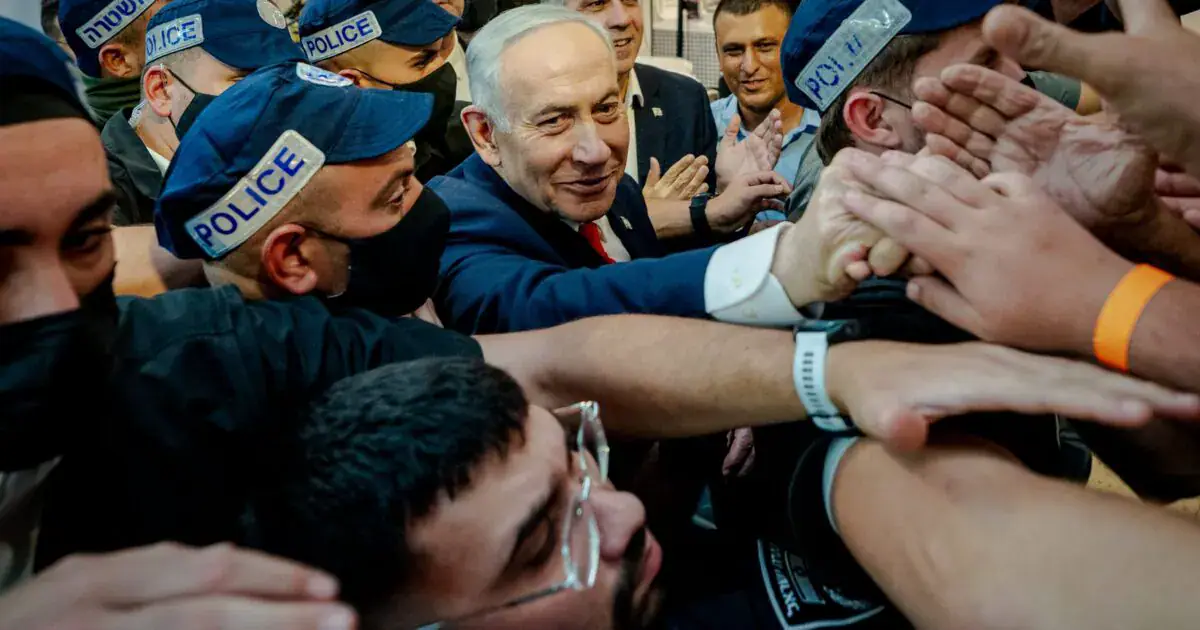
Israeli Prime Minister Benjamin Netanyahu's more than 19-year tenure may be nearing its end, with the October 27 vote seen as a referendum on his time in office and the country's future character. Recent opinion polls indicate a significant decline in support for Netanyahu since the last election in 2022, and he may struggle to form a government. Despite this, political analysts believe Netanyahu still has a chance to hold onto power due to his strong support base.
Netanyahu's support base consists of three main groups: the ultra-Orthodox, who have been exempt from military service; the far-right, who have seen their ideological goals advanced under Netanyahu; and his personal supporters, who have been convinced of his indispensability to Israel. According to Gideon Rahat, a senior fellow at the Israel Democracy Institute, Netanyahu has established a personal cult, with many supporters believing he is the only person capable of ruling Israel.
Political analysts attribute Netanyahu's staying power to his skill as a politician, with Professor Jonathan Rynhold describing him as "ruthless" and able to outmaneuver his opponents. However, Rynhold also notes that Netanyahu's past four years in office, marked by policies seen as counterproductive to the war effort, have left many Israelis feeling disillusioned. The government's efforts to overhaul the judiciary, failure to enlist ultra-Orthodox into the military, and rise of far-right populist figures have contributed to this sentiment.
The stakes are high for Netanyahu, who faces criminal indictments and has been dogged by scandals throughout his career. Voters appear poised to punish him for his failures in recent wars, increasing threats of international sanctions, and domestic policies seen as favoring his coalition partners at the expense of the rest of society. However, it remains unclear whether this dissatisfaction is enough to remove him from power.
The opposition, led by former Israel Defense Forces chief Gadi Eisenkot, faces challenges in outmaneuvering Netanyahu, a master political player who has stated he has no intention of retiring from politics. A recent poll found that 64% of respondents believed US President Donald Trump's endorsement of Netanyahu would not influence their decision on who to vote for, and 17% said it made them less likely to back Netanyahu.
The same poll found that Eisenkot had widened his lead over Netanyahu as the preferred prime minister, with 45% versus 33%. It also projected that Netanyahu's ruling Likud party would only win 21 seats, down from the 32 it held in the outgoing parliament, while Eisenkot's Yashar party was on track to potentially win 24 seats. Udi Sommer, a professor of political science, noted that Netanyahu's loss or victory also depended on Eisenkot and the opposition parties.
Ultimately, the outcome of the vote will depend on various factors, including the performance of the opposition and the ability of Netanyahu's supporters to rally behind him. As the country waits for the results, it is clear that Netanyahu's tenure has been marked by significant controversy and challenges, and that the next government will face difficult decisions about the country's future.
Key points
- Netanyahu's support base consists of ultra-Orthodox, far-right, and personal supporters.
- Recent polls indicate a decline in support for Netanyahu, with 64% of respondents saying Trump's endorsement would not influence their decision.
- The opposition, led by Gadi Eisenkot, faces challenges in outmaneuvering Netanyahu.