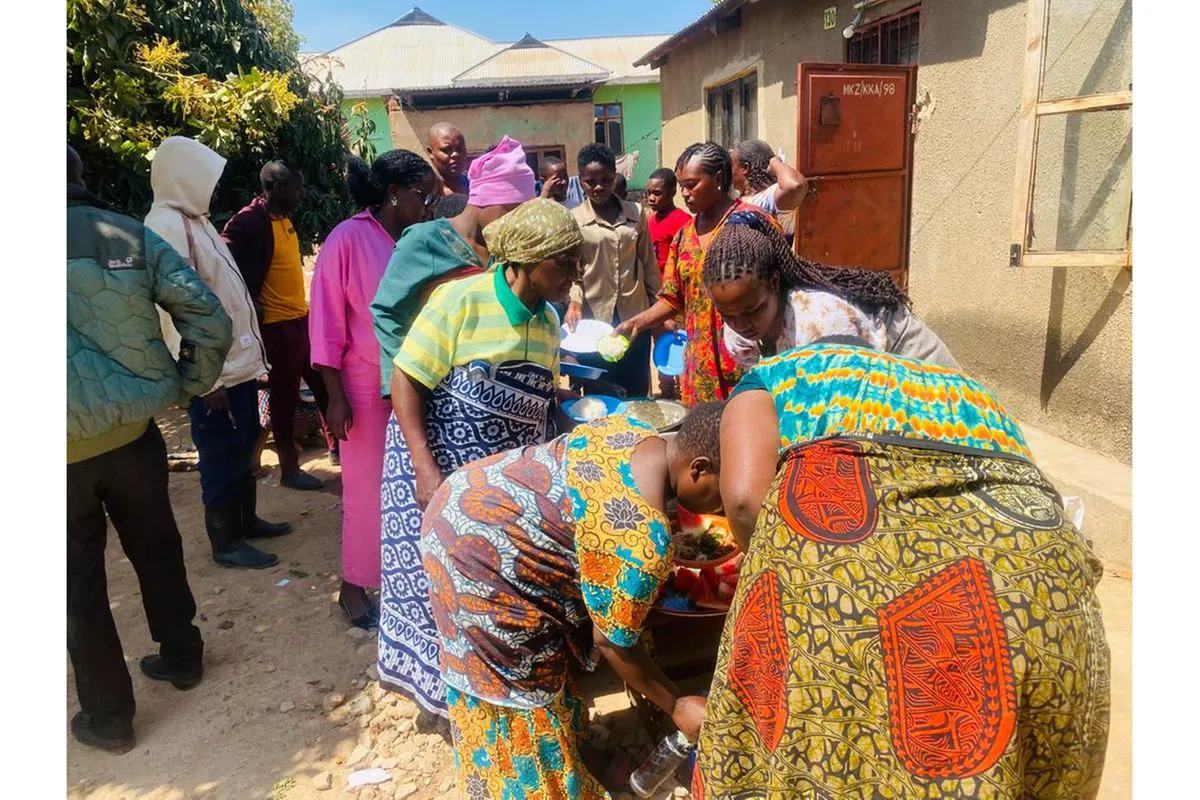
The Iringa Municipal Council in Tanzania has introduced community health and nutrition days to bring essential services closer to households. This initiative aims to address the region's high rates of childhood stunting, which stands at 56.9 percent among children under five, according to the 2022 Tanzania Demographic and Health Survey and Malaria Indicator Survey. The program was recently launched at Kihesa Kilolo A Street in Mkimbizi Ward, providing residents with access to various health services.
During the launch event, residents accessed nutrition screening, non-communicable disease screening, Vitamin A supplements, deworming medicine, malaria preventive tablets, and mosquito nets. The exercise also included practical cooking demonstrations and nutrition education from health and nutrition experts. This comprehensive approach reflects the council's efforts to provide families with the necessary tools and knowledge to improve their children's health and nutrition.
The initiative follows an investigation by The Citizen, which identified gaps in growth monitoring, practical nutrition guidance, and follow-up of children with malnutrition in Iringa. The investigation found that some mothers and caregivers struggled to attend nutrition sessions due to their economic activities, such as working in farms, markets, and other income-generating activities. The new community-based services aim to make nutrition services more accessible to these families.
Iringa Municipal Nutrition Officer Anzaeli Msigwa stated that the council has equipped streets across the municipality with basic equipment to enable communities to monitor children's growth and identify potential health concerns earlier. Each street has received equipment, including scales, blood pressure machines, blood sugar testing machines, and height boards for children. The equipment has been handed over to ward executive officers as part of efforts to strengthen community-level health and nutrition services.
The availability of equipment at the community level could help address one of the challenges identified in The Citizen's earlier investigation: delayed identification of growth problems and limited follow-up outside health facilities. In one documented case, a caregiver only learned that her child had moderate malnutrition after a health worker measured the child and explained the growth chart. The municipality's approach aims to bridge this gap by providing early detection and counselling at the household level.
Nutrition experts emphasize that effective interventions require more than just telling parents to improve their children's diet. Families need practical information on what to prepare, how frequently to feed children, and how to achieve dietary diversity using available and affordable foods. The new community-based services provide an opportunity to move from identifying stunting as a major problem to strengthening early detection, counselling, and follow-up at the household level.
The impact of the initiative will depend on the consistent use of equipment, follow-up of children identified with growth problems, and provision of practical support to caregivers after screening. UNICEF data show that only 16.1 percent of children aged 6–23 months in Iringa received a minimum acceptable diet in 2022. By bringing weighing, height measurement, and nutrition counselling closer to home, the initiative could provide an important link between detection and action, particularly for children whose growth problems might otherwise go unnoticed.
Key points
- Iringa Municipal Council launches community health and nutrition days to tackle high childhood stunting rates
- The initiative provides residents with access to nutrition screening, non-communicable disease screening, and practical nutrition education
- The program aims to address the region's high rates of childhood stunting, which stands at 56.9 percent among children under five