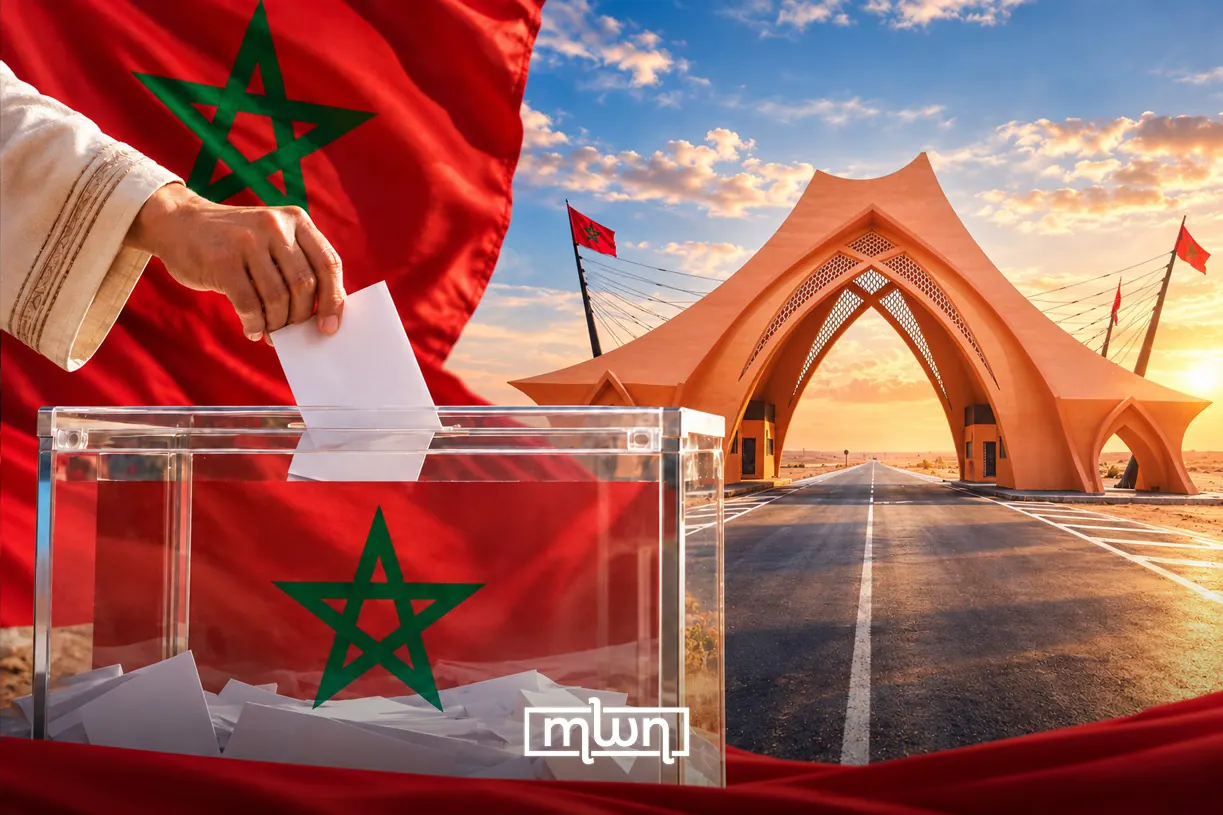
Morocco's legislative elections, which took place on September 23, 2026, saw a high voter turnout in the country's southern provinces, according to an assessment by the International Republican Institute (IRI). The IRI deployed a rapid response election assessment mission to observe the elections, citing voter turnout in southern provinces, with participation reaching 77% in Laayoune-Sakia El Hamra, 53.48% in Guelmim-Oued Noun, and 61% in Dakhla-Oued Eddahab.
The IRI assessment noted that strong participation is not unprecedented in the region, which also recorded comparatively high turnout in previous legislative elections. In 2021, Laâyoune-Sakia El Hamra recorded 68.7 percent turnout, while in 2016, it was 59.5 percent. Dakhla Oued Ed-Dahab recorded 59.5 percent turnout in 2021 and 53.8 percent in 2016. These numbers suggest that high voter turnout in the region is not a new phenomenon.
The IRI assessment also compared the 2026 elections to the voter turnout from 2021, noting that national turnout stood at 50.9% in 2021 and 42.3% in 2016, compared to 38% in the 2026 elections. According to data from Morocco's Ministry of Interior, around six million of the 15 million registered voters cast ballots in the 2026 legislative elections. This represents a decrease in voter turnout compared to previous elections.
The IRI mission observed that election day was generally peaceful, orderly, and transparent in the areas observed. Election authorities professionally administered a complex process with multiple integrity safeguards, including manual reconciliation procedures and redundant counting and results transmission systems. The assessment also noted that polling stations opened on time and election materials were present in centers observed.
The IRI mission reported that party representatives and national and international observers enjoyed broad access to voting, counting, and tabulation activities. Security forces behaved professionally and responded to incidents as needed. The assessment also recalled efforts and initiatives from the National Human Rights Council's (CNDH) mission and Morocco to ensure and enhance accessibility, transparency, and voter engagement.
The IRI mission identified several procedural and operational areas that could be improved, including the absence of voter instructions on how to correctly mark ballots in polling stations. The ballot design itself confused some voters and may have contributed to a notable percentage of invalid ballots. The report also cited areas for improvement related to accessibility, prevention of vote buying, and the protection of voter information.
Despite these shortcomings, the IRI assessment concluded that the election was "well administered in the areas observed, with polling and counting conducted in an orderly manner and elections officials carrying out their responsibilities professionally." The assessment also noted that the Interior Ministry reported 3,006 observers in the 2026 legislative elections, including 2,023 from civil society, 783 from the CNDH, and 200 foreign observers.
Key points
- High voter turnout in Morocco's southern provinces during legislative elections not unprecedented.
- IRI assessment finds election was well administered despite some shortcomings.
- Areas for improvement identified, including voter instructions and ballot design.