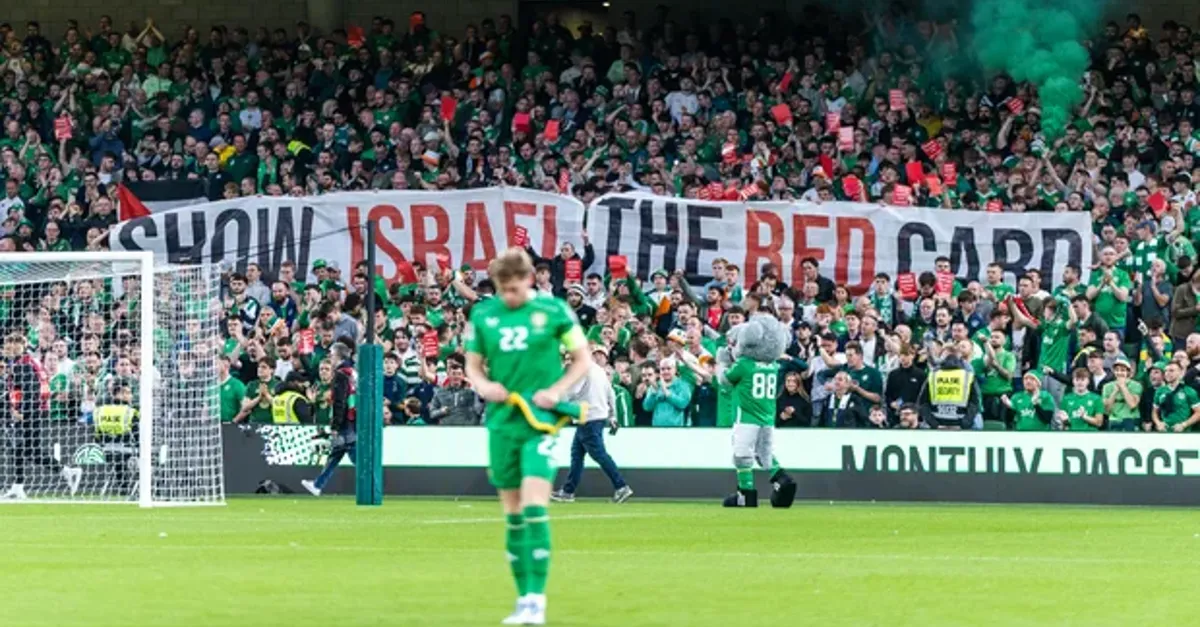
The Irish football community is in an uproar following the Irish Football Association's decision to field their team against Israel in the upcoming European League of Nations qualifiers. The move has sparked widespread protests due to Israel's actions in Gaza and the West Bank. Ireland has been a vocal critic of Israel's government, and tensions between the two nations have escalated in recent years.
Ireland recently joined a lawsuit at the International Court of Justice accusing Israel of committing genocide. The Irish Football Association had previously voted to urge the Union of European Football Associations (UEFA) to suspend Israel's participation in its tournaments. However, UEFA rejected the request, prompting the association to announce that the Irish men's team would fulfill its obligations to play against Israel.
The association argued that boycotting the matches could harm Ireland's chances of qualifying for the 2028 European Championship, which Ireland will co-host with Britain. Therefore, they decided to proceed with the matches against Israel to avoid what they described as "significant and lasting harm." The decision has been met with strong opposition from those who support the Palestinian cause.
The announcement sparked protests in Dublin, with demonstrators calling for a boycott of the matches against Israel. Over 160 Irish athletes have signed an open letter issued by the Irish group "Athletes for Palestine," urging the football association to reconsider its decision. The letter described the opportunity to do the right thing by refusing to play against Israel.
In response to the backlash, Irish coach Hémir Hallgrímsson stated that while he and the players do not feel comfortable playing in those matches, they will play as a team once the decision is made. Hallgrímsson emphasized that they are not condoning genocide but rather standing against it.
The conflict has resulted in significant human suffering, with over 73,821 Palestinians killed in Gaza, mostly women, children, and the elderly, according to the Gaza Health Ministry. The infrastructure in the sector has also been severely damaged. The upcoming matches between Ireland and Israel are scheduled to take place behind closed doors in neutral locations due to "operational challenges."
The Irish team is set to play Israel on September 27 in Debrecen, Hungary, and on October 4 in Serbia. Despite the controversy, the Irish Football Association remains committed to fulfilling its obligations. The situation highlights the intersection of sports and politics, with football becoming a platform for expressing opinions on international issues.
Key points
- The Irish football team will play Israel in the European League of Nations qualifiers, despite protests over Israel's actions in Gaza and the West Bank.
- The Irish Football Association argues that boycotting the matches could harm Ireland's chances of qualifying for the 2028 European Championship.
- The decision has sparked protests and opposition from those who support the Palestinian cause, with over 160 Irish athletes signing an open letter urging the association to reconsider.