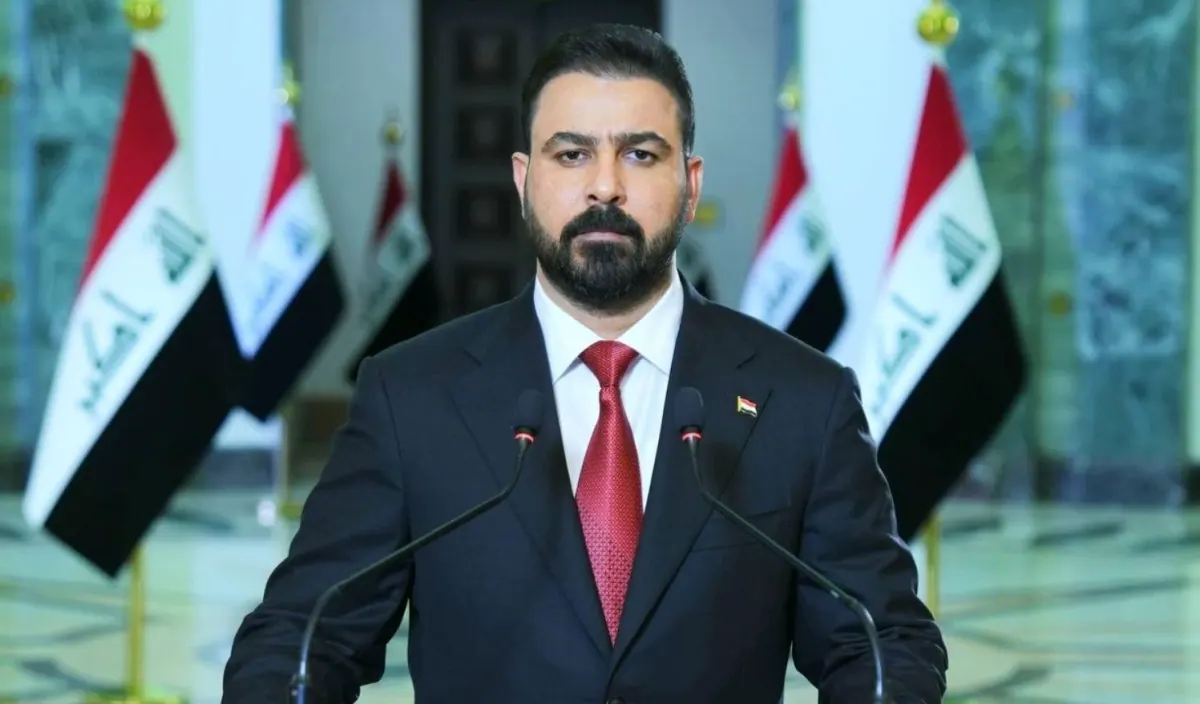
Iraqi Prime Minister Ali Falah Al-Zaydi, Commander-in-Chief of the Armed Forces, announced on Wednesday that the international coalition mission against ISIS has officially ended in Iraq. In a speech on the occasion of "Sovereignty Day," Al-Zaydi stated that the cooperation between friendly forces and peoples had led to a victory over one of the darkest chapters of extremism and brutality in history. The announcement marks a significant milestone in Iraq's fight against terrorism.
According to the Prime Minister's media office, Al-Zaydi emphasized that the end of the international coalition mission does not mean the end of the battle against terrorism, but rather a transition to a new phase where Iraq takes full responsibility for its security and stability. He highlighted that a new phase has begun, characterized by Iraq's sovereignty, strong institutions, and a unified decision-making process. The Prime Minister also stressed that security cooperation with international friends will continue, but on a more effective and focused level.
Al-Zaydi's announcement comes after a series of agreements and developments, including a joint statement by Iraq and the United States in September 2024, which outlined a plan to end the international coalition mission within 12 months. The plan included a transition to bilateral security relations between Iraq and the US, aimed at supporting Iraqi forces and maintaining pressure on ISIS. The US Department of Defense confirmed on Wednesday that the organized withdrawal of coalition forces and equipment from the Al-Asad airbase marks the end of the military mission.
The international coalition, led by the United States, has been fighting against ISIS in Iraq and Syria since 2014. The coalition's mission in Iraq was set to conclude by the end of September 2025, with a continued presence in the city of Erbil, capital of the Kurdistan Region, until September 2026. The Iraqi government has been working to strengthen its security forces and institutions, with the aim of assuming full responsibility for the country's security.
On September 21, Al-Zaydi announced a plan to begin a 90-day calm period, during which Iraqi factions would refrain from launching attacks, in exchange for guarantees that they would not be targeted by US airstrikes. The plan aims to create an environment conducive to the disarmament of militias and the transition to a more stable security situation. The Prime Minister emphasized that there will be no weapons outside the control of the state and no forces outside the institutions of the state.
The US Department of Defense confirmed that the withdrawal of coalition forces from the Erbil airbase marks the end of the military mission, but emphasized that the US will continue to support Iraq's security forces through bilateral cooperation. The Pentagon stated that the transition to a new phase in the relationship between Iraq and the US will be focused on supporting Iraqi forces and maintaining stability in the region.
The announcement of the end of the international coalition mission marks a significant step towards Iraq's increased sovereignty and self-reliance in security matters. The country still faces challenges in its fight against terrorism, but the new phase is expected to be characterized by greater Iraqi control and cooperation with international partners. The developments are seen as a positive step towards long-term stability and security in Iraq.
Key points
- Iraq's Prime Minister Ali Falah Al-Zaydi announces end of international coalition mission against ISIS.
- The end of the mission marks a transition to a new phase in Iraq's fight against terrorism.
- Iraq and the US will transition to bilateral security relations, aimed at supporting Iraqi forces.