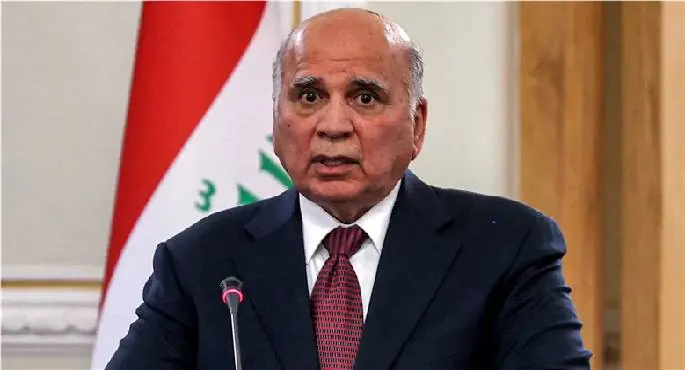
Iraqi Foreign Minister Fuad Hussein announced that his government will present a new plan to control weapons by the end of the month, coinciding with the withdrawal of US forces. The plan aims to restrict weapons to state institutions, a move seen as crucial for stabilizing the country. Hussein emphasized that the issue of weapon control is an internal Iraqi matter. He made these statements as Iraq navigates its relations with the US and other international partners.
The announcement comes as Iraq is set to discuss with the US the issue of sanctions on Iranian airlines. The US has imposed strict sanctions on Iran's aviation sector, which has led to the cancellation of flights from Tehran to Baghdad and Muscat. The Iraqi government is working to find alternative solutions for these flights. Iranian airlines will no longer be able to receive services at airports worldwide without exposing providers to US sanctions.
The US sanctions have had significant implications for Iraq's aviation sector. Several Iraqi airports have suspended flights to Iran, and the Iraqi government is negotiating with Washington to exempt some of its airports from these restrictions. The sanctions are part of broader US efforts to pressure Iran. Iraqi Prime Minister Ali Al-Zeidi has emphasized his government's commitment to consolidating weapons under state control.
Al-Zeidi, in a speech at the United Nations General Assembly, highlighted his government's vision for Iraq's future, which includes strengthening state institutions and promoting economic development. He stressed that the government is working to ensure that only state institutions possess weapons. This vision is part of a broader strategy to transition Iraq from a post-conflict state to a stable and economically viable nation.
The issue of weapon control has been a contentious one in Iraq, with some factions resisting the government's efforts to restrict their access to arms. The government has been engaged in dialogue with various groups to encourage them to surrender their weapons. The US withdrawal has added urgency to this process. Iraq's relations with Iran and the US will likely influence the success of these efforts.
The Iraqi government faces challenges in implementing its plan for weapon control, particularly from factions that are resistant to the idea of surrendering their arms. These groups, including some militias, have expressed concerns about the government's intentions and the proposed mechanisms for weapon control. The government will need to navigate these complexities to achieve its goals.
The outcome of Iraq's efforts to control weapons will have significant implications for the country's stability and security. The government's success in this endeavor will depend on its ability to engage with various stakeholders and find solutions that address their concerns. The international community, including the US and Iran, will be watching closely as Iraq navigates this critical issue.
Key points
- The Iraqi government will introduce a new plan to control weapons by the end of the month.
- The plan aims to restrict weapons to state institutions, a move seen as crucial for stabilizing the country.
- The US sanctions on Iranian airlines have had significant implications for Iraq's aviation sector.