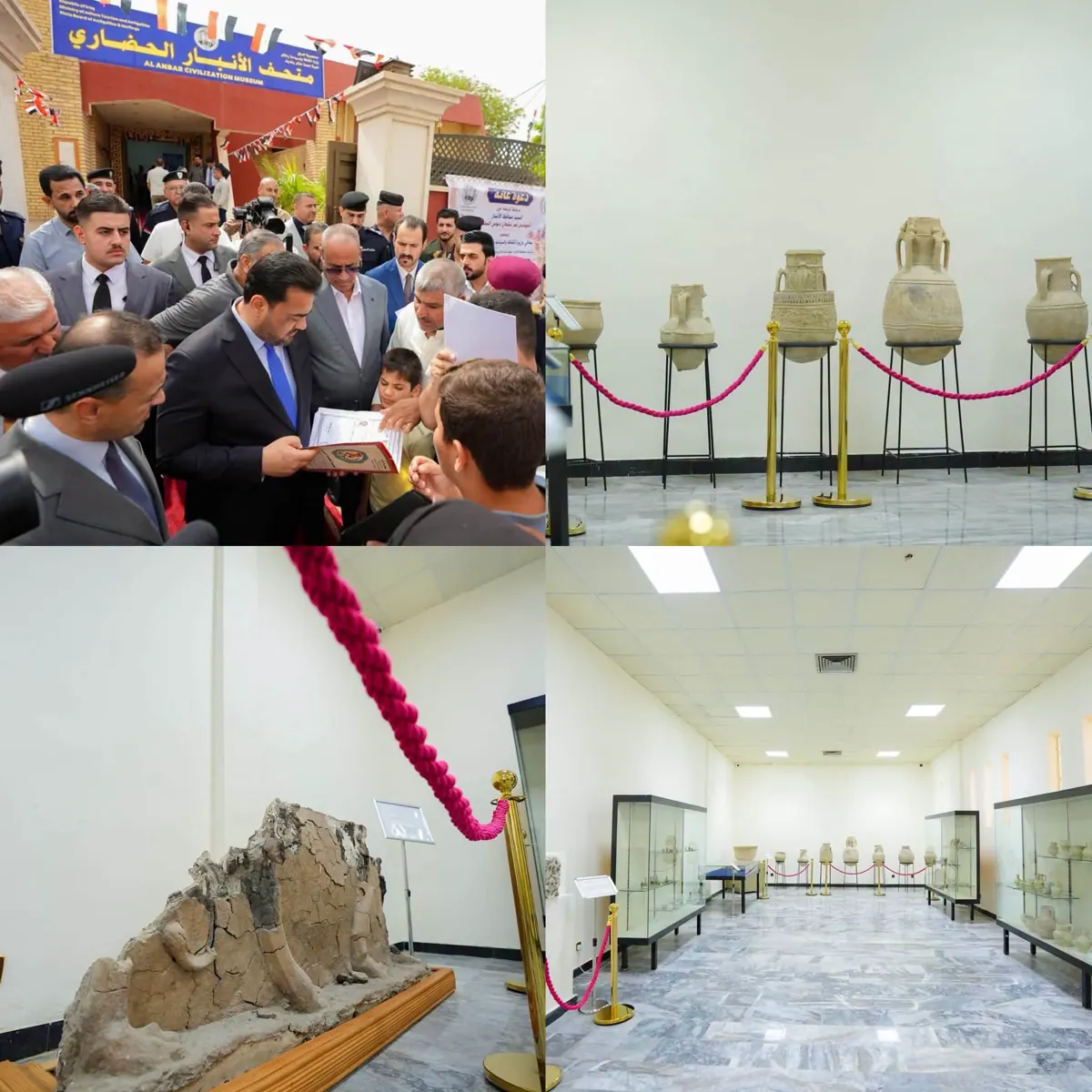
The Anbar Museum in western Iraq has reopened after more than two decades, with a collection of over 530 artifacts returned from the Iraqi Museum in Baghdad. The museum's reopening was announced by Anbar Governor Omar Misha'an Dhubus, who stated that it represents the recovery of part of Anbar's cultural heritage and identity after years of war. The returned artifacts cover a range of historical periods, from prehistoric times to the modern era.
According to Governor Dhubus, the returned artifacts will help to tell the story of human history and the civilizations that have succeeded each other in Anbar. The artifacts include pieces from the prehistoric, historical, and Islamic periods, as well as modern heritage items. The governor emphasized that the protection of historical sites and artifacts is a responsibility towards the identity of the province and the right of future generations to know their history.
The reopening of the Anbar Museum is a significant step in the province's recovery after years of conflict. Anbar has faced significant challenges in recent years, including the loss of thousands of archaeological pieces from museums and historical sites after 2003. However, the Iraqi government has made efforts to recover stolen artifacts, with over 40,000 pieces recovered and returned to the country as of July 2025.
The Anbar Museum's reopening is part of a broader effort to preserve and showcase Iraq's cultural heritage. The museum's collection includes a range of artifacts that reflect the province's rich history and cultural significance. The governor emphasized that the museum's reopening is a symbol of the province's recovery and its commitment to preserving its cultural heritage.
The return of the artifacts to Anbar is a significant achievement for the Iraqi government, which has been working to recover stolen artifacts and preserve the country's cultural heritage. The government has been working with international partners to recover and return stolen artifacts, and has made significant progress in recent years.
The reopening of the Anbar Museum is also significant for the local community, which has been affected by years of conflict and instability. The museum's reopening provides a sense of pride and ownership for the local community, and serves as a reminder of the province's rich cultural heritage.
The Anbar Museum's reopening is a positive development for Iraq's cultural sector, which has faced significant challenges in recent years. The museum's reopening is a testament to the country's resilience and determination to preserve its cultural heritage, and provides a sense of hope for the future.
Key points
- The Anbar Museum has reopened after over two decades, with over 530 artifacts returned from Baghdad's Iraqi Museum.
- The returned artifacts cover a range of historical periods, from prehistoric times to the modern era.
- The reopening of the Anbar Museum is part of a broader effort to preserve and showcase Iraq's cultural heritage.