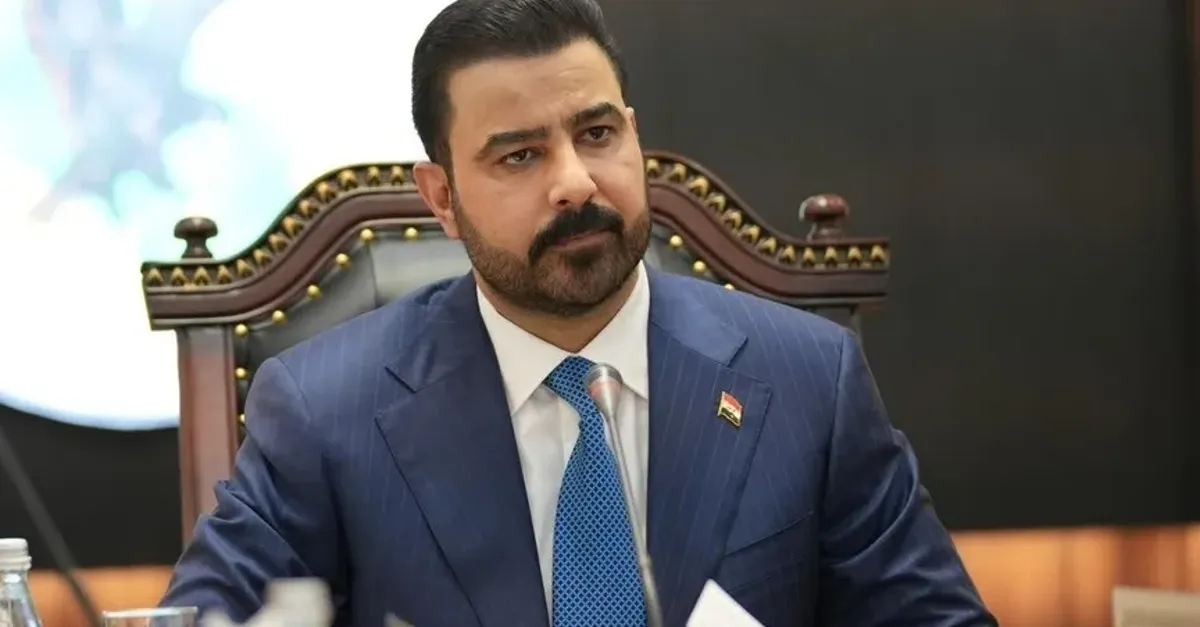
Iraq has suffered significant economic losses since the start of the Iran-US war, with Prime Minister Ali F. Al-Zeidi stating that the country has lost approximately $60 billion in revenue. According to Al-Zeidi, the losses are primarily due to the war's impact on oil exports, with Iraq's oil tankers being blocked from passing through the Strait of Hormuz by Iran. Despite being considered a regional partner of Iran, Iraq was not exempt from the blockade.
Al-Zeidi revealed that Iraq and Iran had extensive discussions regarding the blockade, with the Iranian decision being firm. He stated that Iran's goal is to raise global oil prices, and the country's actions are not influenced by its relationships with neighboring countries. The blockade has resulted in Iraq losing 60% of its monthly oil export revenue. Al-Zeidi emphasized that Iraq aims to establish economic relationships with countries worldwide.
As part of his efforts to reach an agreement with Turkey, Al-Zeidi has been working to strengthen economic ties between the two countries. This includes a recent agreement to increase Iraqi oil exports to Turkey through an existing pipeline. The goal is to expand the pipeline's capacity, enabling Iraq to export more oil to Turkey and potentially to Europe. Al-Zeidi discussed plans to build new pipelines through Turkey to transport Iraqi oil directly to Europe during his recent visits to France and Germany.
On the domestic front, Al-Zeidi announced that efforts to consolidate weapons under state control will begin with a 90-day period, during which militant groups will not be attacked or subject to US airstrikes. The Iraqi government aims to combat corruption and establish a strong economy. Al-Zeidi stressed that consolidating weapons is not optional but a necessity, and the issue is a matter of national pride.
The process of consolidating weapons will involve militant groups surrendering their arms, with the goal of completing the process by June 30, 2027. Al-Zeidi stated that he aims for these groups to cease existing as independent entities and integrate into the Iraqi Popular Mobilization Forces as individuals. Those who continue to operate under militant group names after the deadline will be considered outlaws.
Al-Zeidi's statements highlight the challenges facing Iraq, both economically and domestically. The country's significant losses due to the Iran-US war have impacted its economic stability. The government's efforts to establish new economic relationships and consolidate weapons under state control aim to address these challenges. The success of these initiatives will be crucial in determining Iraq's future stability and growth.
The Iraqi Prime Minister's statements also underscore the country's desire to play a more significant role in regional and global affairs. By establishing economic relationships with countries worldwide and consolidating weapons under state control, Al-Zeidi aims to position Iraq as a hub of cooperation rather than conflict. The implementation of these plans will be closely watched, both domestically and internationally.
Key points
- Iraq has lost approximately $60 billion in revenue since the start of the Iran-US war.
- The Iraqi government aims to consolidate weapons under state control, with a 90-day period set to begin soon.
- Iraq is working to establish new economic relationships with countries worldwide, including Turkey, France, and Germany.