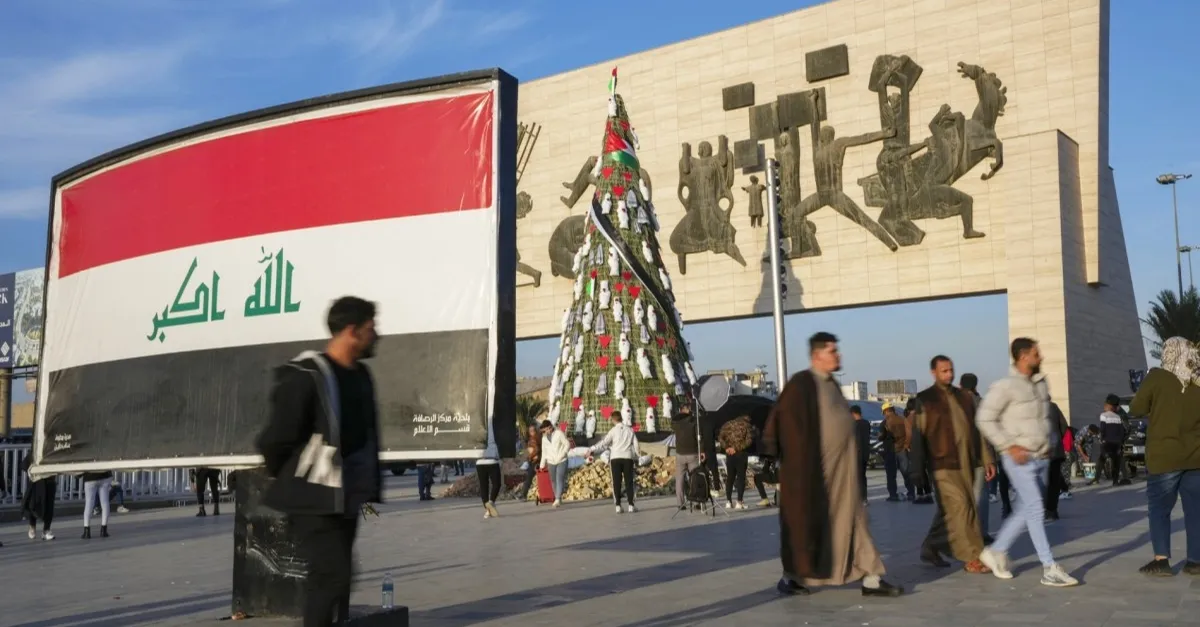
The Iraqi government has officially ended the 12-year military mission of the international coalition led by the United States, marking a significant shift in the country's security landscape. The coalition, which was formed in 2014 to combat the Islamic State (ISIS), has been gradually withdrawing its forces from Iraq since 2021. The withdrawal was formally announced by the Iraqi Ministry of Defense, which stated that the country's military and intelligence agencies are now capable of handling security threats independently.
The decision to end the coalition's mission was made in 2024, when Iraq and the US agreed to transition to a bilateral partnership, focusing on training and intelligence sharing. The withdrawal of coalition forces is seen as a major step towards Iraq's regaining of sovereignty and control over its security affairs. Iraqi Prime Minister Ali Al-Zaydi announced that October 1st would be celebrated as "Sovereignty Day," marking the country's transition to a new era of self-reliance in security matters.
The international coalition, which included forces from several countries, was instrumental in helping Iraq defeat ISIS in 2017. However, the presence of foreign troops had become a contentious issue in Iraqi politics, with some factions calling for their withdrawal. The Iraqi government has now taken over responsibility for securing the country, with its military and intelligence agencies working to maintain stability and counter terrorist threats.
The end of the coalition's mission has also raised questions about the future of Iraq's militias, some of which are backed by Iran. The government has called for these groups to integrate into the state's security apparatus or disarm, but some have resisted, citing concerns about US involvement in Iraq. The issue remains a challenge for the Iraqi government, which must balance the need to maintain security with the need to assert its authority over all armed groups.
The US Pentagon announced that it had withdrawn its forces from the Iraqi city of Arbil, marking the end of the coalition's combat mission. The withdrawal was welcomed by the Iraqi government, which sees it as a positive step towards achieving full sovereignty. However, concerns remain about the ability of Iraq's security forces to counter threats from ISIS and other extremist groups.
Iraq's security forces have been working to enhance their capabilities, with support from the US and other countries. The country's air force has been conducting airstrikes against ISIS targets using American, French, Korean, and Czech aircraft. The Iraqi government has also announced plans to develop its own military industries, including the production of drones and other equipment.
The withdrawal of the international coalition marks a new chapter in Iraq's history, as the country seeks to rebuild and strengthen its institutions. The coming months will be crucial in determining the success of Iraq's new security strategy and its ability to maintain stability in the face of ongoing challenges. Key issues to watch include the integration of militias into the state's security apparatus and the development of Iraq's military capabilities.
Key points
- The Iraqi government has officially ended the 12-year military mission of the international coalition led by the US.
- The withdrawal of coalition forces marks a significant shift in Iraq's security landscape and a major step towards regaining sovereignty.
- The Iraqi government faces challenges in asserting its authority over all armed groups and maintaining security in the face of ongoing threats.