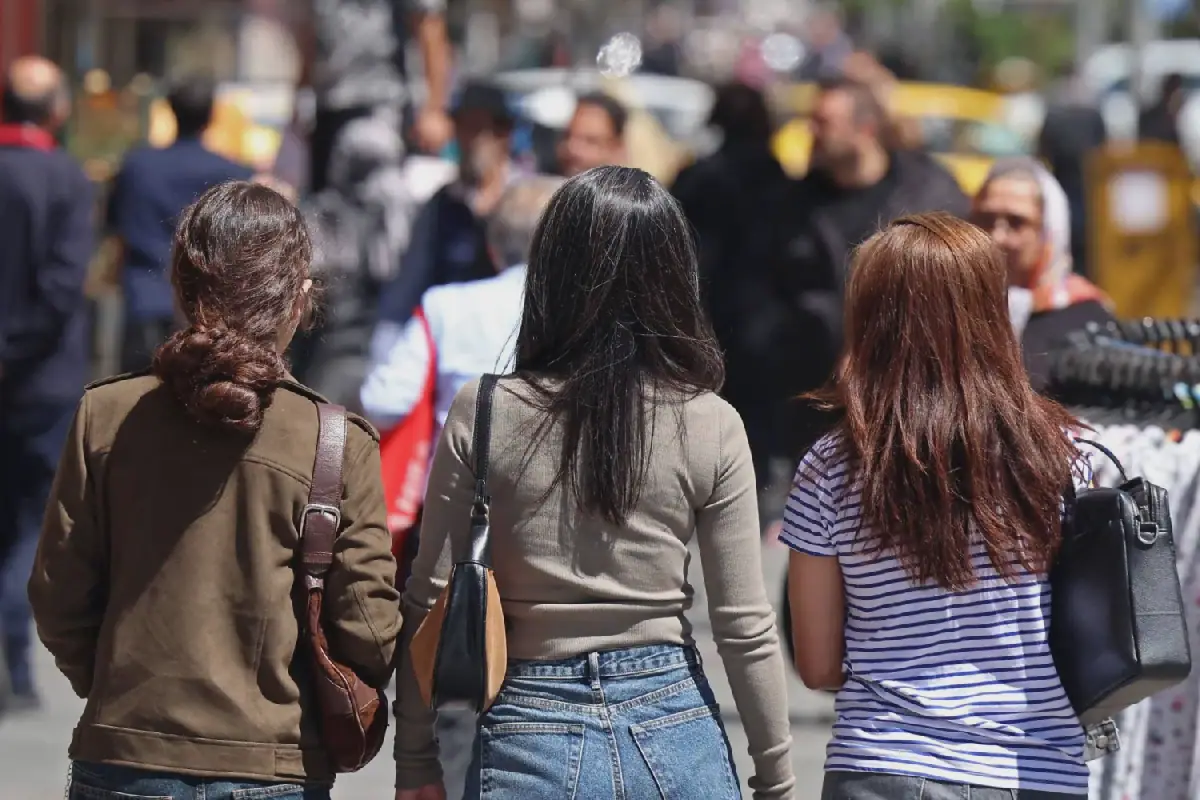
In a growing display of defiance, Iranian women are increasingly challenging the country's mandatory hijab rules, opting to wear chosen outfits freely in Tehran's streets. This shift in attitude towards dress code restrictions has become more pronounced since the 2022 protests that erupted following the death of Mahsa Amini, a young woman who died in custody for violating dress code rules. The protests highlighted the country's growing economic and political pressures.
The relaxation of dress code restrictions is seen as a significant departure from the traditional norms enforced by the Iranian government. Women have been spotted wearing short blouses, skirts, and ripped pants, sparking a heated debate about the role of the hijab in Iranian society. While some view this as a threat to social and religious values, others see it as a necessary step towards greater freedom and personal choice.
The conservative faction in Iran has responded strongly to the emerging trend, viewing it as a threat to the country's social and religious fabric. The Council of Experts, a high-ranking body, has issued a statement condemning the promotion of "social deviations" as an attempt by enemies to weaken Iranian society from within. This rhetoric underscores the deep divisions within Iranian society over issues of personal freedom and dress code restrictions.
Iranian authorities have taken steps to crack down on those promoting the abandonment of the hijab, arresting several individuals in Tehran on charges of promoting nudity and indecent behavior in public. The judiciary has called for a concerted effort to confront what it describes as "unusual behavior" in the streets. The prosecutor general has also warned government institutions of the consequences of failing to enforce hijab-related laws.
The struggle between the Iranian authorities and the growing number of women demanding greater freedom of choice in dress reflects a deeper societal divide. As the country grapples with economic and political challenges, the debate over the hijab has become a focal point for broader discussions about personal freedom, social norms, and the role of religion in public life.
Despite the risks, many Iranian women are choosing to assert their individuality and push the boundaries of what is considered acceptable under the country's strict dress code regime. The shift in attitudes towards dress code restrictions has been accompanied by a growing sense of defiance and activism among young Iranian women, who are increasingly vocal about their demands for greater freedom and autonomy.
The Iranian government's response to the emerging trend will likely have significant implications for the country's social and political landscape. As the debate over the hijab continues, it remains to be seen whether the authorities will seek to enforce existing laws more strictly or whether they will consider reforms to accommodate the changing attitudes and aspirations of Iranian women.
Key points
- Iranian women are increasingly defying mandatory hijab rules, wearing chosen outfits freely in Tehran's streets.