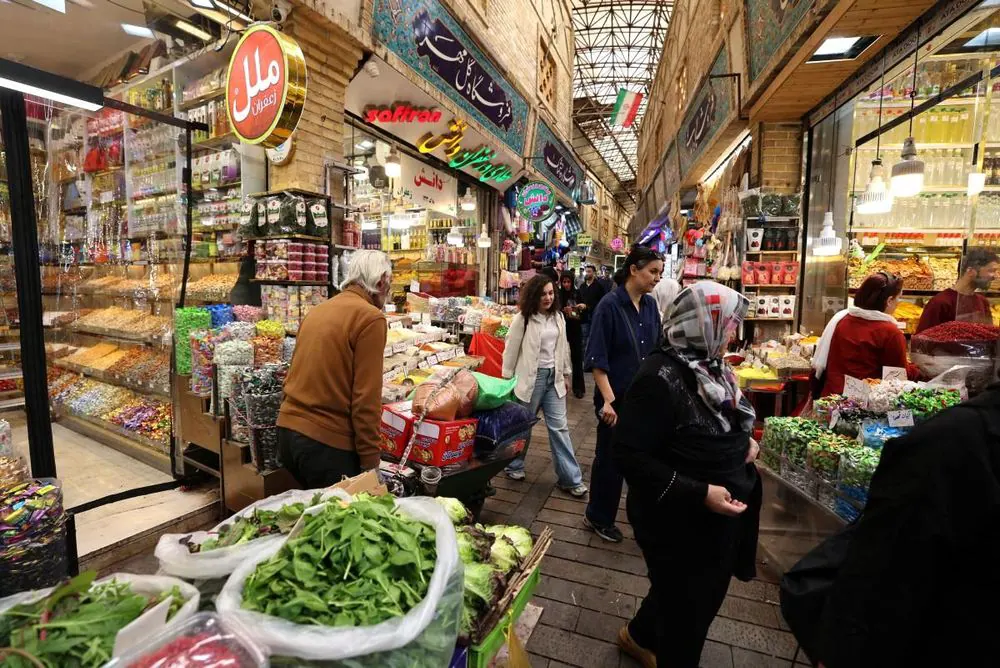
The marketplace in Tehran's north, once bustling with customers, now sits mostly empty with only a few people walking its narrow paths. Shopkeepers are struggling to sell their goods as locals face financial difficulties due to the ongoing war with the US. The conflict, which began in February, has put extra strain on daily life in Iran, with rising inflation and erratic currency exchange fluctuations driving up the cost of everyday items.
At a Tehran bazaar, shopkeeper Nasir says locals once bought his nuts by the kilo, but soaring prices have reduced sales. He called on authorities to stabilize the currency so businesses could plan ahead. Nasir, 61, noted that customers now buy smaller quantities, with some purchasing only half a kilogram. He expressed frustration with the current economic situation, saying that everyone is "left in limbo."
Iran's economy has been battered by years of sanctions, but the conflict with the US has exacerbated the situation. The country's GDP contracted 10.1 percent year-on-year between late March and late June, according to official figures. The rial has also depreciated significantly, trading at around 2.7 million to the dollar on the unofficial market, compared with about 1.7 million before the war.
Many shopkeepers, like Ali Nowruzi, 36, who runs a sportswear shop in the bazaar, are struggling to see a future for their businesses. He now orders only a few items for display to prevent his shop from looking bare. Nowruzi cited rising rent and utility bills as major concerns, saying that the situation effectively spells bankruptcy for his business.
Shoppers, whose purchasing power has weakened since the outbreak of war, are often seen leaving the bazaar without buying anything. Azadeh, a 45-year-old woman currently out of work, says she just goes to the bazaar to "watch the shops." She noted that prices have "skyrocketed," with a kitchen cloth she bought for 22 cents several months ago now costing $1.10.
Car mechanic Mojtaba Rezaei says his customers have "dropped to a tenth of what it was" due to the high prices of goods. He expressed embarrassment about telling customers the prices, saying that people often come in, ask the price, and leave. Rezaei, 57, noted that many aspects of life, including buying clothes, going out for leisure, and dining at restaurants, have been cut out of people's lives.
The country's economy minister has rejected predictions of an imminent economic collapse, accusing Iran's foes of trying to fuel public anxiety and drive up exchange rates. However, many Iranians, like Azadeh, feel that the economic situation is dire, saying that people "aren't meant to just exist, we're meant to actually live." The minimum monthly wage has fallen to $65 from around $120 a year ago, further exacerbating the financial struggles faced by many Iranians.
Key points
- Iran's economy has been severely impacted by the ongoing war with the US, with rising inflation and reduced customer spending affecting businesses.