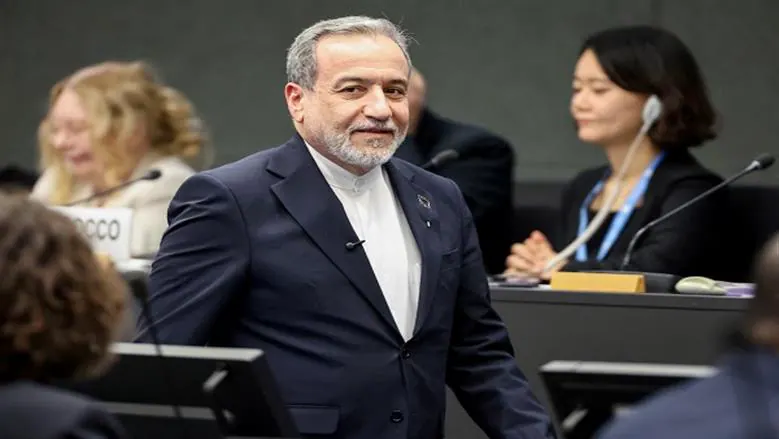
The Iranian Revolutionary Guard has publicly criticized Foreign Minister Abbas Araghchi for conducting talks with US envoy Steve Witekoff at the UN General Assembly without prior coordination with relevant authorities. According to reports, Araghchi's discussions with Witekoff were not approved by the Supreme National Security Council, sparking concerns about the potential implications for Iran's national interests.
The criticism comes amid reports that Araghchi and Witekoff engaged in a three-hour conversation on the sidelines of the UN General Assembly. While details of the talks remain scarce, sources indicate that the discussions focused on potential diplomatic efforts to revive stalled negotiations between Iran and the US. The incident has raised questions about the Iranian government's stance on diplomatic engagement with the US.
In response to the criticism, Araghchi has faced calls to provide explanations for his actions. Amin Rezaei, Secretary of the Supreme National Security Council, stated that Iran had intended to convey its conditions for renewed diplomatic engagement through intermediaries, rather than through direct talks with Witekoff. Rezaei's comments suggest that Araghchi's actions may have been at odds with the government's stated position.
Iran has outlined several conditions for reviving diplomatic talks with the US, including the establishment of a secure shipping route in the Strait of Hormuz and the lifting of US sanctions. According to reports, these conditions were conveyed to the US through Qatari mediators during a recent meeting. The Iranian government has emphasized that its conditions must be met before diplomatic talks can proceed.
US envoy Steve Witekoff has described the talks with the Iranian delegation as "very good" and expressed hope for a productive outcome. Witekoff's comments suggest that the US is interested in pursuing further diplomatic engagement with Iran, despite the current tensions. The US has been seeking to negotiate a new agreement with Iran, which could potentially address issues such as Iran's nuclear program and regional security concerns.
The incident highlights the complexities of Iran's diplomatic engagement with the US, which has been marked by periods of tension and uncertainty. While some Iranian officials have expressed support for renewed diplomatic talks, others have raised concerns about the potential risks and implications for Iran's national interests. The Iranian government's stance on diplomatic engagement with the US remains unclear.
The criticism of Araghchi's actions by the Revolutionary Guard underscores the challenges facing Iran's diplomatic efforts. As the Iranian government navigates its relationships with international partners, it must balance competing interests and priorities. The incident serves as a reminder of the complexities and nuances of Iran's diplomatic engagement with the US and other countries.
Key points
- The Iranian Revolutionary Guard criticizes Foreign Minister Abbas Araghchi for unauthorized talks with US envoy Steve Witekoff at the UN General Assembly.
- Iran outlines conditions for reviving diplomatic talks with the US, including a secure shipping route in the Strait of Hormuz and the lifting of US sanctions.
- The incident highlights the complexities of Iran's diplomatic engagement with the US, which has been marked by periods of tension and uncertainty.