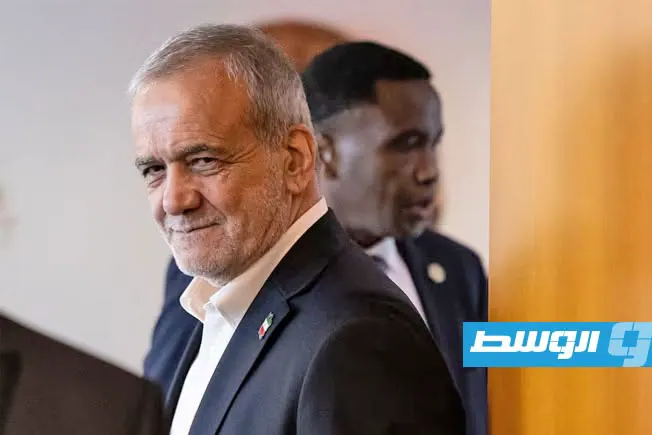
Iranian President Masoud Pezeshkian stated on Monday that negotiations with the United States are futile. This comes as the war in the Middle East continues into its eighth month with no clear resolution in sight, despite various diplomatic efforts. Pezeshkian made these comments while receiving Armenian Foreign Minister Aram Papikyan.
According to Pezeshkian, Iran's problem with the US is that every time they sit down for negotiations, war is imposed on them immediately. He cited instances where the US has launched attacks on Iran three times after negotiations, suggesting that the US is not interested in dialogue but rather in overthrowing the Islamic Republic of Iran.
Pezeshkian further emphasized that with an enemy that resorts to assassination, sanctions, pressure, and threats daily, and repeatedly breaks its promises, negotiations become meaningless. He stressed that the Iranian nation will not accept this approach. The President also highlighted that Iran has demonstrated its intentions regarding its nuclear activities and is subject to the highest level of scrutiny by the International Atomic Energy Agency.
However, Pezeshkian noted that despite this, the US continues to exert pressure on Iran based on "baseless claims." He pointed out that the issue with the Atomic Energy Agency lies in the fact that after inspectors visit Iran, the locations of nuclear facilities and the identities of scientists are determined, only to be followed by bombings and assassinations.
In response to the US proposal, Iranian Foreign Ministry spokesperson Ismail Baghaei stated that Tehran has clarified its positions through mediators. He noted that the US proposal resembles previous ones, focusing primarily on the nuclear file, whereas Iran wishes to concentrate on the Strait of Hormuz.
Baghaei also mentioned that the issue of allowing inspectors from the Atomic Energy Agency back into Iran was not discussed. He added that there are additional points that still need to be communicated to the US side. Meanwhile, Iranian Parliament Speaker Mohammad Bagher Ghalibaf asserted that the Strait of Hormuz will not be reopened unless Iran's seven conditions, as outlined in the temporary agreement with the US in June, are met.
Ghalibaf warned that the era of procrastination and unilateral demands has ended. He emphasized that Iran's stance is clear and firm, and the country will not open the Strait of Hormuz until its conditions are fulfilled. These conditions are based on a memorandum of understanding from Islamabad.
Key points
- The Iranian President believes negotiations with the US are futile due to continuous US aggression.
- Iran's nuclear activities are under intense scrutiny by the International Atomic Energy Agency.
- The Strait of Hormuz will remain closed until Iran's seven conditions are met.