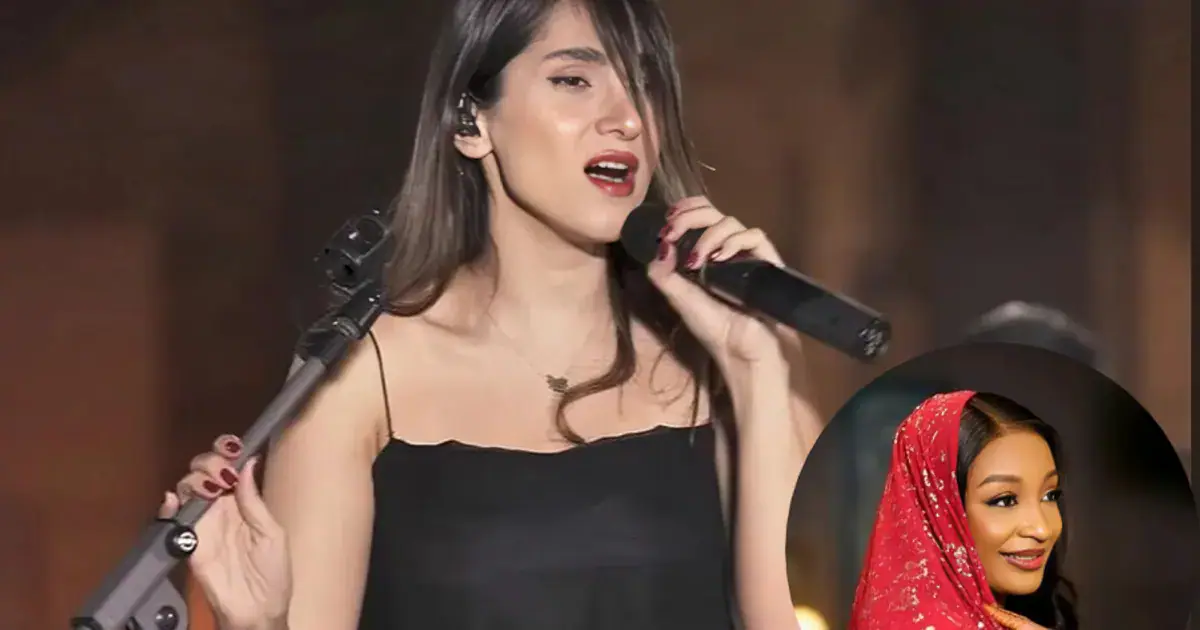
Iranian singer Parastoo Ahmadi and four other musicians have been flogged 74 lashes for performing without a hijab in a 2024 livestream. Ahmadi was also banned from making audio or video content and leaving Iran for two years after a court found her guilty of offending public decency. The punishment was carried out in the City of Qom, according to reports from the BBC.
Ahmadi's case bears similarities to that of Rahama Sadau, a Northern Nigerian actress who faced backlash for posting pictures of herself in an open-back gown in 2020. Sadau was accused of causing the public to blaspheme against Prophet Muhammad, highlighting the different ways Sharia laws are applied and interpreted across countries. In Iran, women are required to wear headscarves and modest dresses, and those who fail to comply can face severe consequences.
The incident occurred in December 2024, when Ahmadi performed on a livestream wearing a sleeveless dress. She and her band members were put on trial and found guilty of "offending public decency" by showing "obscene and indecent material". The defendants denied the accusations, but the court ruled in favor of the prosecution. Ahmadi's lawyers appealed the verdict, but the appeal was rejected in September, confirming the original sentence.
The flogging was carried out at the third branch of the Criminal Sentence Enforcement Office in Qom, according to one of Ahmadi's lawyers. The other defendants who received lashes were identified as Soheil Faghih-Nasiri, Amin Taheri, Amirali Pirnia, and Mohsen Lashkari. The incident has sparked outrage among Iranian artistes and human rights activists, who have condemned the flogging as a violation of human rights and international prohibition on torture.
Human rights activists have strongly criticized the Iranian authorities' actions, calling the flogging a flagrant violation of Ahmadi's fundamental rights. Bahar Ghandehari, director of advocacy at the US-based Centre for Human Rights in Iran (CHRI), stated that Ahmadi's flogging was a chilling demonstration of the Iranian authorities' determination to suppress women's freedoms and punish those who challenge discriminatory laws and policies.
The Iranian government has been criticized for its strict enforcement of Sharia laws, particularly those related to women's dress code and public behavior. Women's rights activists have continuously protested against the mandatory head covering, leading to arrests and crackdowns by the government. The case of Parastoo Ahmadi has highlighted the need for greater tolerance and flexibility in the application of Sharia laws, particularly with regards to women's rights and freedoms.
The incident has also raised concerns about the similarities between Iran's laws and those in Northern Nigeria, where Sharia is also widely practiced. While the two countries have different interpretations of Sharia, the consequences for women who fail to comply with dress code regulations can be severe. The case of Rahama Sadau, who faced backlash for her open-back gown, serves as a reminder of the challenges women face in countries where Sharia laws are strictly enforced.
Key points
- Iranian musician Parastoo Ahmadi was flogged 74 lashes for performing without a hijab in a 2024 livestream.
- Ahmadi was also banned from making audio or video content and leaving Iran for two years.
- The incident has sparked outrage among Iranian artistes and human rights activists, who have condemned the flogging as a violation of human rights.