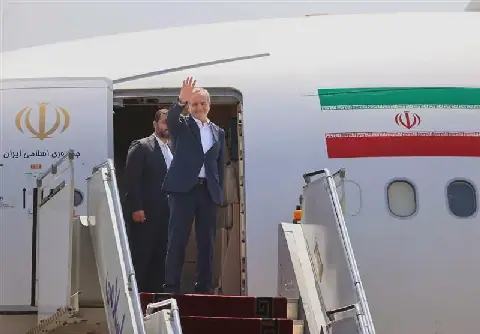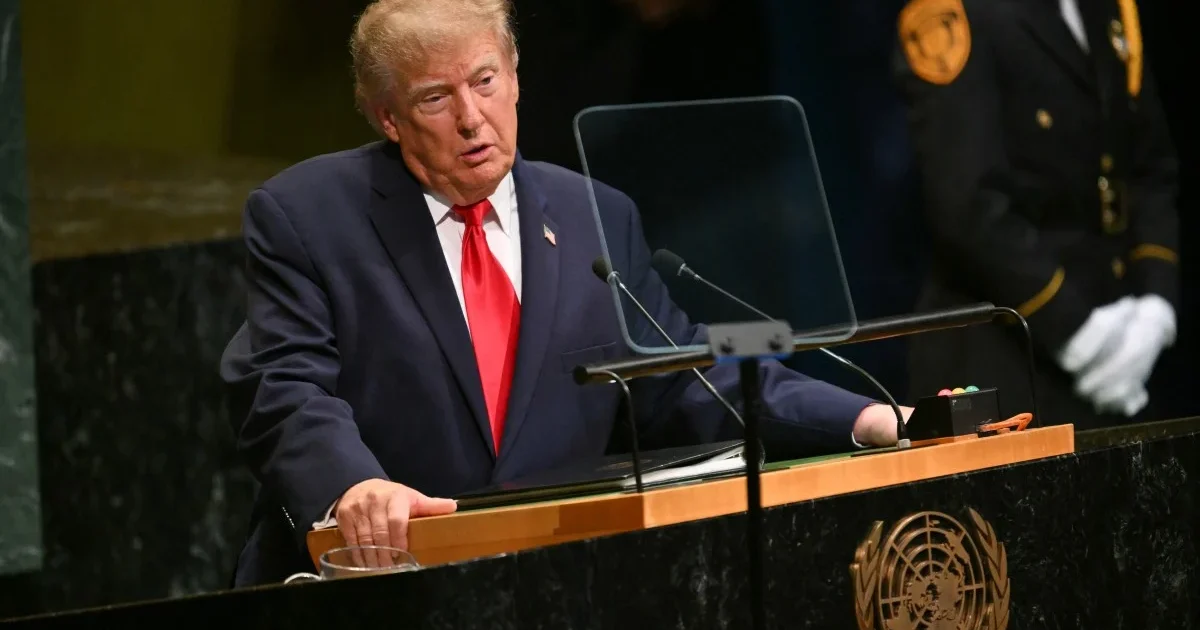
Iranian mid-level officials and delegates walked out of the United Nations General Assembly on September 22, 2026, after US President Donald Trump delivered a combative address. In his speech, Trump threatened to "annihilate" Iran if Tehran fails to reach a deal with Washington. The Iranian delegation left about 10 minutes into Trump's speech. Iran's President Masoud Pezeshkian and Foreign Minister Abbas Araghchi, who were in New York for the UN gathering, were not in the hall during Trump's address.
Trump defended the US's months-long military campaign against Iran, warning that he could escalate the conflict rather than accept a settlement that allows Tehran to recover. He presented the US as a central force in resolving international conflicts, claiming credit for ending the war in Gaza. However, negotiations over the next phase of the Gaza conflict remained unresolved. Trump's address ranged beyond Iran and Cuba to other foreign-policy disputes, including Venezuela, Ukraine, and the International Criminal Court.
The Iranian delegation's walkout was not the only reaction to Trump's speech. The Cuban delegation also walked out after Trump said Cuba's communist government was failing and "will fall". Trump's remarks contrasted sharply with the emphasis on diplomacy from Brazilian President Luiz Inácio Lula da Silva, who addressed the assembly shortly before him. Lula said the wars and escalating tensions confronting the international community could not be resolved through military force alone.
UN Secretary-General António Guterres also urged world leaders to strengthen international cooperation rather than retreat into confrontation. "Military power alone cannot secure peace," Guterres said in his opening address to the gathering. Turkish President Recep Tayyip Erdogan sharply criticised Israel, describing it as having a "genocidal mind-set." Israeli delegates subsequently left the General Assembly Hall as Erdogan spoke.
Qatar's Emir Sheikh Tamim bin Hamad Al Thani also addressed the Gaza conflict, describing the situation there as "a genocide in every sense of the word." Trump's UN appearance came against the backdrop of the continuing war with Iran and heightened international concern over the economic consequences of the conflict. The conflict has led to disruptions around the Strait of Hormuz and elevated energy prices.
Immediately after his address, Trump signed an agreement with Denmark concerning increased US military presence in Greenland. The agreement would give the United States "permanent control over security and all other needs on that territory". Trump said the US would have the complete ability to do what is necessary to defend the American continent and also Europe and other places.
The UN General Assembly, the organisation's main deliberative and representative body, brings together leaders and delegations from its member states each year to address international conflicts, development, security, and other global issues. Trump's address was part of the 81st session of the UN General Assembly in New York.
Key points
- Iran's delegation walked out of the UN General Assembly after US President Donald Trump's threatening remarks.
- Trump's speech contrasted with the emphasis on diplomacy from other world leaders, including Brazilian President Luiz Inácio Lula da Silva.
- The US signed an agreement with Denmark concerning increased US military presence in Greenland.