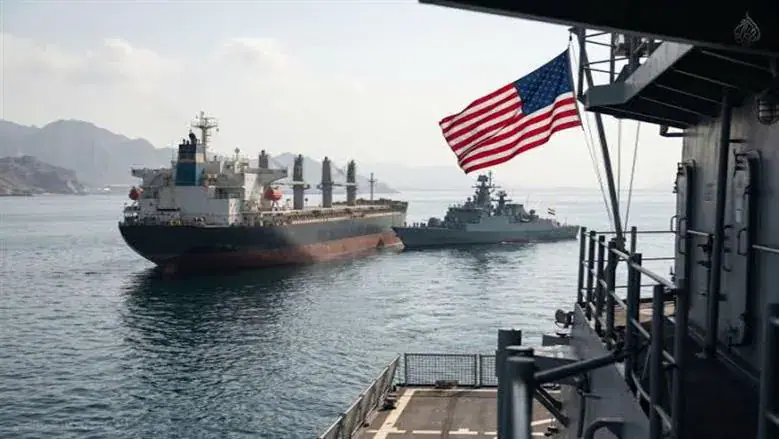
The Iranian Foreign Ministry announced on Monday that it will utilize all available means to confront the US naval blockade imposed on its oil exports. This development escalates tensions between Tehran and Washington, shifting the confrontation from economic pressures to a direct test of each side's ability to enforce its conditions in the region. According to a Reuters report, the timing of this statement coincides with stalled diplomatic efforts to resume negotiations.
The significance of Iran's statement lies not only in its political threat but also in its timing, which comes as diplomatic efforts to revive negotiations have stalled. The blockade, reimposed by Washington on July 14 after the collapse of previous understandings, targets Iran's oil exports, a crucial source of revenue for the country. This move puts Iran's economy under direct pressure, making it challenging for the country to maintain its oil exports.
Iran is banking on the strategic importance of the Strait of Hormuz, a critical waterway for global energy trade. Iranian Foreign Minister Abbas Araghchi emphasized that reopening the strait is not difficult if Washington meets Iran's conditions, which include lifting the blockade, releasing frozen assets, and ending the war. The Strait of Hormuz is a vital passage for international oil shipments, and Iran's control over it gives the country significant leverage.
On the nuclear front, Iran faces pressure from the US and Europe to allow inspectors from the International Atomic Energy Agency to return to facilities damaged in 2025. According to a Reuters report, the lack of oversight on Iran's high-enriched uranium stockpile raises international concerns about the country's nuclear program. The nuclear issue remains a contentious point in the negotiations between Iran and Western powers.
Iranian President Masoud Pezeshkian has described the economic pressures on his country as more challenging than a missile war, warning of difficulties with energy supplies during the winter. His comments, as reported by Reuters, highlight the domestic challenges Iran faces due to the US sanctions. The economic strain on Iran is significant, with the country's oil exports being a primary target of the US sanctions.
The conflict between Iran and the US is not limited to the nuclear program but has expanded to include a battle for freedom to export oil, control of sea lanes, and the terms of a political settlement. Both Washington and Tehran are grappling with a complex equation, where continued pressure may increase the cost of confrontation regionally, while a settlement may require reciprocal concessions that neither side appears ready to make.
The ongoing tensions between Iran and the US have significant implications for regional stability and global energy markets. As Iran seeks to assert its rights and interests, the international community remains cautious about the potential for escalation. With diplomatic efforts stalled, the situation remains fluid, and the possibility of further confrontation cannot be ruled out. The Iranian government's commitment to using all means to counter the US naval blockade underscores the country's determination to resist external pressure.
Key points
- Iran vows to use all available means to counter the US naval blockade on its oil exports.
- The blockade has significant implications for Iran's economy and the global energy market.
- The conflict between Iran and the US has expanded beyond the nuclear program to include a battle for freedom to export oil and control of sea lanes.