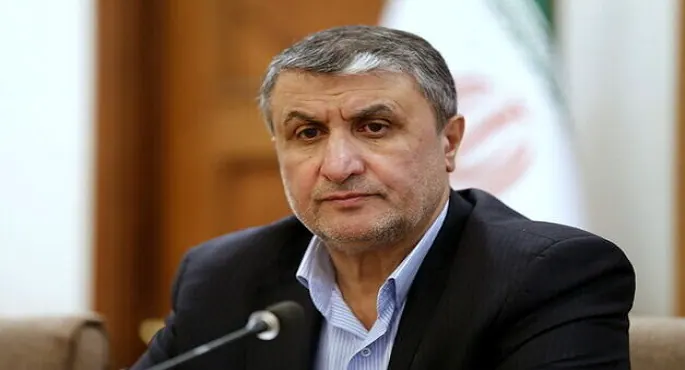
Iranian Atomic Energy Organization head Mohammad Eslami stated on Thursday that Iran will not cease uranium enrichment and will not surrender its stockpile. This comes after the US suggested Iran should make significant reductions to its uranium enrichment capabilities. Eslami dismissed renewed US threats against Iranian nuclear facilities, describing them as "not new." He emphasized that enrichment is an integral part of the nuclear process.
Eslami's comments come amid recent exchanges between Iran and the US, aiming to end the war and reopen the Strait of Hormuz, a vital passage for global energy shipments. Iranian Foreign Minister Abbas Araghchi mentioned on Thursday that Iran may respond within days to a US response to its proposal, which involves reopening the Strait of Hormuz within seven days if necessary conditions are met.
Eslami stressed that enrichment is essential to Iran's nuclear industry, saying, "How can you claim to have a nuclear industry if you don't have a starting point for the process?" Iran's nuclear program has been a point of contention, with the US, Israel, and other Western nations accusing Tehran of seeking nuclear weapons. Iran denies these allegations.
The US and Iran have been engaged in discussions, with US President Donald Trump stating on Thursday that the US is having productive talks with Iran and will not launch an attack before the US midterm elections in November. Iran has been enriching uranium to 60% purity, significantly higher than the 5% required for civilian uses and closer to the 90% needed for military applications.
Iranian authorities have suggested that Tehran might agree to reduce its enrichment levels. The developments are being closely watched as the international community seeks to address concerns over Iran's nuclear ambitions. The US has imposed sanctions on Iran's "shadow fleet" and has been critical of Tehran's nuclear activities.
The situation remains complex, with various stakeholders involved. The European Parliament has called for the Muslim Brotherhood to be added to the EU's list of terrorist organizations. Meanwhile, Iran's nuclear program continues to be a focal point of international attention.
The Iranian government's stance on uranium enrichment is clear, and the country appears determined to pursue its nuclear ambitions. The international community will likely continue to monitor developments closely, seeking a resolution to the situation.
Key points
- Iran's nuclear chief, Mohammad Eslami, says Tehran won't abandon uranium enrichment.
- The US and Iran are engaged in discussions to address concerns over Iran's nuclear program.
- Iran has been enriching uranium to 60% purity, sparking concerns among Western nations.