Iran's acting Friday prayer leader, Mohammad Javad Haj, stated that the Iranian people are demanding a change in the country's nuclear doctrine and are determined to achieve it. He emphasized that the US has been hostile towards Iran for nearly seven decades, dating back to the 1953 coup that overthrew the government of Prime Minister Mohammad Mosaddegh. Haj's comments reflect the country's stance on its nuclear program and its relations with the US.
Haj also highlighted that the US has failed to achieve its objectives in Iran through various means, including sanctions and military interventions. He noted that the US has directly engaged in confrontations with Iran, citing the assassination of Qasem Soleimani and the recent 12-day war. Despite these developments, Haj asserted that the Iranian people remain resolute in the face of US pressure. He also warned that Iran will not be swayed by US overtures for negotiations, citing past experiences where US overtures have been accompanied by hidden agendas.
Fada Hussein Maleki, a member of Iran's National Security Committee, responded to recent comments by former US President Barack Obama, who acknowledged that the Strait of Hormuz is under Iran's control. Maleki considered Obama's remarks a significant admission, noting that they contradict the claims of current US President Donald Trump. Maleki also accused Trump of spreading misinformation to create chaos, while Obama's comments reflect a more realistic understanding of the situation.
Iran's Ambassador to the United Nations, Gholam Hossein Dehghani, addressed the UN Security Council, emphasizing that any disruptions to navigation in the Gulf and Strait of Hormuz are the responsibility of aggressors. He noted that Iran has faced threats and that the Security Council should address these issues within its mandate. Dehghani also highlighted that the US naval blockade of Iran is a serious violation of the country's sovereignty and territorial integrity.
The US naval blockade has severe humanitarian implications, Dehghani said, as it restricts access to essential goods such as food, medicine, and fuel. He emphasized that this collective punishment of the Iranian people is a grave breach of the UN Charter. In response, Iran will explore all available legal avenues to hold those responsible for these actions accountable. The situation remains tense, with Iran prepared to defend its interests.
Iranian Rear Admiral Mostafa Izadi stated that enemies of Iran have sought to divide the country, overthrow its government, and destroy its scientific and nuclear capabilities. However, he emphasized that the Iranian people's resistance has thwarted these plots. Meanwhile, Iranian Foreign Ministry spokesperson Ismail Baghaei responded to allegations by the UN Special Rapporteur on Human Rights, accusing the US and Israel of committing crimes and attempting to shift blame onto Iran.
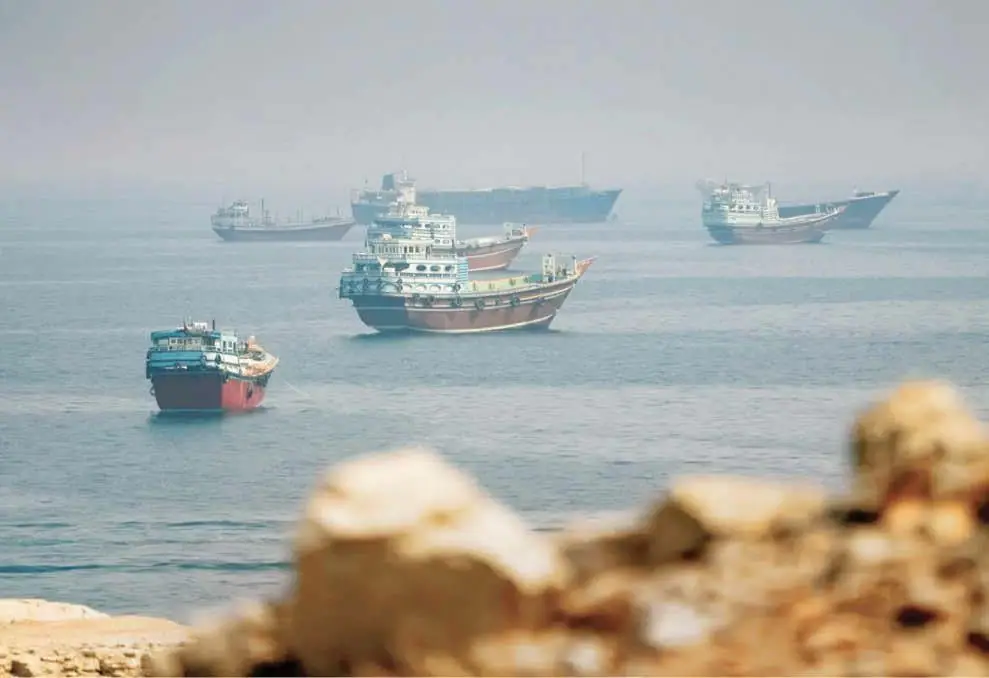
In a recent incident, two oil tankers were involved in an accident in the Strait of Hormuz, resulting in their temporary halt in the southern waters of the strait. The incident occurred as the vessels attempted to traverse an unauthorized route. Separately, the Omani Navy evacuated 25 crew members from a commercial ship that was attacked and caught fire in the Strait of Hormuz. US Central Command reported that dozens of commercial ships, including oil tankers and gas carriers, have safely transited the strait with US military support.
Key points
- Iran asserts control over Strait of Hormuz amid escalating tensions with US
- US naval blockade of Iran has severe humanitarian implications
- Iranian leaders emphasize resistance to US pressure and determination to defend national interests