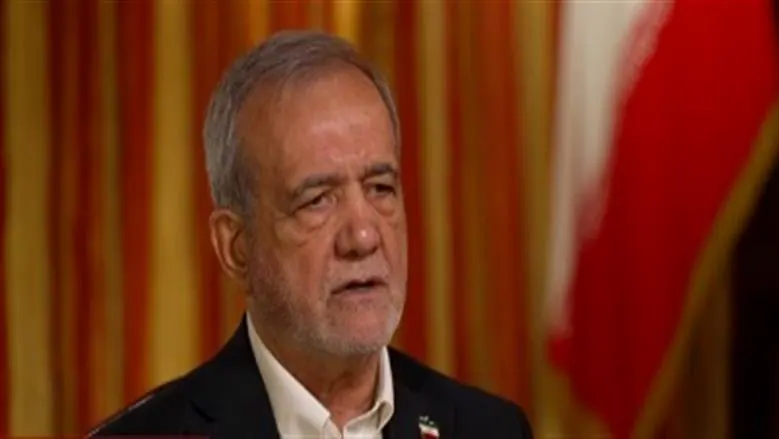
Iranian President Masoud Pezeshkian has announced that his country will permit United Nations nuclear inspectors to enter Iran. In an interview with CBS News' "Face the Nation with Margaret Brennan" on Friday, Pezeshkian stated that Iran is willing to cooperate with inspectors and reach agreements on specific issues within the framework of negotiations. This development comes after a period of tension between Iran and the US, which led to the collapse of a ceasefire agreement.
Pezeshkian attributed the collapse of the agreement to the US, citing Iran's targeting of commercial shipping vessels and the US response with airstrikes on Iran. He expressed hope that if the US and Iran can agree on a framework, both sides will adhere to it. The original agreement between the US and Iran had shown promise, but it ultimately fell through. Pezeshkian's comments suggest a willingness to revive negotiations and restore cooperation.
The Iranian president emphasized that his country is not seeking to develop nuclear weapons, citing religious and moral objections. He stated that "developing nuclear weapons is forbidden" and that even if some individuals in Iran were inclined to pursue such a path, they would be prohibited from doing so on religious grounds. This stance aligns with Iran's long-standing claims that its nuclear program is peaceful in nature.
Pezeshkian's comments on nuclear inspectors were welcomed by CBS News, which noted that previous attempts by UN inspectors to access Iranian nuclear facilities were met with resistance. The president's assurance that Iran will allow inspectors to enter the country represents a significant shift in policy. However, details of the new agreement and the scope of inspections remain to be determined.
The development has significant implications for regional security and global non-proliferation efforts. Iran's nuclear program has been a subject of concern for many countries, particularly in the context of the 2015 nuclear deal, which was abandoned by the US in 2018. Pezeshkian's statements suggest a desire to revive diplomatic channels and address concerns about Iran's nuclear activities.
The Iranian president also touched on the issue of the Strait of Hormuz, a critical waterway for global oil exports. He suggested that if the US and Iran can reach an agreement, it could lead to the reopening of the strait and a reduction in tensions. However, he emphasized that any progress would depend on the US's willingness to engage in meaningful negotiations.
In conclusion, Pezeshkian's announcement marks a significant step towards increased transparency and cooperation on Iran's nuclear program. The country's willingness to allow UN inspectors to enter the country and its commitment to peaceful uses of nuclear energy are positive developments. Nevertheless, much work remains to be done to address concerns about Iran's nuclear activities and restore trust between Iran and the international community.
Key points
- Iran will allow UN nuclear inspectors to enter the country.
- Developing nuclear weapons is forbidden in Iran, according to President Pezeshkian.
- Iran's president is open to reviving negotiations with the US on a range of issues, including the nuclear program and the Strait of Hormuz.