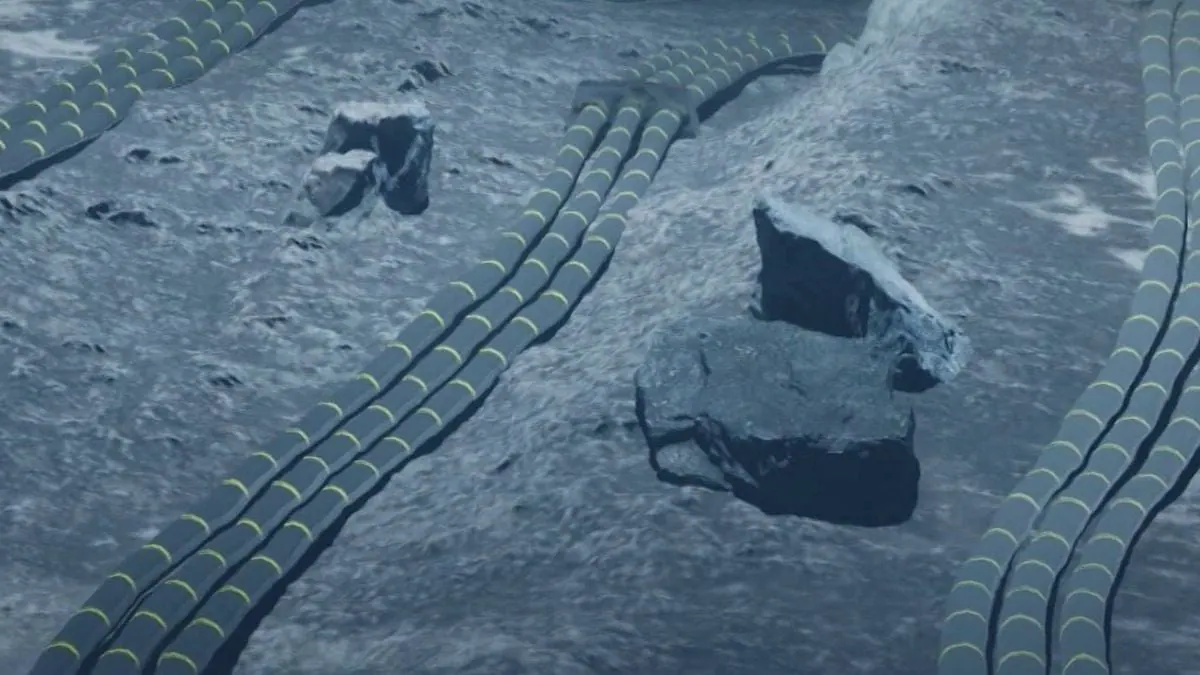
The Revolutionary Guard of Iran has issued a threat to target seven undersea internet cables traversing the Strait of Hormuz, a critical waterway for global communications and oil shipments. This latest development raises concerns about the potential impact on international communications, banking services, and digital activities in the region. The cables in question connect Europe and Asia, serving countries in the Gulf region that have heavily invested in data centers and digital services.
Iranian officials have previously mentioned the possibility of targeting undersea cables and data centers linked to American technology groups in the event of a direct confrontation with Washington. The Strait of Hormuz is a vital passage for both communications and oil shipments, with a significant portion of global oil flows passing through it. Any disruption to these cables could have far-reaching consequences, depending on the extent of the damage and the ability to activate alternative routes.
The threat has not elicited an official response from the governments, telecommunications operators, or US authorities that would be affected. The situation in the Strait of Hormuz remains tense, with the waterway largely closed to maritime traffic since the beginning of the year. Oil flows through the strait have declined by over 90% before partially recovering, according to the US Secretary of Energy.
Iran has deemed insufficient the US response to its seven conditions for reopening the strait. The Moroccan kingdom, while not directly reliant on the Gulf's communication links, has its own Atlantic and Mediterranean cables connecting it to Europe and Africa. However, a degradation of regional connectivity could impact Morocco's international financial services and logistics chains, which are crucial to its foreign trade.
The impact of a potential disruption to undersea cables in the Strait of Hormuz would depend on various factors, including the extent of the damage and the ability to activate alternative routes. The region's economies have invested heavily in data centers and digital services, making them vulnerable to disruptions in connectivity. The situation remains a concern for countries in the region and beyond.
The global economy is already feeling the strain of tensions in the region, with Brent crude oil prices exceeding $110 per barrel. Any further escalation could have significant implications for international trade and economic stability. The threat to undersea cables in the Strait of Hormuz adds to an already complex and volatile situation.
As the situation in the Strait of Hormuz continues to unfold, countries in the region and around the world are monitoring developments closely. The potential consequences of a disruption to undersea cables in the strait are far-reaching, and efforts to mitigate these risks are underway. For now, the threat remains a concern for global communications, economic stability, and regional security.
Key points
- Iran's Revolutionary Guard threatens to target seven undersea internet cables in the Strait of Hormuz.
- A disruption to these cables could impact international communications, banking services, and digital activities in the region.
- The situation in the Strait of Hormuz remains tense, with the waterway largely closed to maritime traffic since the beginning of the year.