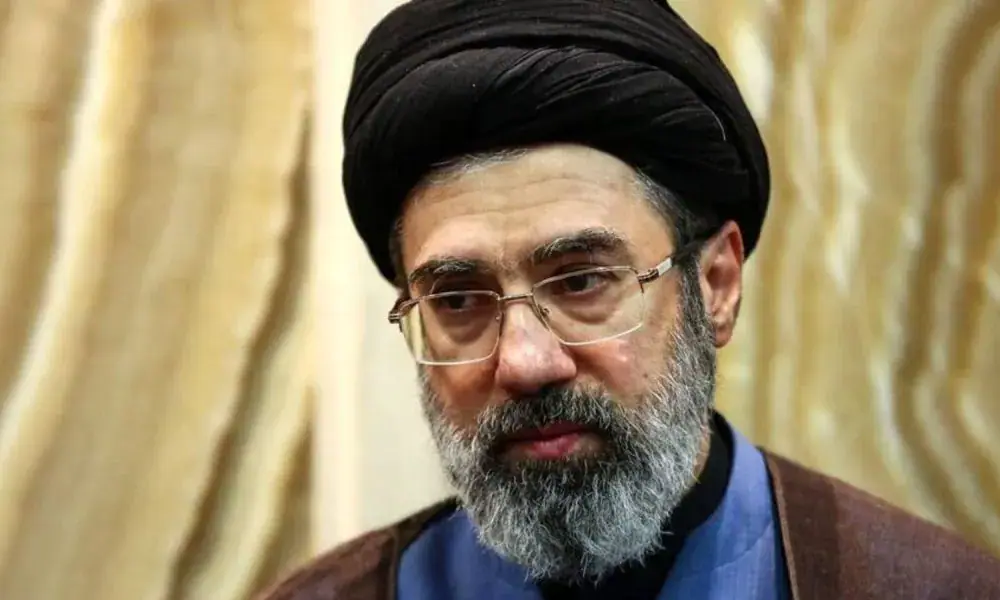
Iran's Supreme Leader, Mojtaba Khamenei, has ordered the country's armed forces to respond immediately to any renewed military or terrorist attack. He declared that retaliation would not be restricted by geographical boundaries. The directive was issued during a meeting with senior military commanders and published on Khamenei's official Telegram account. This move comes amid mounting tensions between Tehran, Washington, and Tel Aviv, and growing fears of a resumption of hostilities.
Khamenei instructed the military leadership to maintain maximum combat readiness and prepare for a powerful confrontation with Iran's enemies. This is part of efforts to strengthen the country's deterrence capabilities. He also ordered an update of Iran's military target list to bring American and Israeli physical and non-physical assets within the reach of Iranian forces. The directive called for an immediate and effective response to any potential threat, irrespective of its geographical location.
Iranian military spokesman Mohammad Akraminia warned that any renewed American attack could widen the conflict beyond its current theatre. He stated that Iranian forces were strengthening their combat readiness amid reports that Washington was considering further military action against Tehran. Akraminia cautioned that any decision by US President to resume military operations under pressure from Israel could have consequences across a much wider region.
Iranian Foreign Minister Abbas Araghchi also issued a warning, declaring that the country's armed forces would respond forcefully to any attempt to harm its population. Araghchi's statement came as Qatar and Pakistan pursue diplomatic efforts to prevent a breakdown of the fragile cessation of hostilities. A Qatari delegation arrived in Tehran for talks with senior Iranian officials as part of efforts to revive negotiations between Washington and Tehran.
The diplomatic initiative follows reports that US Vice President JD Vance sent a letter to Iran's security chief, Mohsen Rezaei, seeking to reopen communication between the two countries. Iran has confirmed receiving the communication but has not announced a formal response. The reported diplomatic initiative comes amid disagreements over Iran's nuclear programme, American sanctions, frozen Iranian assets, and Washington's naval blockade of Iranian ports.
The confrontation has increasingly centred on the Strait of Hormuz, one of the world's most important energy shipping routes. Iran has maintained restrictions on maritime traffic through the strategic waterway since the outbreak of the war, disrupting international energy shipments and contributing to rising energy prices. The United States has responded by imposing a naval blockade on Iranian ports in an attempt to restrict the country's oil exports and economic revenues.
Iranian media reported that an unidentified enemy drone attacked two fishing boats off Qeshm Island, injuring two fishermen, while two others were rescued. Saudi Arabia's civil defence authorities also briefly issued danger alerts for the southwestern Jazan region and Najran Province. No direct connection between the alerts and the reported incident off Qeshm Island was established.
Key points
- Iran's Supreme Leader Mojtaba Khamenei orders military to respond immediately to any renewed attack without geographical restrictions.
- Iranian military spokesman Mohammad Akraminia warns that any renewed American attack could widen the conflict.
- Diplomatic efforts by Qatar and Pakistan continue to prevent a breakdown of the fragile cessation of hostilities.