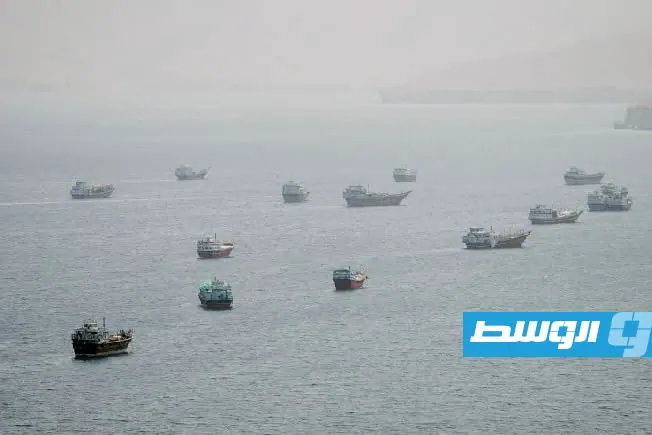
The Iranian Revolutionary Guard Corps (IRGC) plans to close illegal routes through the Strait of Hormuz, a vital waterway for oil shipments. According to Mohammad Reza Naghdi, a senior advisor to the IRGC commander, these routes were created by blasting and destroying rocky passages in the strait. Small boats have used these routes for oil smuggling, contradicting reports that oil shipments through the strait have returned to pre-war levels.
The Strait of Hormuz, situated between Iran and Oman, is a critical passage for oil exports from the Persian Gulf. Data from Kpler, a market analytics firm, shows that the average daily crude oil flow through the strait reached 18.3 million barrels in the week ending September 30. This marks a significant increase, with volumes surpassing pre-war levels for 14 days in September.
The IRGC denies that the increase in oil shipments is due to support from the US Navy. Instead, they claim that the strait is under their complete control. Naghdi stated that the situation will persist until Iran's legitimate demands are met. Another IRGC advisor, Majid Mir Ahmadi, reported that only about 10 ships pass through the strait daily, compared to an average of 125 vessels before the war began.
Despite the increase in oil flows in September, attacks on oil tankers and logistical challenges continue to raise concerns about the sustainability of this trend. The IRGC's announcement to close illegal routes may further impact oil shipments and global energy markets. The situation in the Strait of Hormuz remains a critical concern for the international community.
The US has expressed concerns about Iran's actions in the Strait of Hormuz. US Secretary of State Antony Blinken claimed that Iran had "lost complete control" over the strait. However, the IRGC maintains that it has full control over the waterway.
The closure of illegal routes through the Strait of Hormuz may have significant implications for global oil markets. As a critical passage for oil exports, any disruption to shipments could lead to price increases and supply chain disruptions. The international community will be closely monitoring the situation.
The situation in the Strait of Hormuz is a complex issue, with multiple factors at play. The IRGC's announcement to close illegal routes is just one aspect of the broader context. As the situation continues to unfold, it is essential to consider the various perspectives and interests involved.
Key points
- The Iranian Revolutionary Guard Corps plans to close illegal routes through the Strait of Hormuz.
- The Strait of Hormuz is a critical passage for oil exports from the Persian Gulf.
- The situation in the Strait of Hormuz remains a concern for the international community.