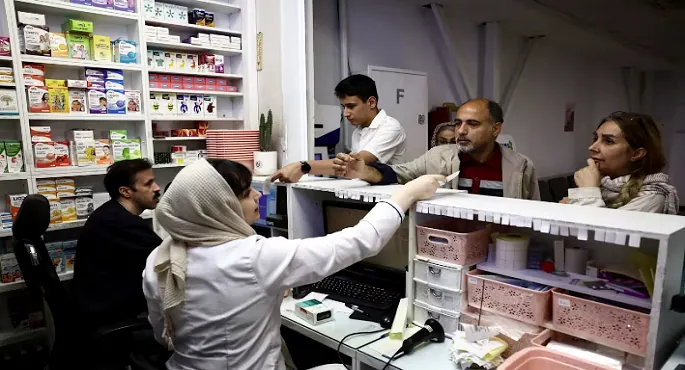
Iranian pharmacists have warned of a worsening crisis of medicine shortages, exacerbated by the impact of the war and US sanctions that hinder the country's ability to import and pay for essential medicines. As a result, Tehran has begun to deplete its strategic medicine reserves while intensifying efforts to find alternative land routes to secure imports. According to officials, Iran, with a population of 90 million, produces most of its medicines domestically but relies on importing active ingredients from countries like India and purchasing medicines and vaccines from Europe and other regions.
The US has imposed a blockade on Iran's southern ports, the primary entry point for medicine imports, since months ago. Additionally, US sanctions on airlines in several countries have led to the cancellation of an increasing number of international flights that transport medicines. The spokesperson for the Iranian Pharmacists' Syndicate, Hadi Ahmadi, stated that around 60 medicines used to treat serious diseases, such as thalassemia, are facing severe shortages. He added that no raw materials, medicines, or essential equipment have entered the country by sea during the US naval blockade.
The Iranian Health Minister, Mohammad Reza Zafarqandi, acknowledged this week that the economic blockade is disrupting the supply chain, stating that despite official declarations that medicines are exempt from sanctions, restrictions on foreign currency exchange and shipments are hindering supplies. The US claims that medicines are exempt from sanctions, but analysts argue that medicines are also affected by Washington's efforts to cut off flights to Iran as part of its campaign to pressure the regime.
A report by the "Bourse and Bazaar" research center, based in the UK, found that international banks are increasingly cautious in dealing with Iranian institutions, even if transactions are exempt from sanctions. The report stated that new measures represent the latest example of how tightening sanctions threatens to inflict significant harm on ordinary Iranian citizens due to its impact on the availability and prices of vital medical goods.
India has long been a primary supplier of Iranian pharmaceutical products via the Strait of Hormuz. However, the disruption of shipments and direct flights between the two countries has exacerbated the problem. Iranian Vice Minister of Cultural Heritage, Anoushirovan Mohseni Bandpi, said that President Masoud Pezeshkian used his recent visit to India to transport several tons of pharmaceutical ingredients to Iran on his private plane.
A pharmacist in Tehran, who wished to remain anonymous, stated that previously, shortages mainly affected biological medicines or those for incurable diseases, but now even basic painkillers and common psychiatric medications are unavailable. A European pharmaceutical company reported that it had not restricted any supplies to Iran due to sanctions but had not received requests for certain medicines from Iranian authorities since June.
Patients are facing extremely high costs, with the annual inflation rate currently at 90%, and the government stopped providing cheap foreign currency to support most medicines in March. The spokesperson for the Iranian Pharmacists' Syndicate, Ahmadi, stated that the cost of raw materials suddenly increased fivefold, leading to a 150-500% rise in medicine prices.
Key points
- US sanctions on Iran have led to severe medicine shortages.
- Iran is seeking alternative routes to import medicines.
- The medicine shortage has resulted in significantly higher costs for patients.