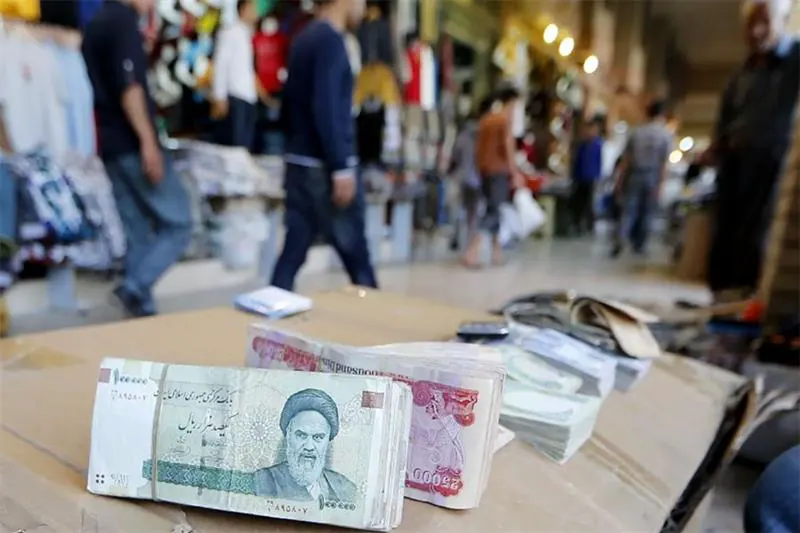
The Iranian rial has continued its downward trend, reaching a new record low of 2.5 million rials to the US dollar, as the country's economy grapples with the impact of a prolonged conflict in the Middle East. This latest decline comes just 27 days after the rial hit its previous record low of 2.2 million to the dollar on September 2. The ongoing conflict, which began in February, has severely affected the Iranian economy, already under duress due to years of international sanctions.
The Iranian economy has been struggling with a combination of new sanctions and a US naval blockade aimed at preventing Iranian oil from being sold on the global market. These measures have significantly reduced Iran's ability to earn foreign currency through oil sales, leading to a sharp decline in the value of the rial. The blockade and sanctions have had a devastating impact on the economy, causing widespread shortages and a significant increase in inflation.
Despite the dire economic situation, Iran's top diplomat, Foreign Minister Abbas Araghchi, has expressed optimism about potential new talks with the United States aimed at reopening the critical Strait of Hormuz. Araghchi stated that indirect negotiations with the US, facilitated by Qatari mediators, are becoming "more serious." He revealed that Qatari intermediaries are expected to engage with the US side soon and convey their response to Iran.
The mediation efforts are ongoing, even after US President Donald Trump rejected an Iranian proposal to reopen the strait in seven days if the US agreed to lift its blockade of Iranian ports, release frozen Iranian assets, and waive sanctions on Iranian oil sales. Officials from both sides have confirmed that mediators are working to broker a deal to end the fighting and open the strait, a vital waterway for international oil shipments.
In a provocative move, the Iranian Revolutionary Guard Corps appealed to everyday Americans to pressure their government to end the US war against Iran. The Guard's chief spokesman, General Hossein Mohebbi, read a letter during a news conference in Tehran, claiming that the only way for the war to end is for Washington to admit defeat and leave the Middle East. Mohebbi also accused the US of using Iran's nuclear program as a ruse to "plunder Iran's wealth" and turn the country "back into a colony."
The US, however, remains confident that Iran's economy cannot sustain a prolonged conflict. US Secretary of State Marco Rubio stated that Iran is heading toward an economic "cataclysm," and that the combination of new sanctions and the naval blockade is having the intended effect. The Trump administration believes that Tehran will be forced to capitulate, with the President predicting that the conflict will likely end after the November elections in the US.
The ongoing conflict and economic sanctions have had a significant impact on the Iranian people, with elevated gasoline prices and shortages of essential goods. The situation is likely to have implications for the global economy, particularly in the region. The international community remains concerned about the escalation of the conflict and its potential consequences for regional and global stability.
Key points
- Iran's currency has hit a new record low of 2.5 million rials to the US dollar.
- The Iranian economy is struggling under the weight of international sanctions and a US naval blockade.
- Mediation efforts are ongoing to broker a deal to end the fighting and open the Strait of Hormuz.