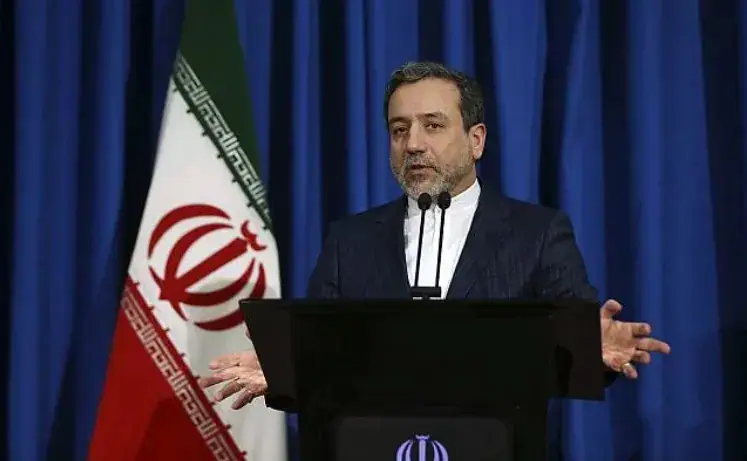
Iranian Foreign Minister Abbas Araghchi has outlined Tehran's position on negotiations with Washington, the reopening of the Strait of Hormuz, and the future of Iran's nuclear program. In an interview with the state-run newspaper Iran, Araghchi provided insight into the country's stance on several key issues. The interview was reported by Al Jazeera. Araghchi's comments come amid ongoing tensions between Iran and the US. Tehran has set conditions for the reopening of the Strait of Hormuz.
Araghchi stated that a memorandum agreed upon in June with Washington is no longer on the table. The memorandum aimed to advance peace negotiations and reopen the Strait of Hormuz. However, Araghchi claimed that the US violated a crucial provision of the agreement. This has led to a renewed confrontation between the two nations. The Strait of Hormuz is a vital waterway for global oil exports. Iran has previously threatened to block the strait.
According to Araghchi, Tehran has set seven conditions for reopening the Strait of Hormuz. These conditions include an end to the war, the lifting of the naval blockade, and the removal of sanctions against Iran. Araghchi emphasized that Tehran is willing to negotiate. However, he stressed that the country's demands must be met. A shorter deadline for negotiations does not pose a problem for Tehran.
Araghchi called for measures to restore trust between Iran and the US. He stated that previous negotiations have failed due to a lack of trust. Araghchi also urged US President Donald Trump to explicitly express his desire for an agreement. This, Araghchi believes, would help to create a more favorable negotiating environment. Trust-building measures are essential for Tehran.
The Iranian minister confirmed that enriched nuclear materials will remain in Iran. These materials will be utilized according to the country's needs. Araghchi's comments provide insight into Iran's nuclear policy. The country's nuclear program has been a point of contention with the international community. Iran has consistently maintained that its nuclear program is peaceful.
Araghchi touched on the debate within Iran regarding the country's nuclear doctrine. Some factions advocate for a revision of the current policy, which prohibits the development of nuclear weapons. This policy was decreed by the former Supreme Leader, Ayatollah Ali Khamenei. Opponents argue that the current doctrine has failed to protect Iran's nuclear installations.
Araghchi concluded by emphasizing Iran's commitment to diplomacy. He expressed hope that a mutually beneficial agreement can be reached. The minister stressed that not all agreements are worth accepting simply to resolve the current situation. Iran remains open to negotiations, but its conditions must be met. The international community is watching Tehran's next moves.
Key points
- Iran sets seven conditions for reopening the Strait of Hormuz.
- Enriched nuclear materials will remain in Iran.
- Tehran calls for measures to restore trust with the US.